

Ethan Brooks
Focused on sustainable practices, careful seed selection, and hands-on experience, our family work closely with nature to produce quality harvests while continuously learning and improving each year..
Latest Posts


Archive
Tags
Social Links
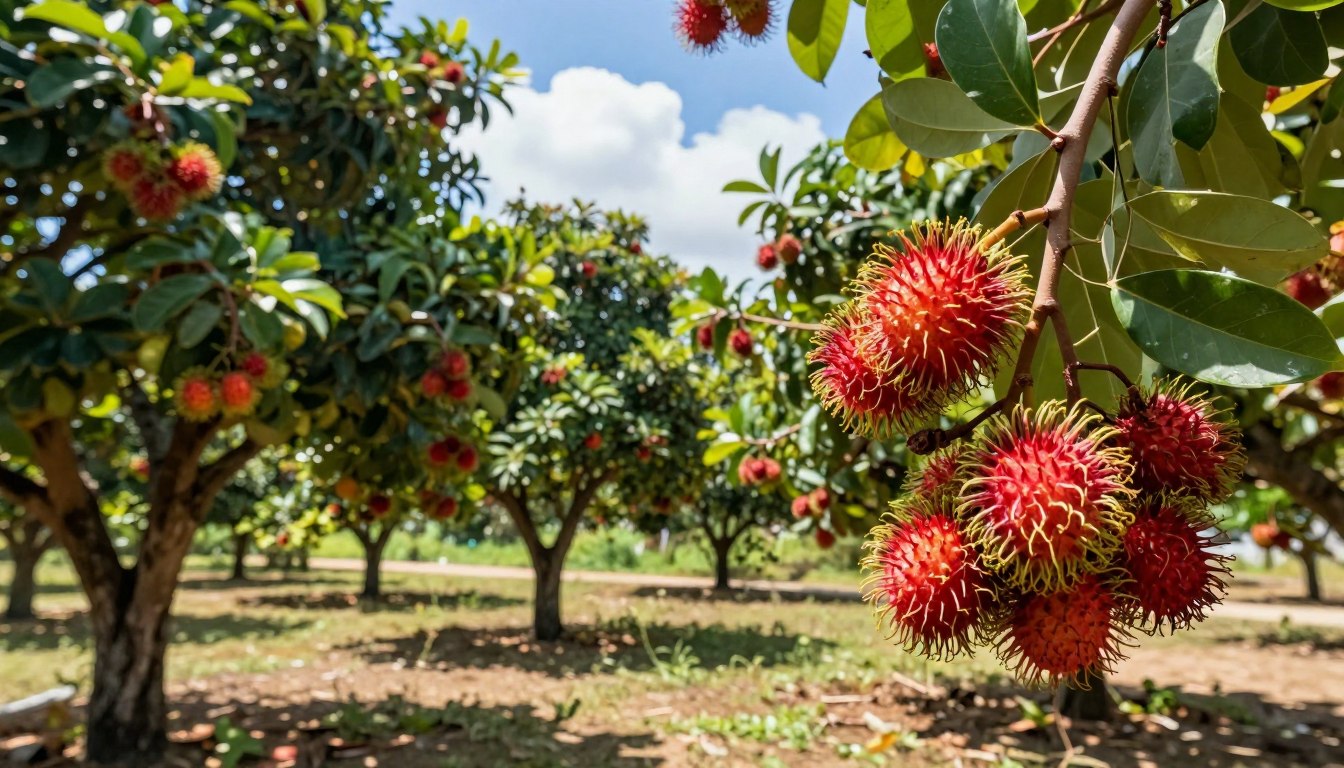

I’m excited to share my practical guide for planting and caring for these exotic trees.
Rambutan offer a sweet, aromatic fruit with a striking hairy shell that rivals lychee in flavor.
I’ll walk you through site choices, soil basics, and climate tips that protect these delicate plants from cold stress.
With clear steps and friendly advice, I’ll help you feel confident about nurturing a thriving harvest in the United States.
Key Takeaways
- Rambutan trees need warm, sheltered sites and rich, well-draining soil.
- Protect young plants from frost and strong winds for best results.
- Regular feeding and deep watering encourage steady fruit set.
- Pruning and pest checks keep trees healthy and productive.
- Patience pays off: home-grown fruit tastes far better than store-bought.
Understanding the Unique Needs of Rambutan Trees
Nephelium lappaceum is the scientific name for this heat-loving plant. I keep that name in mind when planning a spot in my yard.
The full-sized trees can reach 32 to 82 feet in tropical settings, so space matters. Even a young tree needs room to spread roots and canopy.
I think of the fruit as a hairy lychee. The white flesh tastes like grapes and shines in summer treats. That flavor shows why consistent warmth and humidity are essential.
- Zones: Best in USDA 10 and above for reliable fruiting.
- Climate needs: Steady heat and high humidity mimic native tropical climates.
- Size planning: Allow ample vertical and root space when planting.
How to Grow Rambutan in Your Backyard
I prepare a sunny spot in my garden and plan the steps before planting. This gives young trees the best chance for strong roots and steady growth.
Planting in the Ground
Dig a hole at least twice as wide as the root-ball and the same depth. I loosen surrounding soil so roots can spread.
I place the tree so the top of the root-ball sits level with the ground. Then I backfill gently and firm the soil around the root.
Keep soil moist for several weeks after planting. Consistent watering supports root establishment and reduces transplant shock.
Growing in Containers
For containers, I pick a pot at least 500mm wide and use a high-quality potting mix. Good drainage matters; the mix should be airy and not compacted.
I place the pot where it gets full sun for most of the day, while offering shade in harsh afternoons if conditions get intense.
- Space: Allow plenty of room for roots and canopy.
- Watering: Keep soil damp for the first few weeks after planting.
- Patience: Expect fruit in about 4–5 years as the tree matures.
Essential Soil and Drainage Requirements
Healthy roots start in a slightly acidic, well-aerated soil that drains freely. I aim for a pH between 5.5 and 6.5, which helps the plant absorb key nutrients.
I always choose well-draining mixes such as sandy loam or clay loam so roots do not sit in water. If a 12-inch test hole takes more than 30 minutes to drain after filling, I improve drainage before planting.
In heavy clay I dig in gypsum and lots of organic matter, like Yates Dynamic Lifter Soil Improver & Plant Fertiliser. This lightens the soil and boosts aeration for deep root growth.
For plants in containers, I use a high-quality potting mix that resists compaction. Good aeration prevents root rot and keeps the mix lively between waterings.
- Soil depth: Ground planting needs 6–9 feet available for deep roots.
- Drainage test: Water should disappear from a test hole in under 30 minutes.
- pH monitoring: Regular checks keep levels in the 5.5–6.5 range for best uptake.
| Soil Type | Drainage | Best Use |
|---|---|---|
| Sandy loam | Fast | Ideal for ground plantings; easy root spread |
| Clay loam (amended) | Moderate after gypsum/organic matter | Good where native soil is heavy; improve before planting |
| Commercial potting mix | Well-draining if airy | Best for containers; choose mixes with perlite or bark |
For more detailed planting notes and practical tips, see my recommended guide at rambutan tree care.
Managing Light and Temperature for Tropical Success
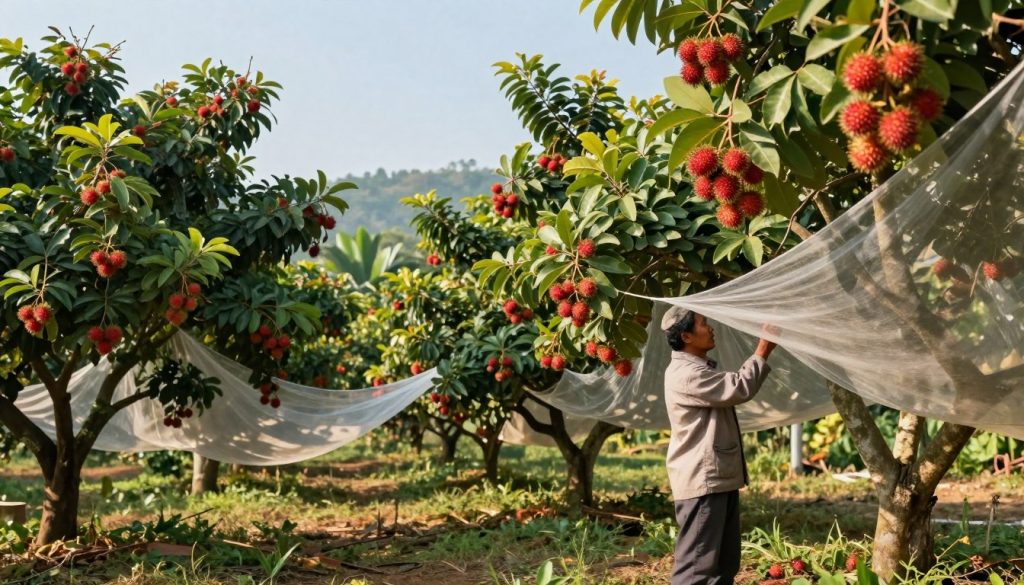
Creating a stable microclimate turns a marginal spot into a year-round fruiting nook. I aim for steady warmth and steady light so my rambutan trees set fruits and stay vigorous.
Temperatures under 50°F (10°C) can kill the tree. I keep conditions above 60°F (16°C) most nights. That buffer prevents cold stress and supports steady growth.
When full sun is not possible, I use grow lights. I run lights about 13 hours a day and check leaf color for signs of insufficient light.
In a greenhouse I hold humidity near 75–80% to match tropical climates. This helps the plant flower and bear fruit in a confined pot or container.
- Keep nights warm: avoid dips below 50°F (10°C).
- Provide light: full sun preferred; otherwise 13 hours of supplemental light.
- Humidity target: 75–80% for best leaf and flower health.
| Factor | Ideal Range | Why it matters |
|---|---|---|
| Night temperatures | Above 60°F (16°C) | Prevents cold damage and encourages flowering |
| Humidity | 75–80% | Mimics tropical climates for fruit set |
| Light | Full sun or 13 hrs supplemental | Supports leaf health and steady growth |
Watering Strategies for Healthy Growth
I keep a steady watering routine so the tree never faces a dry spell.
At minimum, I provide 1 inch of water each week, especially during the dry season. This helps keep soil consistently moist and supports developing roots.
I water in the morning at the base so moisture soaks into the root zone before heat raises evaporation. Small, regular waterings work better for my garden than rare, deep soaks.
- Weekly target: at least 1 inch of water per week for steady growth.
- Timing: morning base watering helps roots absorb water efficiently.
- Method: frequent light irrigation prevents waterlogging of garden soil.
- Containers: I check moisture daily so rambutans in pots never dry out.
These habits help the plant endure higher temperatures and stop leaves from wilting during hot weeks. With regular checks, my tree stays healthy and productive.
Fertilization Schedules for Fruit Production
A steady feeding plan is the backbone of consistent fruit yields and tree vigor.
I follow timed feedings that match growth stages and seasonal needs. This keeps the soil lively and supports bloom, set, and ripening.
Yearly Application Methods
For a 3-year-old tree, I apply 300g urea, 575g phosphate, and 275g potash every six months. I spread the nutrients evenly under the canopy and water in gently.
For younger plants I use Yates Dynamic Lifter Soil Improver & Plant Fertiliser to build strong roots before moving to measured synthetic blends.
Seasonal Feeding for Mature Trees
After flowering I switch to a 20-10-30 mix to help the fruit set and fill. One to two weeks after harvest I apply a 20-20-20 feed to support recovery for the next season.
During winter I use 15-30-15 to stimulate the tree ahead of the coming growth cycle and preserve reserves through colder weeks.
| Timing | Ratio / Dose | Purpose |
|---|---|---|
| Every 6 months (3-yr tree) | 300g urea / 575g phosphate / 275g potash | Maintain balanced growth and support heavy fruit set |
| After flowering | 20-10-30 | Support fruit development and improve harvest size |
| 1–2 weeks after harvest | 20-20-20 | Restore vigor and rebuild reserves for next year |
| Winter | 15-30-15 | Encourage buds and steady production next season |
Pruning Techniques to Maintain Tree Health
I keep pruning precise so my trees stay vigorous and don’t waste energy on dead wood.
I remove dead or diseased branches first. That cut lowers infection risk and clears the canopy. It also helps light reach inner growth.
I remove suckers below the graft union so the tree directs nutrients to productive limbs. This small step improves overall growth and fruiting on rambutan trees.
In early winter, while the tree is dormant, I cut larger branches at a 45-degree angle. I wait until after flowering before trimming older shoots. That avoids losing potential harvest-bearing wood.
- Light shaping trims keep the canopy strong and manageable.
- Targeted cuts reduce weight on weak branches and prevent breakage.
- Clean tools and quick wound sealing speed recovery.
| Action | Best Time | Purpose |
|---|---|---|
| Remove dead branches | Anytime safe weather | Reduce disease and improve airflow |
| Cut suckers under graft | During active growth | Preserve main tree vigor |
| 45° cuts on large limbs | Early winter (dormant) | Control size and encourage healthy regrowth |
| Regular light trims | Seasonal | Maintain shape and support heavy fruit loads |
Propagation Methods for New Trees
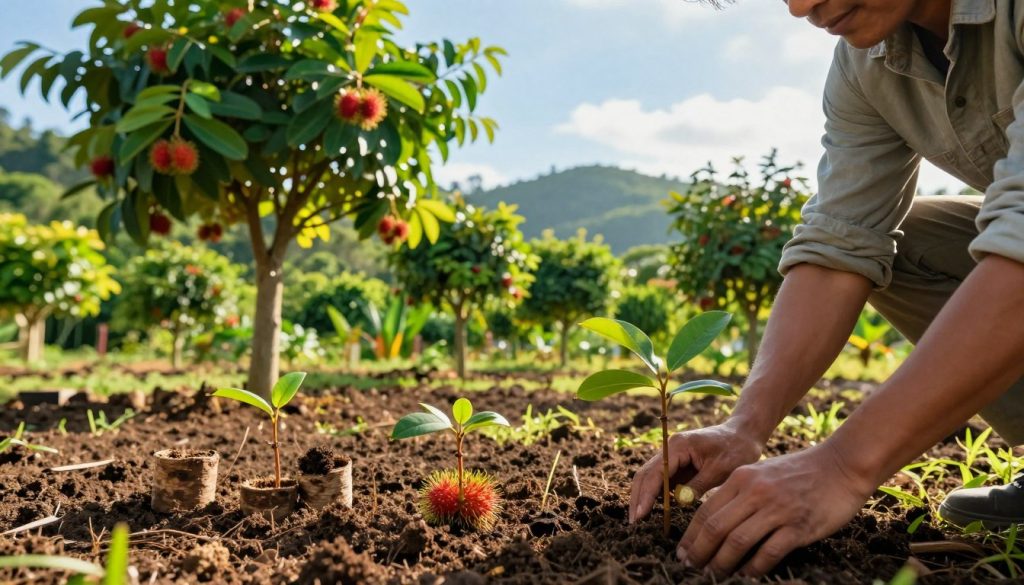
Propagation offers several paths that let me create new trees from seed, grafts, or rooted branches. Each method fits a different goal: low-cost seedlings, reliable fruit quality, or faster establishment in the garden.
Starting from Seed
I plant fresh seed quickly because viability drops after one week. A cleaned seed usually sprouts in 10–21 days.
I use a sandy, loamy mix in a small container and keep the soil warm and evenly moist. A grow light speeds uniform germination in less sunny months.
Grafting and Budding
Grafting or budding helps me preserve desirable fruit traits when I have several trees. I select a healthy scion and graft onto a vigorous rootstock.
This method gives a new tree the same fruit quality as the parent and shortens the time until the first harvest by a year or more.
Air Layering Techniques
Air layering convinces a living branch to form roots before removal. I wound the branch, wrap moist sphagnum and a plastic barrier, then check for roots after weeks.
Once the new roots appear, I cut and plant the rooted branch in a container or the garden for a fast, reliable start.
For a practical reference on a related tropical fruit, see this lychee propagation guide.
Can the Best Fertilizer for Sorghum Help Improve Rambutan Tree Growth?
Using the best sorghum fertilizer tips can benefit more than just sorghum crops. These techniques promote nutrient-rich soil, enhancing the growth of various plants, including rambutan trees. By implementing proven strategies to optimize soil health, a gardener can ensure vibrant trees and a bountiful harvest of delicious fruit.
Harvesting and Preserving Your Sweet Fruit
I pick fruit when the skin shows a deep red and the hairs feel firm under my fingers. I look for pieces about 1 inch across. That size and firmness mean the white flesh inside will be sweet and juicy.
I use garden shears and cut the stems carefully. This keeps the delicate flesh whole and avoids bruising. The tree does not ripen all its fruit at once, so I harvest 2–3 times per week through the season.
I store extra fruit in the fridge where they stay fresh for up to 2 weeks. For longer keeping, I freeze peeled sections in a sealed bag for up to three months. I also can small batches in light syrup when I have a big harvest.
- Pick: bright red skin, firm hairs, ~1 inch diameter.
- Cut: use shears to protect the flesh and stem.
- Store: fridge up to 2 weeks; freeze up to 3 months; can in syrup for year-round use.
| Action | Timing | Result |
|---|---|---|
| Harvest | Throughout fruiting season, 2–3x weekly | Fresh, undamaged fruit ready to eat |
| Refrigerate | Up to 2 weeks | Maintain texture and sweetness |
| Freeze | Up to 3 months | Best for smoothies and long-term storage |
| Canning in syrup | After peak harvest | Preserves flavor for months |
Conclusion
Growing Nephelium lappaceum rewards patience; it often needs four or five years before it will bear fruit.
I found that providing full sun, steady water, and warm temperatures makes the journey easier. Small trees in a pot or those in the garden both respond to regular care and correct soil.
Pruning, timely feeding, and watching leaves for stress keep these fruit trees productive. If you plan on starting from seed, note storage and emergence tips in this seed storage study.
I hope this guide helps you manage your rambutan trees through each season and enjoy sweet fruits for years to come.