

Ethan Brooks
Focused on sustainable practices, careful seed selection, and hands-on experience, our family work closely with nature to produce quality harvests while continuously learning and improving each year..
Latest Posts


Archive
Tags
Social Links
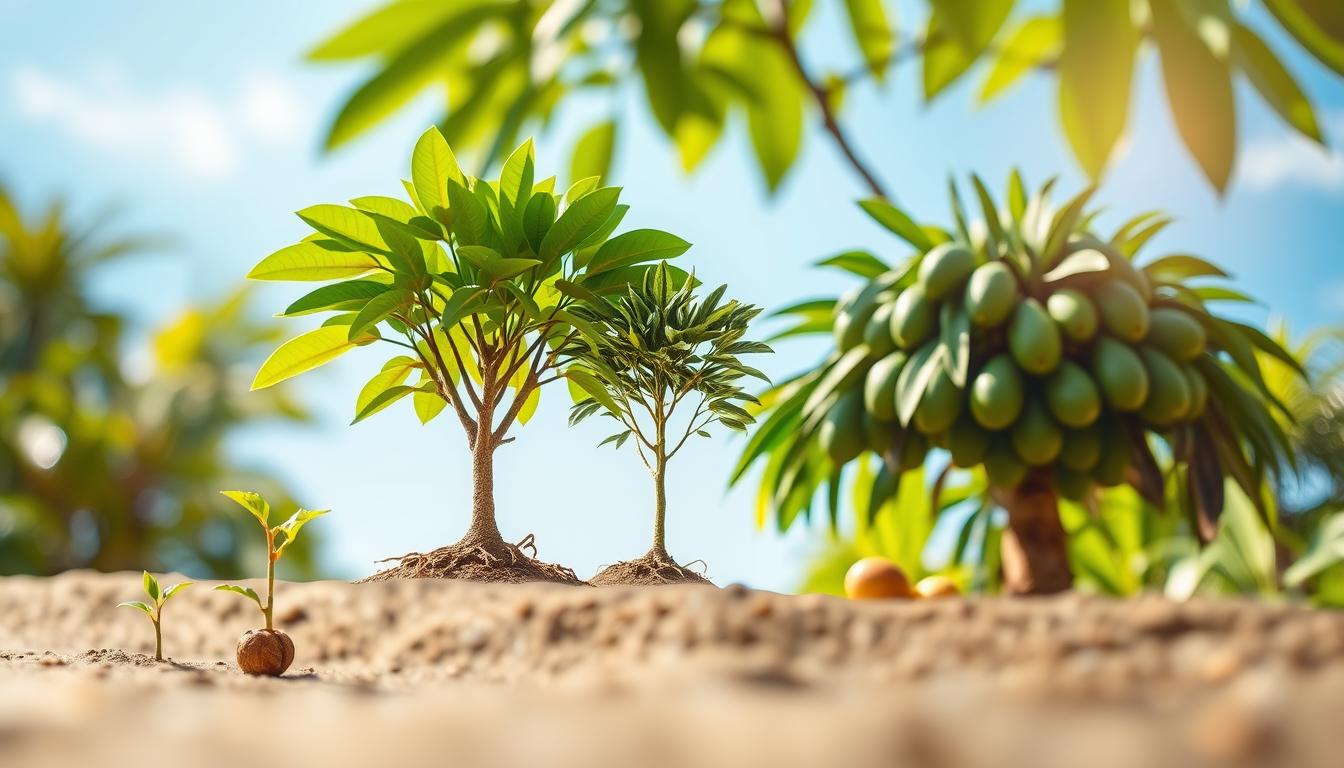

Ever wondered how a simple pit becomes a towering plant laden with creamy fruit? Understanding the avocado tree life cycle is your first step to growing your own. This guide breaks down the entire journey, from a dormant seed to a productive, fruit-bearing plant.
Many new gardeners are surprised by the timeline. From germination to your first harvest can take 5 to 13 years if you start from a seed. That’s a long commitment! But there’s a faster path. As experts note, a grafted tree may produce fruit in just 3 to 4 years.
I created this resource to simplify this complex growth process. My goal is to give you clear, actionable steps. You’ll learn how to nurture your plant for long-term success, whether you begin with a seed or a young tree.
This information is built on trusted data from horticultural sources. It will help you set realistic expectations and make smart choices from day one. For more foundational tips, check out this beginner’s guide to growing avocado trees.
Key Takeaways
- The complete life cycle from seed to fruit production typically spans 5 to 13 years.
- Starting with a grafted tree can drastically reduce your wait time to 3 or 4 years.
- Understanding each growth stage is crucial for proper care and troubleshooting.
- Success depends on factors like climate, soil quality, and consistent watering.
- Patience is the most important tool for any home grower.
- This guide provides expert-backed steps to navigate the entire journey.
- Setting realistic expectations from the start leads to greater gardening satisfaction.
Introduction: My Journey with the Avocado Tree Life Cycle
I still remember the exact date I started my journey with this incredible plant: February 10, 2017. That’s when I placed a young Hass avocado from a five-gallon container into the ground in my backyard. It felt like the beginning of a long, hopeful partnership.
The real reward came from a different plant I had started years earlier. Back in July 2013, I planted another Hass. The wait tested my resolve, but by 2017, it yielded a bountiful harvest of 73 avocados. That moment made every bit of patience worthwhile.
I’m sharing my story so you can skip some of the early stumbles I made. Watching a plant develop from a young sapling into a productive member of the garden is deeply satisfying. It’s an experience I believe every home gardener should have.
The biggest lesson? Patience is non-negotiable. You can’t rush a young tree. Giving it consistent care over the years is what leads to success. My goal is to help you navigate that waiting period with confidence and joy.
What is the Avocado Tree Life Cycle?
Let’s define the fundamental stages that characterize the development of this popular fruit-bearing plant. The avocado tree life cycle is a fascinating biological process. It begins with a seed and progresses through several distinct growth stages.
Each phase of this development is critical. Specific environmental conditions are required to ensure the plant remains healthy and strong. From seedling to maturity, it’s a dynamic period of rapid transformation.
I have observed that the vegetative phase is the most important for building a robust root system. This foundation supports future leaf development and, ultimately, fruit production. Root and leaf development are crucial for later success.
Understanding this progression helps you provide the right care at the right time. That is essential for long-term plant health. Every step contributes to the overall structural integrity of the tree.
Germination Process: From Seed to Sprout
Watching a hard seed transform into a tender green shoot is one of gardening’s most rewarding experiences. This is where your patience and care first pay off.
Key Germination Timeframes
You need to know the typical schedule. A pit usually takes 4 to 8 weeks to show activity. The most exciting time is between weeks five and eight.
This is when the sprout finally pushes through the soil surface. Mark your calendar and keep the environment stable during this period.
Observing Early Growth and Signs of Success
The first clear sign your avocado seed is working is a crack along its side. Soon, a primary root emerges to anchor the young plant.
I watch this root development closely. It’s the foundation for all future growth. Protecting the tender sprout from drafts and extreme temperatures is vital.
Seeing the first pair of leaves unfold is the ultimate sign of success. It means your seed has officially become a seedling, ready for its next phase of care.
Seedling Development: Establishing Roots and Shoots
The moment your sprout becomes a true seedling marks a critical shift. This stage typically lasts several weeks to a few months. Your care now sets the foundation for everything that follows.
Nurturing Early Growth in Your Seedlings
Once it emerges, the young plant focuses entirely on building a strong root system. This underground network anchors it and absorbs essential water and nutrients. That work is vital for all future development.
I always protect my young seedling from extreme weather. This phase is when it is most vulnerable to wind, frost, or intense sun. A little shelter goes a long way.
The appearance of the first true leaves is a major sign of progress. It shows the specimen is becoming more independent and resilient. It can now produce more of its own food.
As the stem thickens, it gains the stability needed for future growth. Nurturing the root structure during these first few months is the best way to ensure long-term health outdoors.
Vegetative Growth: Expanding the Avocado Tree’s Foundation
After the seedling stage, your plant enters a period of vigorous expansion known as vegetative growth. This phase is all about building a strong physical structure. The focus is on expanding the root system and producing a robust set of leaves.
Shoot length increases significantly with adequate soil moisture and nutrient availability. Your young specimen is putting energy into its infrastructure. This work maximizes energy capture from the available sunlight.
Balancing Sunlight, Water, and Nutrient Needs
I ensure my trees receive consistent water and nutrients. This supports the rapid expansion of their leaves and overall plant structure. It’s a delicate balance that requires attention.
Regular monitoring of this phase lets me spot any signs of stress. I look for abnormal growth patterns in my trees. Catching issues early prevents bigger problems later.
The rate of growth can vary widely. It depends on your specific climate and soil quality. Some years, your avocado tree might seem to shoot up overnight.
Providing a balanced environment is the key. It ensures your plant develops a sturdy foundation for future fruit production. Patience and consistent care during this time pay off immensely.
Flowering Stage: The Magic of Avocado Blooms
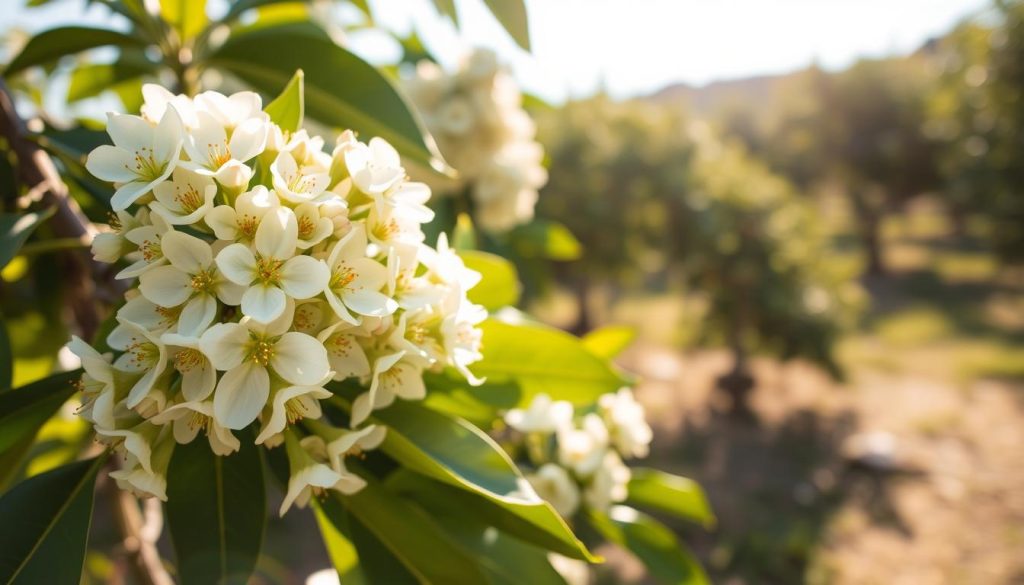
One of the most anticipated moments in the garden is the annual bloom display. For me, it’s a signal that years of care are about to pay off. A mature plant becomes covered in a delicate cloud of tiny blossoms.
This flowering spectacle usually begins in April. The exact timing can shift based on the plant’s genetics and local weather patterns. It’s a brief but beautiful window.
Understanding Pollination and Dichogamy
Avocado trees have a unique reproductive strategy called protogynous dichogamy. Each tiny flower opens first as a female, ready for pollination. It then closes and reopens later as a male.
This clever timing promotes cross-pollination between different trees. It helps ensure strong, genetically diverse avocados. Successful pollination needs help from bees and just the right conditions.
It’s amazing to think a single plant can produce up to a million flowers. Yet, only a tiny fraction will ever become fruit. Understanding this flowering cycle explains why harvests vary from year to year.
Detailed Phases of Avocado Flower Development
Avocado flower development isn’t a single event but a series of ten distinct substates, starting with a closed bud. This intricate development process ensures successful pollination. Each phase is a critical part of the journey from a dormant bud to a potential fruit.
From Bud Dormancy to Initial Blooming
The beginning is State A, the bud dormancy phase. Here, buds are tightly closed and covered with visible protective scales. This dormant state protects the delicate inner tissues.
As conditions become favorable, the scales loosen. The bud swells and prepares to open. This transition marks the start of the active blooming period.
| Phase | Substage Code | Description | Key Feature |
|---|---|---|---|
| Bud Dormancy | State A | Closed bud covered with protective scales | Scales are visible |
| Female Phase | F2f | Open flower with tepals perpendicular to the axis | Pistil is receptive to pollen |
| Male Phase | M1 | Anthers open to release pollen | Pollen dispersal occurs |
| Closing Phase | Final Male | Tepals begin to close | Bloom cycle ends |
Male and Female Flower Substates Explained
In the female substate, the flower opens its tepals at about a 45-degree angle. This position exposes the pistil, ready to receive pollen from other plants.
The male phase follows. Here, the anthers open their valves to release pollen for the pollination process. This clever timing, known as dichogamy, is explained in detail in this guide on how avocado trees flower.
The entire sequence is carefully orchestrated. It protects the ovary until fertilization can occur. By the final male substate, the tepals close, completing the cycle.
Fruit Maturation: Transitioning from Flower to Fruit
The journey from a delicate bloom to a plump, harvest-ready fruit is a test of patience and observation. This process is not quick. Maturation can take anywhere from five to thirteen months, depending on your variety and local conditions.
Monitoring Ripeness and Color Transition Cues
I watch my avocados closely as they develop. The first visual cue is a change in skin color. It shifts from a bright green to deeper, darker shades.
This signals the breakdown of chlorophyll inside the fruit. The growth in size is another clear sign. It’s driven by cell expansion and nutrients drawn from the leaf canopy.
For climacteric types, a burst of ethylene gas triggers the final ripening. Understanding these cues helps me pick my avocados at the perfect time. The result is peak flavor and creamy texture in every fruit.
Timing the First Harvest: When to Expect Fruit
The day you finally pick your first homegrown avocado is a moment of pure triumph. It marks the culmination of dedicated care. This milestone arrives on its own schedule, which depends heavily on your starting point.
I have found that buying a larger fifteen-gallon plant can significantly reduce your wait. A specimen this size may yield its first fruit in just one to two years after planting. In contrast, a smaller five-gallon plant typically needs three to four years to deliver a substantial harvest.
It is important to set realistic expectations. Your initial yield might be small, perhaps just a few avocados. Do not be discouraged. This modest beginning is a powerful sign of future fruit production success.
| Starting Plant Size | Typical Time to First Fruit | Key Consideration |
|---|---|---|
| Five-Gallon Avocado Tree | 3 to 4 years | First substantial harvest |
| Fifteen-Gallon Tree | 1 to 2 years post-planting | Can produce avocados much sooner |
| Seed-Started Plant | 5 to 13 years | Requires the most patience |
My experience shows that waiting three to four years is standard for most young plants. Once your fruit production begins, you will deeply appreciate the care invested. The reward is truly worth the wait.
Special Varieties and Grafted Trees for Early Fruit
Not all varieties are created equal when it comes to how quickly these trees bear fruit. Choosing the right type is a strategic move for gardeners eager to enjoy a homegrown harvest sooner.
Precocious cultivars like Pinkerton, GEM, Lamb, and Carmen are known for setting fruit early. My Pinkerton specimen, placed from a five-gallon container in March 2016, produced its first fruit that same spring. This happened in less than two years!
Grafted avocado trees are generally more reliable for early production compared to those grown from a seed. They combine a hardy rootstock with a proven fruiting scion. This partnership accelerates the timeline significantly.
| Precocious Variety | Typical Fruiting Onset | Key Note |
|---|---|---|
| Pinkerton | Often within 2 years | My personal success story; sets fruit quickly |
| GEM | Early, often 2-3 years | Known for consistent yields |
| Lamb Hass | Early, similar to Pinkerton | Popular for home gardens |
| Carmen | Early producer | Great flavor, reliable |
Investing in high-quality grafted trees is one of the best ways to ensure consistent fruit production. It bypasses the long juvenile phase of seed-grown specimens. You’ll be enjoying your own creamy avocados much faster.
Factors Affecting Fruit Production and Success
The path to successful fruit production is paved with careful attention to environmental conditions and care practices. Several key elements determine whether your plant will thrive and bear a heavy crop.
Soil quality and consistent watering are foundational. I have learned that aggressive pruning can backfire. Cutting back too hard reduces the number of flowers, which directly limits your total harvest.
Experts like Mary Lu Arpaia and Ben Faber stress that a healthy environment is essential for new trees. If your plant is stressed by poor irrigation or a harsh winter freeze, it will take much longer to reach its full potential.
Providing the right care ensures your avocado tree remains productive and healthy for many years. This long-term success is the ultimate reward for your gardening efforts.
Environmental Requirements for Thriving Avocado Trees
Long-term success in your garden depends on replicating the natural habitat of these fruit-bearing plants. I focus on creating a space that feels like home for them. This approach leads to healthier specimens and more consistent harvests.
My top priority is providing plenty of sunlight. These plants need full sun for most of the day to fuel their growth. I also ensure the soil drains exceptionally well. Soggy roots are a major threat to their health.
Protection from extreme cold is non-negotiable. A harsh winter freeze can damage tender branches. This injury can delay future fruit production for an entire season. With proper care, these trees are incredibly long-lived, often thriving for 50 to 100 years.
Watering requires a careful balance. Both over-watering and under-watering stress the plant. I mimic the rainfall patterns of a tropical climate. This strategy helps my avocado tree establish deep, strong roots.
By getting these fundamentals right, you set the stage for decades of fruit production. Your trees will reward you with lush growth and plentiful avocados. It’s the best way to ensure your avocado tree not only survives but truly flourishes.
Practical Home-Gardening Tips: My Personal Experience
My years of tending plants in my backyard have yielded more than just fruit; they’ve given me a wealth of practical lessons. The most important one is simple: patience is your greatest asset. You cannot rush a young plant to produce.
My Reed and Lamb avocado tree went into the ground in July 2013. I enjoyed its first fruit three years later. In contrast, a seedling in my mom’s yard took about six years. This shows how timelines can vary.
I strongly suggest keeping a simple garden journal. Note when you plant your trees and when they first flower. This record helps you understand their personal rhythm.
It is also incredibly helpful to talk to local growers. They know which varieties perform best in your specific area. Their experience can save you years of trial and error.
Celebrate every success, no matter how small. My first real harvest was just 15 avocados. It was a deeply satisfying reward for years of dedicated care. Remember, every plant is unique. Your results will depend on your location and gardening style.
Ensuring Proper Care and Protection for Your Avocado Tree
A thriving home landscape requires a shield against pests, diseases, and harsh weather. Providing proper care and protection is essential for your plant’s long-term success.
I always check my trees for early signs of stress. Yellowing leaves can signal a need for better soil drainage. Catching these issues quickly prevents bigger problems.
My weekly routine includes a few key actions:
- Inspecting leaves and branches for pests.
- Shielding young trunks from intense sun or frost.
- Confirming the identity of all plants in my garden before using them.
Safety is a critical part of gardening. If you ever suspect a plant has caused harm, contact experts immediately. You can call the Pet Poison Helpline at (800) 213-6680.
Consistent protection throughout the year ensures your avocado tree remains healthy. This diligent care supports strong fruit production. Your efforts will be rewarded with a productive and beautiful tree for years to come.
Is Growing an Avocado Tree a Part of the Complete Avocado Tree Life Cycle?
Growing an avocado tree indeed plays a crucial role in the complete avocado tree life cycle. To ensure its healthy development, it’s essential to implement step by step avocado tree care techniques. This includes proper watering, sunlight exposure, and pruning, which collectively promote robust growth and fruit production.
Understanding Avocado Tree Growth Metrics and Measurements
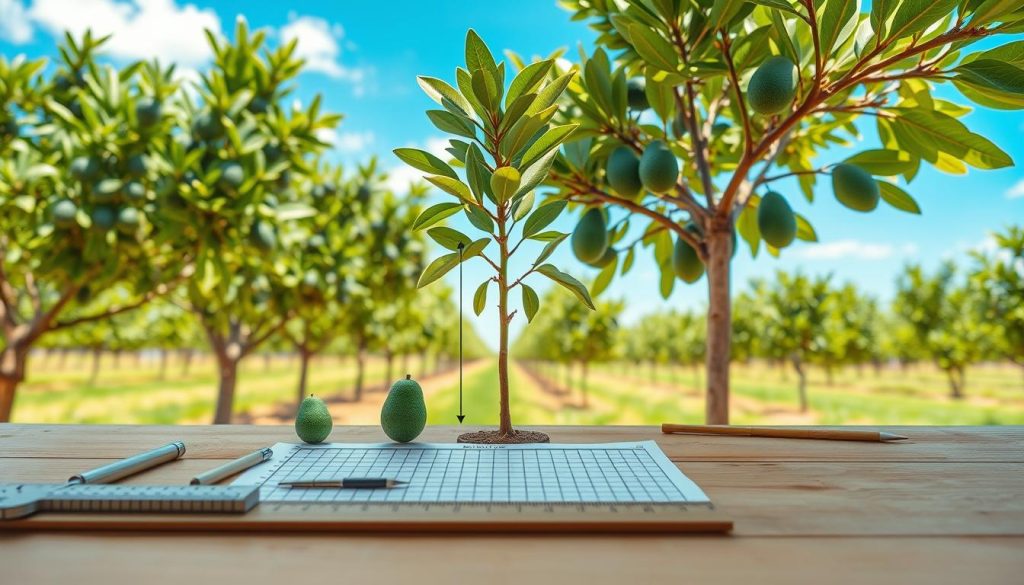
Knowing the potential height and spread of your plants prevents future overcrowding issues. I always measure the space before I plant anything new. This simple step saves a lot of trouble later on.
A mature avocado tree can reach up to 30 feet tall. Its canopy can spread just as wide. You must choose a planting site with enough room for this full, mature size.
Once established, these trees grow rapidly. They can add several feet in height each year. This transforms a young plant into a lush, green centerpiece quickly.
I monitor the size of my trees every year. I check their height and canopy width. This helps me see if they are growing at a healthy rate for their variety.
Keeping track of these numbers lets you manage your trees effectively. You can plan for pruning or support if needed. It ensures your garden stays balanced and beautiful.
| Common Variety | Typical Annual Growth (Established) | Space Planning Note |
|---|---|---|
| Hass | 2-3 feet | Needs ample lateral space for wide canopy. |
| Reed | 2-4 feet | Grows more upright; good for tighter spaces. |
| Pinkerton | 1.5-3 feet | Moderate spread; easier to manage in a home garden. |
Understanding these growth metrics is crucial. It helps you give your plant the space it needs from the start. You’ll avoid the common mistake of planting too close to a fence or house.
Watching the overall size increase is part of the joy. Just remember to plan for that future 30-foot giant when you first put it in the ground.
Conclusion
Embarking on the journey of growing your own fruit at home is a commitment that pays off in creamy, delicious rewards. This process requires patience over many years, but the wait is truly worth it.
Understanding what your plants need is key to their success. With proper care, they will thrive and produce a bountiful harvest for you to enjoy.
Whether you begin with a seed or a young grafted specimen, the journey is deeply rewarding. I hope this guide empowers you to nurture your garden with confidence.
Remember, consistent attention and a suitable environment are the foundations. Your dedicated efforts will be rewarded with fresh, homegrown produce for seasons to come.