

Ethan Brooks
Focused on sustainable practices, careful seed selection, and hands-on experience, our family work closely with nature to produce quality harvests while continuously learning and improving each year..
Latest Posts


Archive
Tags
Social Links
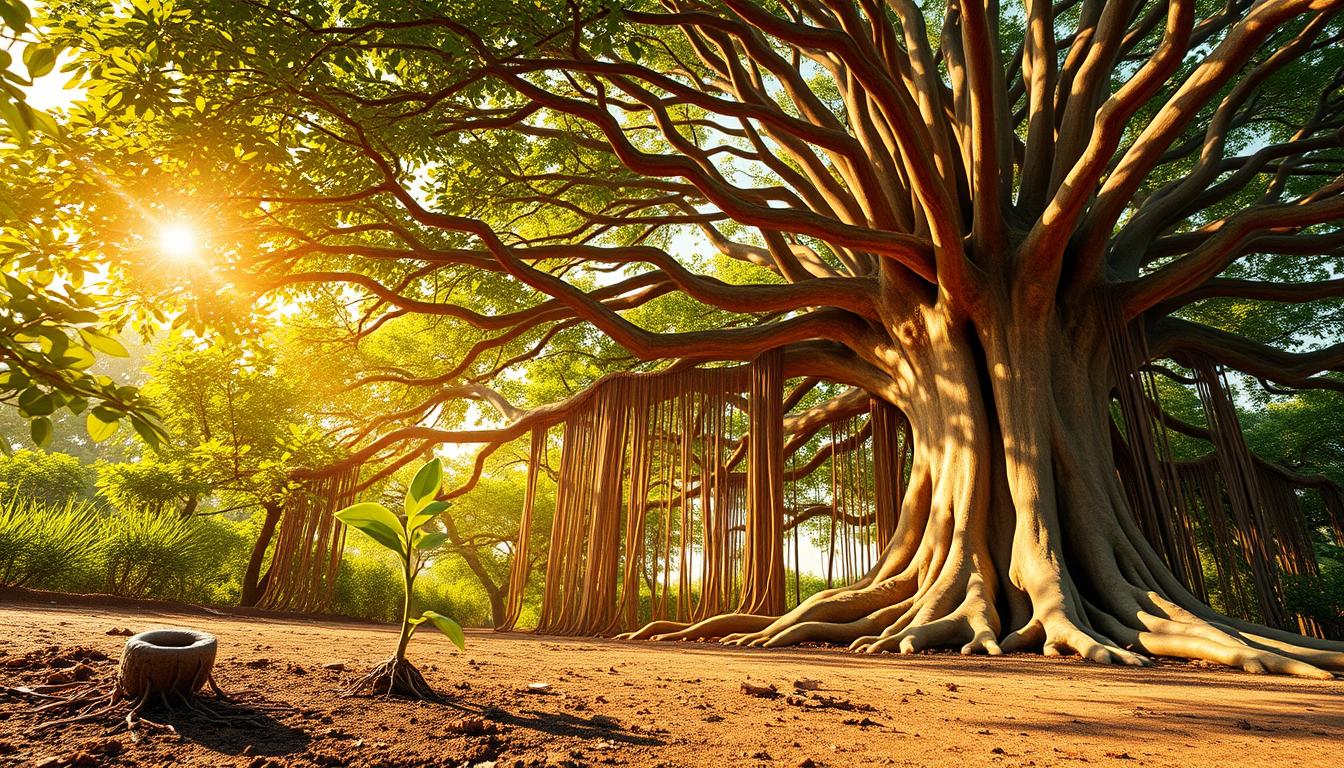

Have you ever looked at a massive, sprawling canopy and wondered how it began? The banyan tree life cycle is the incredible answer. It’s a journey that turns a speck of a seed into a living landmark. I’m excited to guide you through every stage of this fascinating process.
This unique fig species starts in a surprising way. It often begins life as an epiphyte, germinating on a host structure. From there, it sends down distinctive aerial roots. These roots thicken and become supportive trunks over many years.
The result is a complex, interconnected organism that can cover vast areas. Its remarkable ability to adapt ensures it thrives for centuries. These giants are not just plants; they hold deep cultural meaning as symbols of endurance and shelter across the globe.
Key Takeaways
- The development of this plant begins from a very small seed.
- It has a unique starting phase, often growing on other surfaces.
- Aerial roots are a defining feature of its expansion process.
- This species is incredibly resilient and can live for hundreds of years.
- It forms extensive, forest-like structures from a single source.
- Many societies value it for its strength and lasting presence.
- Understanding its growth helps us appreciate its role in nature.
Understanding the banyan tree life cycle
Unlike most plants that sprout from the soil, this species often begins its story high up in the branches of another. This strangler habit means it germinates on a host structure, using it for initial support.
As it matures, the plant sends down slender, hanging roots. These eventually reach the soil and thicken into sturdy, woody trunks. A complex network of these supportive pillars forms, allowing the canopy to expand outward over decades.
This is why a single fig can resemble an entire forest. All the trunks connect back to one original source, creating a vast, interconnected organism. It’s a brilliant growth strategy for securing space and resources.
By studying this design, we see how the giant outcompetes others in its tropical ecosystem. Its ingenious approach ensures dominance and longevity for many, many years.
Germination Stage: From Seed to Sprout
A single, minute seed holds the entire blueprint for a future landmark. For the Ficus benghalensis, this journey often begins in a surprising place. Birds or animals deposit the tiny seed into a crevice on a host structure.
Optimal Temperature and Soil Conditions
Success hinges on specific environmental factors. The ideal temperature for this process is a warm range between 20°C and 30°C (68°F to 86°F).
These seeds also need a supportive base. Well-draining material rich in organic matter is crucial. It allows the initial, delicate roots to establish without rotting.
Duration and Light Exposure Requirements
Under the right conditions, you can expect to see a sprout in just 2 to 4 weeks. Patience is key during this quiet phase.
Indirect sunlight provides the perfect energy. It fuels growth without scorching the tender new plant. This adaptation lets the species thrive in high-canopy spots where light filters through.
I’ve learned that meeting these needs dictates whether the seed becomes a thriving seedling. It’s a delicate but vital start.
Seedling Stage: Establishing a Foundation
For the next half-year to a year, growth is slow but purposeful. This phase builds a solid base for the young banyan tree. From a tiny seed, it now focuses on foundation.
Early Leaf Development and Root Formation
Small, oval-shaped leaves begin to emerge. Their development is crucial for capturing sunlight. Photosynthesis provides the essential energy for steady growth.
Below the surface, root formation is vital. A strong taproot anchors the seedling securely. Lateral roots start their search for the ground and nutrients.
| Characteristic | Details | Importance |
|---|---|---|
| Stage Duration | 6 months to 1 year | Allows foundation building |
| Typical Height | 5–15 cm (2–6 inches) | Manages energy use efficiently |
| Leaf Shape | Small, oval | Maximizes light capture |
| Primary Root | Taproot | Anchors plant securely |
| Secondary Roots | Lateral roots | Seeks soil and resources |
I find it fascinating that even at this small size, the banyan prepares for future expansion. This remarkable tree becomes more resilient. Soon, it transitions into a period of rapid growth.
Vegetative Growth Stage: Expansion and Aerial Roots
This period is defined by explosive vertical and horizontal expansion. The vegetative phase spans two to five years.
During this time, the banyan tree grows with incredible speed. Under ideal conditions, it can shoot up by one meter each year.
Rapid Height Increase and Structural Changes
This swift gain in height is just one part of the story. Major structural changes happen simultaneously to support the future giant.
The leaves become much larger and broader. I’ve seen how this boosts photosynthesis, fueling the entire growth spurt.
Development of Lateral and Aerial Roots
Perhaps the most famous characteristics now appear. Slender aerial roots begin to descend from the branches.
They seek the soil below. Once they anchor, these roots thicken into strong, woody trunks. This creates a supportive pillar network.
| Characteristic | Detail | Purpose |
|---|---|---|
| Stage Duration | 2 to 5 years | Period of major structural development |
| Annual Height Gain | Up to 1 meter (3 ft) | Rapid vertical expansion |
| Leaf Change | Increase in size & breadth | Enhances energy production |
| Key Root Type | Aerial and lateral roots | Forms future support trunks |
| Primary Function | Structural fortification | Prepares for massive canopy weight |
It’s a brilliant display of adaptation. The plant modifies its form to ensure maximum stability for centuries to come.
Transition to Flowering: Preparing for Reproduction
After years of impressive expansion, a major change quietly begins within the plant. Typically, after five to ten years of growth, the banyan tree reaches a key maturity level. This triggers its shift into a reproductive phase.
I see this as a significant milestone. The organism moves from purely vegetative building to creating future generations. It’s a fascinating pivot in its long story.
Environmental Triggers and Maturation Signals
Specific conditions cue this important change. The onset of the rainy season is a crucial signal. It times the flowering process to ensure ideal humidity for pollination.
The banyan prepares by directing resources. Energy goes into forming syconia. These unique structures house the flowers and enable pollination.
Understanding these triggers shows how the giant syncs with its ecosystem’s rhythms. As it matures, it gains the strength to support this energy-intensive task. This ensures its lineage continues for centuries.
Flowering Stage: Beauty, Pollination, and Syconium
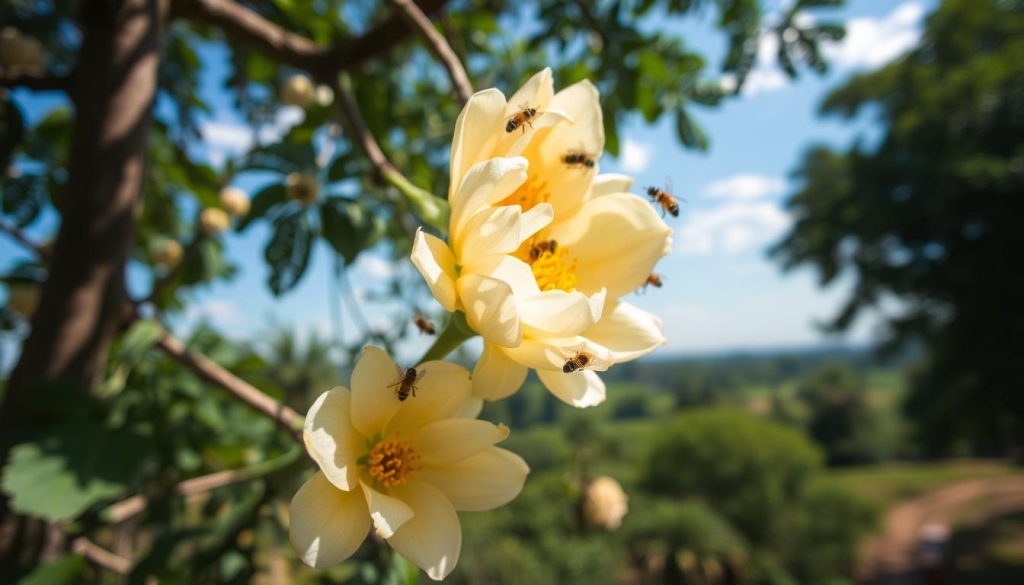
Unlike showy blossoms, reproduction here happens inside a unique, fleshy pod. The banyan tree conceals its tiny flowers within a specialized structure called a syconium.
This clever design protects the delicate reproductive parts. It also sets the stage for a highly specific pollination process.
Pollinator Dynamics and Fig Wasp Interactions
Specific fig wasps are the sole pollinators for this species. I find this partnership incredible. The wasps enter the syconium to lay eggs.
In doing so, they accidentally transfer pollen between flowers. This mutualistic exchange is vital. The insects get a nursery, and the plant gets fertilized.
Structure and Function of the Syconium
The syconium is a hub of activity. It’s much more than just a protective shell.
| Primary Role | Description |
|---|---|
| Reproductive Organ | Houses hundreds of tiny, unisexual flowers for pollination. |
| Insect Nursery | Provides a secure environment for developing fig wasps. |
| Seed Vessel | After successful pollination, it develops into a small fruit containing seeds. |
This timing must align perfectly with the wasps’ own life cycle. When synchronized, it ensures the continuation of both species. It’s a stunning example of nature’s interconnected design.
Seed Production Stage: Generating the Next Generation
The successful pollination of the syconium marks the beginning of a critical phase: seed creation. Once fertilization occurs, the banyan tree shifts its energy. It produces numerous tiny seeds essential for its continued existence.
These seeds are encased within a small fruit. This fruit becomes a vital food source for many creatures. Various birds and small mammals consume it eagerly.
Mechanisms of Seed Dispersal and Adaptability
I find the dispersal process fascinating. Animals eat the fruit and later excrete the seeds elsewhere. This transports them across the landscape.
This method allows the banyan to colonize new areas effectively. The seeds are remarkably adaptable. They can sprout in diverse spots, from forest floors to building crevices.
By relying on animals for transport, the plant ensures its offspring spread widely. This increases chances of finding a suitable host. The seed production stage closes the reproductive loop, preparing the next generation to begin anew.
Growth Rate and Maturation: Measuring Progress
The rate of expansion for Ficus benghalensis is impressive, yet achieving full stature is a multi-decade endeavor. We measure this progress in two key ways: annual gains and the long march to maturity.
I track development by looking at yearly increases and the total time required. Both metrics tell a compelling story about this species’ capabilities.
Annual Growth Metrics and Influencing Factors
Under ideal conditions, a banyan tree grows at a startling pace. It can add 1 to 3 meters (3 to 10 feet) in height each year during its vigorous phase.
This speed isn’t guaranteed. Several key factors directly influence how fast the tree grows.
The quality of the soil is paramount. Nutrient-rich, well-draining earth provides the essential fuel. Consistent moisture and ample sunlight are equally critical for driving this rapid growth.
When all these elements align, the results are truly remarkable. The plant invests energy into both upward and outward expansion.
| Metric | Range | Key Influence |
|---|---|---|
| Annual Growth | 1–3 meters | Soil, Water, Light |
| Time to Maturity | 30–60 years | Cumulative Environmental Conditions |
| Canopy Development | Sprawling, Multi-Trunk | Reached at Full Maturity |
Despite this annual vigor, patience is essential. These trees typically need 30 to 60 years to reach full maturity. That’s when the iconic, sprawling form is complete.
Watching a banyan over decades reveals its incredible resilience. It adapts to challenges, steadily becoming a dominant, sheltering landmark.
Longevity and Lifespan: Centuries of Growth
Imagine a living structure that was already ancient when your great-grandparents were born. The banyan tree is renowned for this incredible longevity. Some specimens live for several centuries and reach massive proportions.
I am constantly amazed by the Great Banyan in Kolkata. It has grown to include 2,880 supplementary trunks. This covers a vast area of land.
Thimmamma Marrimanu in Andhra Pradesh, India, is another testament. It has survived for over 550 years in its natural environment. Its sprawling canopy is considered among the world’s largest.
Even in urban settings, these trees demonstrate an incredible ability to adapt. The Lahaina Banyan was planted in 1873. It has thrived for many decades in a town square.
| Name | Age | Notable Feature |
|---|---|---|
| The Great Banyan (Kolkata) | Over 250 years | 2,880 supplementary trunks |
| Thimmamma Marrimanu (India) | Over 550 years | One of the world’s largest canopies |
| Lahaina Banyan (Hawaii) | Planted 1873 (~150 years) | Thrives in an urban setting |
As a banyan grows, its aerial roots mature into thick, woody trunks. This creates a dense shelter that can protect thousands from the sun. The sheer scale is staggering, with heights reaching 60 feet or more.
By studying this lifespan, we gain a deeper understanding. We learn how these giants maintain their health and vitality across immense stretches of time. It highlights the enduring power of nature.
Ecological Impact: Supporting Wildlife and Ecosystems
Beyond its impressive size, the true value of a banyan lies in the vibrant community it supports. This giant acts as a keystone species, holding its entire environment together. I see it as a living apartment complex and supermarket for countless creatures.
Benefits for Birds, Insects, and Local Biodiversity
The dense canopy creates a special microclimate underneath. It offers cooler temperatures and higher humidity. This allows many shade-loving plants and animals to flourish where they otherwise couldn’t.
Its abundant fig crop is a crucial food source. Many birds, bats, and monkeys rely on it, especially in dry seasons. This makes the plant a reliable lifeline for local fauna.
The complex web of branches and trunks provides perfect nesting sites and shelter. From tiny insects to larger primates, numerous species find a home here. Protecting these ancient trees is vital for the health of the whole ecosystem.
Cultural Significance: Myths, Legends, and Heritage
The sprawling form of Ficus benghalensis is more than a natural wonder; it’s a living library of human culture. Its status as India’s national tree highlights its deep-rooted place in heritage. I find this significance incredibly moving.
Religious Symbolism and Historical Narratives
In Hindu tradition, this giant fig symbolizes immortality. It is often linked to deities like Brahma and Shiva. For centuries, its vast canopy has provided shelter and served as a sacred gathering place.
Rituals further cement its sacred role. During Vat Purnima, married women tie threads around the trunk. They pray for their husbands’ well-being and family longevity.
The plant’s large leaves are used in many ceremonies. This practice connects people to spiritual values passed down for generations. You can explore more about India’s banyan legends and myths to see how deep these roots go.
These trees appear in stories as a bridge between earth and heaven. Honoring them helps communities preserve a vital link to their past. The cultural significance of the banyan tree is truly timeless.
Cultivation Tips for U.S. Gardeners: Growing and Managing Banyan Trees
For U.S. enthusiasts dreaming of their own sprawling fig, success starts with understanding three non-negotiable needs. Cultivating Ficus benghalensis outside the tropics is an arduous but rewarding project. It requires mimicking its native environment as closely as possible.
Space, Soil, and Climate Considerations
First, assess your space. This species needs room for its extensive root system and future canopy. Only warm regions like South Florida offer a suitable climate year-round.
The right soil is crucial. Provide a well-draining, moist mix rich in organic matter. Be careful not to let the soil become waterlogged, as this can cause the leaves to yellow.
I recommend starting with seeds or cuttings. Patience is key, as early growth is slow. Remember, this is a strangler fig. Its aerial roots can impact nearby plants.
Regular pruning manages size and shape. For smaller spaces, explore bonsai techniques. This lets you appreciate the complex structure on a manageable scale.
| Consideration | Key Requirement | Gardener Action |
|---|---|---|
| Space | Ample room for roots and canopy | Plant far from structures and other trees |
| Soil | Well-draining, moist, nutrient-rich | Use a loose potting mix; monitor water levels |
| Climate | Consistently warm, frost-free | Best suited for USDA zones 10-11 |
| Management | Long-term control of size | Commit to annual pruning of branches and roots |
Medicinal and Culinary Uses: Traditional Remedies and Cautions
Many cultures have integrated this landmark into their healthcare and food traditions for centuries. In regions like Nepal, people use the banyan tree as a source of traditional medicine. They treat various health conditions with its different parts.
The roots of this plant are often chewed. This practice helps prevent tooth decay and gum disease. It acts like a natural toothpaste and can eliminate bad breath.
I must emphasize that these remedies are fascinating but not medical advice. Always use them with caution under professional guidance.
Health Precautions and Non-traditional Applications
Extracts from the fruit are sometimes used to boost immunity. They may also help lower cholesterol levels. However, more research is needed to confirm these benefits.
The leaves have unique culinary applications. They are occasionally used as plates or for wrapping food. They can also flavor fire-cooked dishes.
Remember, the fruit is barely edible. Consume it with caution, as it is not a primary food source. Always consult a healthcare professional before using any part for medicinal purposes.
| Part Used | Traditional Use | Important Caution |
|---|---|---|
| Roots | Chewed for dental health; prevents decay and bad breath. | Not a substitute for modern dental care. |
| Leaves | Used as plates, food wraps, or to flavor dishes. | Ensure leaves are clean and free of pesticides. |
| Fruit | Extracts may boost immunity or lower cholesterol. | Fruit is barely edible; consume with extreme caution. |
Adaptations and Unique Characteristics: Nature’s Ingenious Design
Scientists are now uncovering the DNA secrets behind this plant’s legendary endurance. Research has identified specific genes responsible for its long lifespan. This genetic foundation gives the banyan tree a remarkable ability to adapt.
Genetic Adaptability and Resilience Mechanisms
Its unique genetic makeup drives key survival characteristics. The strangler habit is a brilliant start. It lets the young fig secure a sunny spot in the canopy.
I find the development of aerial roots to be its most ingenious design. They provide extra stability and access to nutrients. These traits allow it to thrive in dense jungles and tough urban areas.
The organism also stores carbon in its roots and trunks. This makes it a valuable part of the global ecosystem. By studying Ficus benghalensis, we learn how nature builds resilient, long-lived plants.
| Adaptation | Function | Benefit |
|---|---|---|
| Strangler Habit | Secures canopy position | Access to vital sunlight for growth |
| Aerial Root System | Provides structural support and nutrient access | Enables stability and expansion into a forest-like form |
| Genetic Longevity | Governs extended life span and stress resistance | Allows survival for centuries in changing environments |
| Carbon Storage | Sequesters carbon in woody biomass | Contributes to planetary health and ecosystem balance |
This entire life cycle shows the power of adaptation. A single seed can become a massive structure. It’s a true testament to the ingenuity of this species.
How Does the Banyan Tree Life Cycle Compare to the Redwood Tree Life Cycle?
The banyan tree and redwood tree have distinct life cycles that showcase nature’s diversity. While banyan trees grow from aerial roots creating a vast canopy, redwood tree growth stages from seed to giant highlight their impressive vertical ascent and longevity. Each stage plays a vital role in their respective ecosystems.
Protecting and Conserving Banyan Trees: Community Efforts and Sustainability
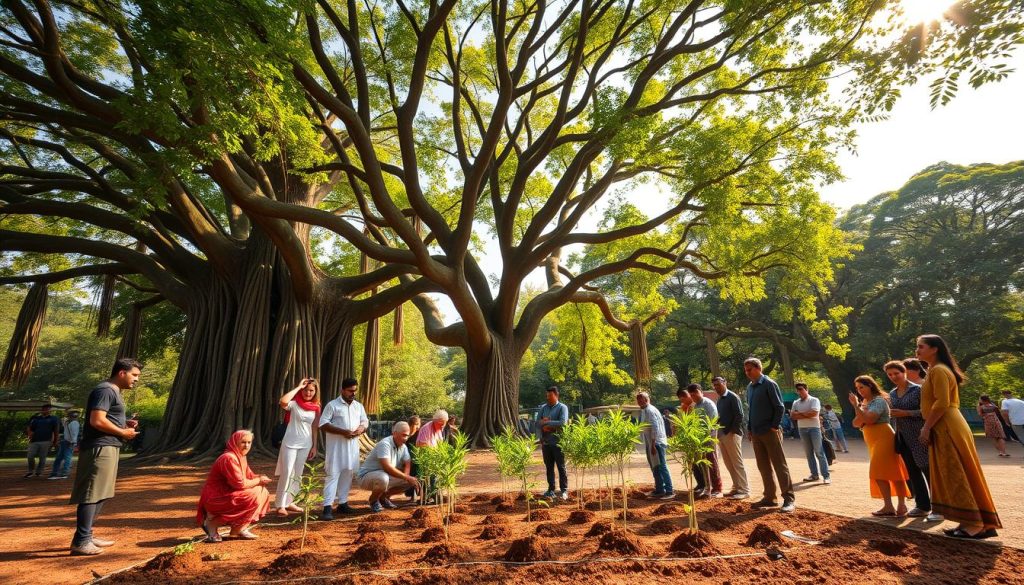
Across the globe, local groups are stepping up to defend these ecological pillars from threats like deforestation and urban sprawl. I believe protecting these banyan trees is a primary goal for many conservation projects. They are essential for maintaining the health of their local ecosystem.
Simple community efforts can make a big difference. Erecting fences around hanging aerial roots helps young trees reach the ground. This support allows them to establish themselves firmly.
I am encouraged by decisive leadership actions. In 2021, Xi Jinping intervened to punish officials for cutting down thousands of these trees in Guangzhou. Such measures highlight the importance of legal protection.
Education is key for long-term success. These projects teach citizens about the banyan’s value. This ensures future generations can enjoy these magnificent plants.
We can all contribute. Measuring our ecological footprint and supporting carbon offset companies helps. It directly aids the protection of vital species.
| Conservation Action | Direct Benefit | Community Role |
|---|---|---|
| Physical Root Protection | Secures growth and stability for young trees | Building supports and barriers |
| Legal and Policy Advocacy | Prevents unauthorized removal and damage | Raising awareness and reporting violations |
| Public Education Programs | Fosters stewardship and cultural appreciation | Hosting workshops and school visits |
| Carbon Offset Support | Funds broader habitat and canopy preservation | Choosing responsible companies and measuring impact |
The sustainability of this plant depends on our willingness to act. We must shield its roots, branches, and canopy from harm. Our conservation efforts are a direct investment in our planet’s future.
Conclusion
The journey we’ve traced is one of nature’s most patient and powerful transformations. It begins with a single seed and unfolds into a sheltering giant. This process is a stunning display of adaptation and endurance.
I hope this guide has given you a new perspective. You can now see the intricate connections, from unique pollination to cultural heritage. Protecting this remarkable organism means safeguarding entire ecosystems for the future.
Our responsibility is clear. We must ensure these living landmarks continue to thrive. Let’s work together to preserve their majestic presence for generations to come.