

Ethan Brooks
Focused on sustainable practices, careful seed selection, and hands-on experience, our family work closely with nature to produce quality harvests while continuously learning and improving each year..
Latest Posts


Archive
Tags
Social Links


I know how frustrating it is when your garden gives leaves but not lots of squash. After years of trial and error, I can tell you that the Best Fertilizer for Zucchini makes a clear difference in fruit and flower counts.
When you are growing zucchini, the right nutrients at the right time keep plants vigorous and productive all summer. Good soil, steady water, and timely compost feed strong roots and healthy growth.
Stick with me and I will walk you through the simple steps I use to boost blooms and harvests. You’ll learn what to add, when to feed, and how to avoid common mistakes that leave fruits stunted.
Key Takeaways
- Strong roots and good soil prep set the stage for high yields.
- Timing nutrient feeds matters during flower and fruit set.
- Compost plus targeted nutrients supports steady growth.
- Too much nitrogen delays fruit; balance phosphorus and potassium.
- Consistent watering and weekly checks keep plants productive.
Understanding the Nutritional Needs of Zucchini
I focus on the roles each nutrient plays so my zucchini set flowers and fruit instead of just leaves.
The Role of NPK
A balanced fertilizer like 10-10-10 supplies nitrogen, phosphorus, and potassium to support steady growth. Nitrogen fuels leafy growth while phosphorus and potassium help roots, flowers, and fruit develop.
The Role of NPK
Phosphorus and potassium are critical for root strength and bloom production. I use a balanced fertilizer early and pair it with compost to maintain healthy soil and steady nutrients all season.
Avoiding Nitrogen Overload
Too much nitrogen makes plants grow fast and leafy, but it often reduces squash set. Excess nitrogen also makes leaves tender and more prone to aphids and powdery mildew.
- I recommend a balanced fertilizer such as 10-10-10 to avoid excess leaf growth.
- Watch for lots of leaves but few flowers — that often signals too much nitrogen.
- Monitor soil and plants so you can adjust feeding through the summer.
| Nutrient | Primary Benefit | Too Much Causes |
|---|---|---|
| Nitrogen | Leaf growth, green vigor | Excess foliage, fewer flowers, pest attraction |
| Phosphorus | Root development, flower set | Poor bloom and weak roots if deficient |
| Potassium | Fruit development, disease resistance | Low yield and weak fruit if lacking |
Selecting the Best Fertilizer for Zucchini
Choosing the right feed gives zucchini plants the steady boost they need to set tight clusters of flowers and fruit.
I rely on expert advice like Amy Enfield, a senior horticulturist with over 25 years of experience, who stresses that timely fertilizing is crucial for high-yield vegetable crops.
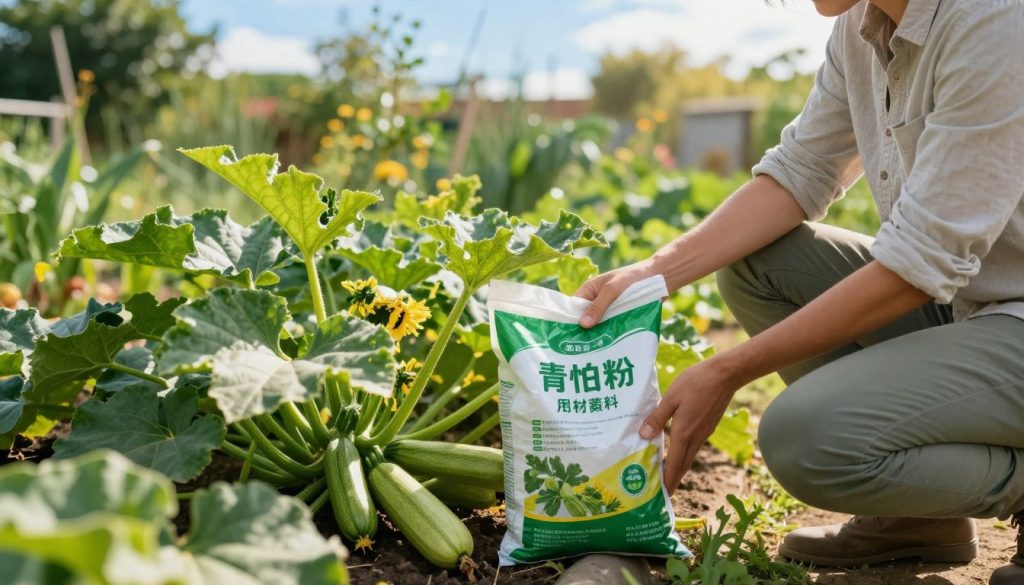
I favor products with a balanced ratio of nitrogen, phosphorus, and potassium. Espoma’s Garden-Tone (3-4-4) is a solid organic choice I use early in the season.
For richer soil when planting, chicken manure pellets work well. They slowly release nutrients and help plants grow without spiking leafy growth.
- I check labels to match nutrients to my soil needs and always test the soil before planting.
- Granular or liquid options both work; the goal is steady feedings so fruits and flowers set.
| Option | NPK | Best Use |
|---|---|---|
| Garden-Tone (Espoma) | 3-4-4 | Organic, season-long feeding |
| Chicken manure pellets | Variable | Soil enrichment at planting |
| Balanced granular | 10-10-10 | Prevent nitrogen overload, steady growth |
Want a deeper guide to planting and feeding? Check my step-by-step notes on how to grow zucchini.
Preparing Your Soil Before Planting
Healthy zucchini start with soil that holds water, drains well, and teems with life. I always test pH first. Aim for a range between 6.0 and 6.5 so vine crops set flowers and fruit without stress.
Incorporating Organic Matter
I mix well-rotted compost or manure into the top 6–8 inches of soil to improve drainage and add steady nutrients. This helps roots find water and air quickly when seeds or seedlings go in.
Avoid fresh manure. It can carry bacteria and spur weeds in your garden. Well-aged compost also inoculates the soil with helpful microbes that support healthy zucchini plants all summer.
- I test soil pH and adjust before planting.
- I work in compost or aged manure to the top 6-8 inches for better structure.
- I add a light, balanced fertilizer at planting to give young plants a start.
| Step | Why it matters | Tip |
|---|---|---|
| pH test | Ensures nutrient uptake | Adjust with lime or sulfur as needed |
| Add organic matter | Improves drainage and microbes | Use well-rotted compost or manure |
| Loose soil | Roots access water and nutrients | Work soil to 6-8 inches before planting |
Establishing a Consistent Feeding Schedule
Keeping a steady routine helps zucchini thrive. I start with timing and simple rules so my plants grow strong and set fruit.
Feeding Seedlings
I wait to sow seeds until soil reaches at least 70° F at two inches. Once true leaves appear, I feed seedlings at half-strength every two to three weeks.
Managing Direct Sown Seeds
When I plant seeds directly, I keep soil moist but not soggy. Seeds need warmth to germinate and steady water to help roots establish.
Supporting Flowering Plants
As flowers form, I increase feeding frequency slightly to support fruit set. I never let fertilizer contact leaves in hot sun — that can burn the plant.
- I apply about 1 inch of water per week from rain or irrigation during the growing season.
- I add compost or organic matter to the soil at planting to supply steady nutrients.
- Follow a half-strength feed every two to three weeks once flowers begin for best harvest results.
| Stage | Action | Timing |
|---|---|---|
| Seeds | Plant when soil ≥70° F | Before sowing |
| Seedlings | Feed half-strength | Every 2–3 weeks |
| Flowering | Increase feeding slightly | Through fruit set |
Avoiding Common Fertilization Mistakes
Small application errors can ruin a season of squash before flowers open. I keep my routine simple so my zucchini plants stay healthy and productive.
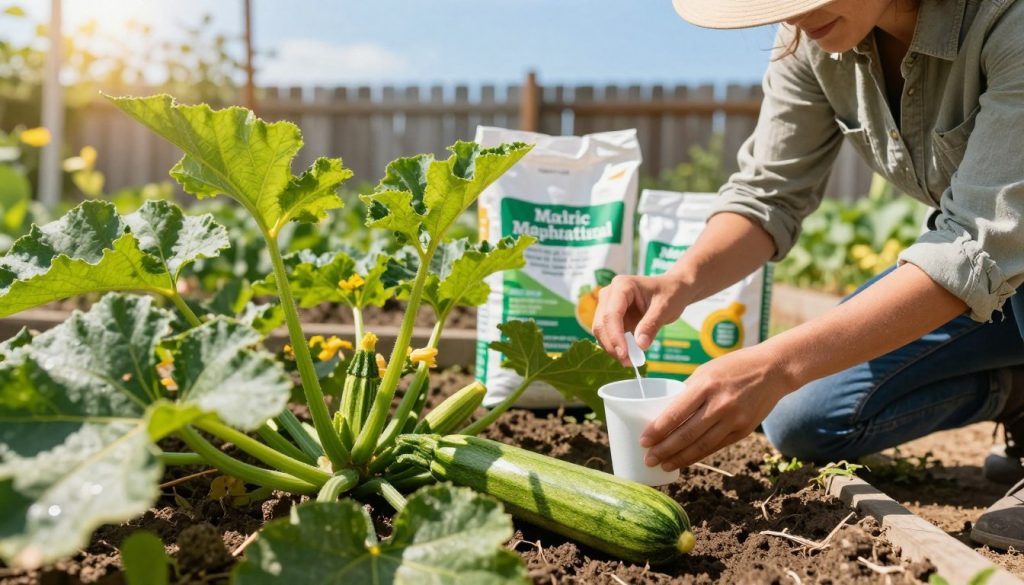
Placement matters. I always put granular fertilizer about 2–3 inches away from the stem to avoid burning the roots. Then I lightly scratch it into the top 2–3 inches of soil so nutrients reach the root zone quickly.
Water first. One of the biggest mistakes is fertilizing dry soil. I wet the ground for 15–20 minutes before adding any nutrients. That step prevents root burn and helps feeds dissolve into the soil.
- I never use “Weed and Feed” products on vegetables; the herbicides will harm my squash.
- I watch leaves and stems for wilting or yellowing — those signs tell me to adjust feeding or water.
- I always read labels to confirm a product is safe on edible crops before I apply it.
| Mistake | Why it harms plants | Fix |
|---|---|---|
| Placing granules at stem base | Burns roots and stunts growth | Spread 2–3 inches away and scratch into topsoil |
| Fertilizing dry soil | Concentrates salts at roots, causes burn | Water 15–20 minutes before applying |
| Using lawn “Weed and Feed” | Herbicides can kill vegetable plants | Use vegetable-safe fertilizers only; check label |
If you want a refresher on timing and product choices, see my practical guide on how to fertilize zucchini. By avoiding these common errors, I protect roots, boost flowers, and increase harvests all summer.
Does Understanding the Zucchini Life Cycle Help in Choosing the Best Fertilizer for Maximum Fruit Production?
Understanding the zucchini life cycle is essential for effective zucchini plant care tips. By knowing the growth stages, you can select fertilizers rich in nutrients needed at each phase. This targeted approach ensures your zucchini plants thrive, ultimately leading to maximum fruit production in your garden.
Supporting Plant Health with Micronutrients
Micronutrients are the quiet helpers that keep my plants flowering and pest-resistant.
Seaweed supplements give a gentle boost of calcium, magnesium, and zinc. I use them alongside a balanced fertilizer, not instead of it. This ensures the soil has both major and minor nutrients my zucchini need.
Calcium is the key I watch most closely. It helps prevent blossom end rot that can spoil fruit before harvest. I foliar-spritz seaweed feed at low strength when flowers form.
I also add small soil applications of magnesium and zinc if leaf tips yellow or flowers fail to set. These trace elements help roots take up phosphorus and potassium, so flowers and fruit develop better through summer.
- I use micronutrients in addition to regular fertilizer to keep nutrients balanced.
- I choose high-quality seaweed products labeled for edible gardens.
- Apply lightly and test soil if problems persist.
| Micronutrient | Primary Benefit | When to Apply | Common Source |
|---|---|---|---|
| Calcium | Prevents blossom end rot | At flowering and fruit set | Seaweed feed, lime |
| Magnesium | Supports chlorophyll, green leaves | When leaf margins yellow | Epsom salt, seaweed |
| Zinc | Boosts flower development | Early bloom stage | Seaweed, trace mixes |
Want a practical routine? See my notes on zucchini fertilizing for timing and product ideas.
Conclusion
Wrap up your zucchini run by focusing on simple, repeatable habits that boost yield.
Give plants steady care: prepare soil, keep a regular schedule, and water on a routine so leaves and flowers stay healthy.
I recommend a light feed of fertilizer at key times and small boosts of micronutrients when blooms form. Watch for excess nitrogen and adjust if growth favors foliage over fruit.
Follow the tips on planting, seeds, and weekly checks. With steady fertilizing and attention, your garden will reward you with summer squash and a generous harvest.
Thanks for joining me on this gardening journey — happy growing.