

Ethan Brooks
Focused on sustainable practices, careful seed selection, and hands-on experience, our family work closely with nature to produce quality harvests while continuously learning and improving each year..
Latest Posts


Archive
Tags
Social Links
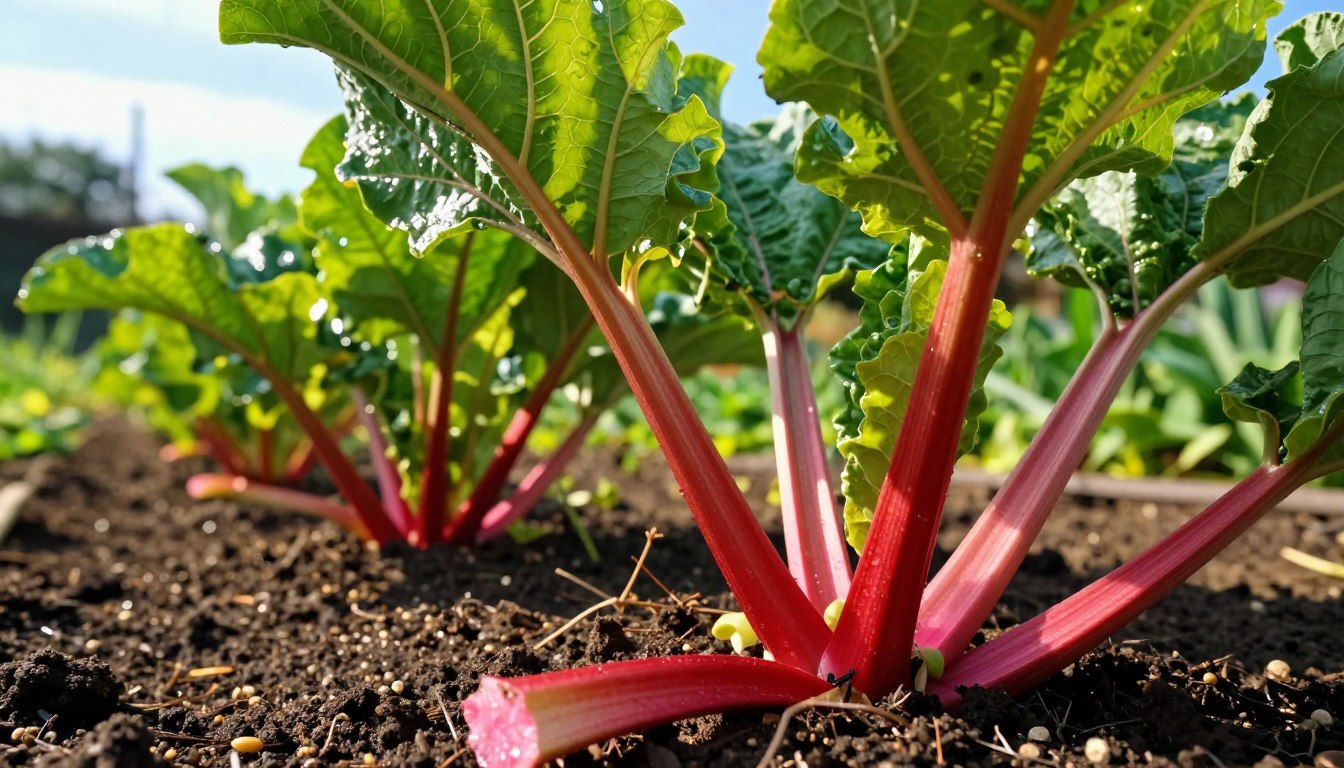

I grow rhubarb as a hardy, reliable perennial vegetable in my Minnesota garden. I use one clear approach to help the crown and stalks produce well: steady soil care with compost or manure each spring.
I give each plant a three-foot-by-three-foot area so the roots and crown can expand. I water regularly and add organic matter to keep nutrients steady through the season.
Rheum rhabarbarum tolerates cold (USDA Zone 4), but it rewards patient care. I wait until the second year to harvest, choose vigorous varieties, and keep weeds at bay so leaves can shade the soil.
Key Takeaways
- Use compost or manure each spring to boost soil nutrients.
- Give each plant a three-foot-by-three-foot area for the crown.
- Water consistently and add organic matter through the year.
- Wait until year two to harvest for stronger stalks and growth.
- Select vigorous varieties and manage weeds early in the season.
Understanding the Nutritional Needs of Rhubarb
My rhubarb crowns need rich, active soil to support those large leaf fans and thick stalks. This perennial vegetable is a true heavy feeder, and I plan nutrient supply around that fact.
Heavy Feeding Habits
The rhubarb plant takes up large amounts of nitrogen, phosphorus, and potassium as it develops. I apply a balanced fertilizer in early spring to jumpstart growth and to feed expanding crowns.
I also watch different varieties closely, since some plants draw more from the bed than others. Regular checks help me avoid nutrient gaps that stunt stalks or dull leaves.
Ideal soil pH sits around 5.5 to 6.5, but composition matters as much as acidity. I add compost or manure to enrich the matter and improve root activity.
If a soil test shows high phosphorus, I avoid high-phosphorus mixes and choose balanced options instead. That keeps my garden healthy and ensures steady seasonal growth.
Selecting the Best Fertilizer for Rhubarb
I choose a balanced formula that gives steady nutrients in spring and fall. I typically apply about 1/2 cup of 10-10-10 around plant bases in early spring and again in autumn.
The crown is sensitive, so I spread fertilizer in a circle around the crown rather than on top of it. This protects roots and helps steady growth of stalks and leaves.
Good planting starts with well-drained soil amended with compost or well-rotted manure. I avoid fresh manure because it can burn roots and upset soil nutrients such as phosphorus and potassium.
- I check varieties; some rhubarb plants need more feed to produce thick stalks.
- Nursery-grown crowns are usually virus-free; divisions may carry risks.
- Prepare soil during planting so roots establish within the first two feet.
| Item | When | Amount | Reason |
|---|---|---|---|
| 10-10-10 balanced mix | Early spring & fall | 1/2 cup per plant | Even nutrient supply for crowns and steady growth |
| Well-rotted manure | At planting | 2–3 inches mixed into soil | Adds phosphorus and potassium without burning roots |
| Compost | Spring top-dress | 1–2 inches | Improves soil structure and long-term nutrients |
| Placement | Each application | Around plant base, not on crown | Protects crowns and targets root zone |
Timing Your Fertilizer Applications for Maximum Yield
I begin nutrient applications as buds swell, giving each crown the start it needs for vigorous growth. Early spring feeding sets the tone for the growing season and helps stalks form strong and steady.
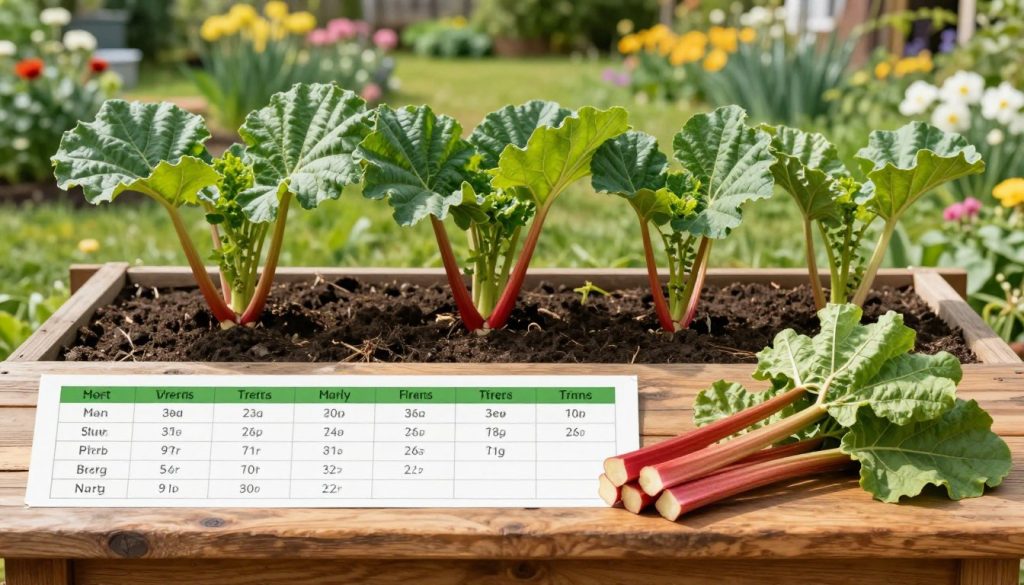
Seasonal Feeding Schedules
Spring: I apply a measured dose of balanced fertilizer and a light top-dress of compost around the plant, keeping the crown clear. This jumpstarts leaf and crown development without burning roots.
Summer: I stop nitrogen-heavy feed after the end of June so the plant can prepare for dormancy. Instead, I focus on deep watering—soaking soil to at least one inch each week—to help roots take up nutrients already in the soil.
Fall: I give a light, balanced application in autumn if the soil test shows need. Then I reduce feeding so crowns can harden off before winter.
- I time applications with the start of spring growth to maximize harvest.
- I always spread nutrients in a circle around the crown, not on top, to avoid rot.
- Consistent yearly schedules and regular soil checks keep plants productive.
For a complete seasonal plan and planting tips, see how to grow rhubarb in my garden notes.
Best Practices for Soil Preparation and Organic Matter
I prepare my bed deeply and deliberately to give rhubarb the best start. I loosen soil to at least two feet so roots can explore, then mix in organic matter before planting.
Using Compost and Manure
I add about 40L of well-rotted manure or garden compost per square meter before planting. This builds steady nutrients and improves structure.
- Timing: work compost in during spring or at planting time.
- Amount: 40L per sqm avoids nutrient overload while feeding crowns and roots.
- Note: use well-rotted material; avoid fresh manure that can burn roots.
Incorporating Organic Matter
After mixing compost, I apply a 5–7cm mulch layer in early spring. Mulch saves moisture and feeds soil as it breaks down through summer.
Avoiding Crown Damage
Keep the crown clear. I never pile heavy manure or compost over rhubarb crowns in winter. That can trap moisture and cause rot.
| Action | When | Amount |
|---|---|---|
| Deep tilling | Before planting | 2 feet depth |
| Organic amendment | At planting | 40L per sqm |
| Mulch layer | Early spring | 5–7 cm |
Proper soil prep takes time, but it pays off. When I protect the crown and feed the soil, my rhubarb plants stay productive year after year.
Essential Care Tips for Healthy Rhubarb Plants
Careful, steady attention through spring and summer keeps my rhubarb productive for years. I give crowns space, remove weeds, and watch soil moisture so stalks grow strong.
Water early in the day to let the surface dry and avoid diseases. During the growing season I water deeply so the soil stays moist but not waterlogged.
I divide my crowns about every five years to boost vigor. Older crowns can slow down and attract pests if left unchecked. I also clip flower stalks as soon as they appear so energy stays with the leaves and stalks.
In winter I may add a light straw layer over the crowns in very cold areas. This extra layer protects crowns without trapping moisture next to the plant.
- I keep the area clear in the first year so new plants get space and nutrients.
- I monitor for pests and diseases and ensure crowns sit in well-drained soil.
- For more on timing and nutrient care, see feeding rhubarb.
| Care Action | When | Why |
|---|---|---|
| Deep watering | Growing season | Encourages root depth and steady growth |
| Divide crowns | Every ~5 years | Maintains vigor and reduces pest risk |
| Remove flower stalks | As they appear | Preserves energy for stalk and leaf production |
| Winter straw layer | Severe winter | Protects crowns from extreme cold |
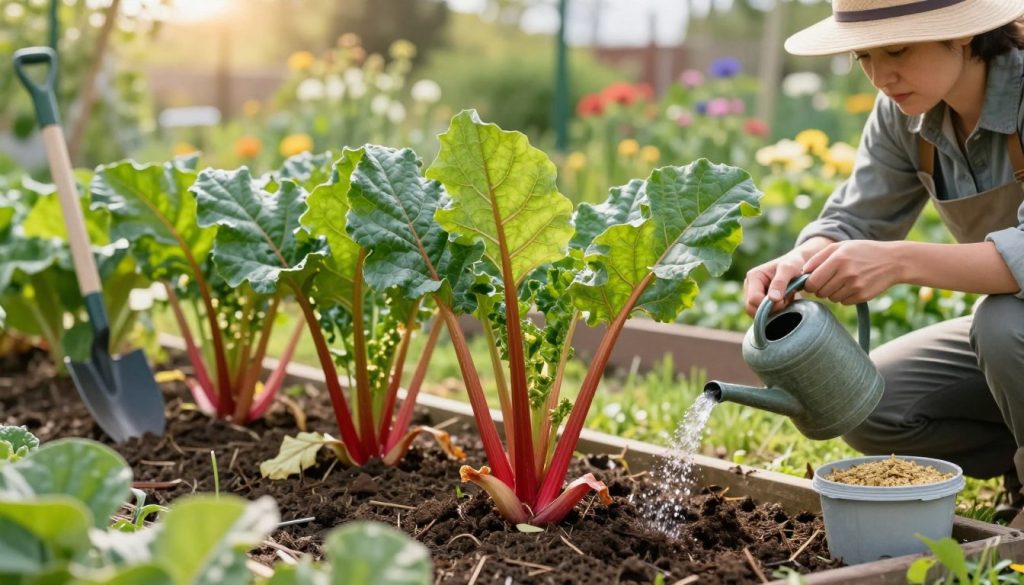
What Fertilizer Should I Use When Planting Rhubarb for Optimal Growth in the US?
To achieve optimal growth for rhubarb, use a balanced fertilizer rich in nitrogen and potassium. Organic options like compost or well-rotted manure are beneficial as they improve soil structure. For comprehensive guidance, consider incorporating when to plant rhubarb tips, ensuring your rhubarb is nurtured from the start.
Managing Pests and Diseases in Your Rhubarb Patch
I focus on simple cultural controls before reaching for sprays in my rhubarb patch. I scout weekly and act at the first sign of chewing, holes, or odd spots.
Rhubarb curculio is a dark, snouted beetle about 1/2 to 3/4 inch long. It can bore into the crown, so I check stalks and crowns often. I remove nearby weeds like curly dock because they host these beetles.
Leaf spots such as Ascochyta rhei and Ramularia rhei show as brown or tan patches on rhubarb leaves. To limit spread, I remove infected foliage after the first hard frost and dispose of it away from the bed.
- I keep the patch clean and well-drained to avoid crown rot from saturated soil.
- If a plant shows unusual growth or color, I pull it out to stop viruses from spreading.
- I encourage birds and beneficial insects to control slugs and snails that nibble new rhubarb leaves.
- Regular inspections of stalks help me catch boring insects early and protect the whole patch.
Conclusion
A small routine of soil care and timely feeding keeps my patch productive year after year. I focus on adding compost in spring, watering deeply, and protecting the crown so roots stay healthy.
Simple steps yield steady results. I check soil, apply a light dose of fertilizer when shoots begin, and spread well-rotted manure at planting or in autumn as needed.
I also watch plants for pests and divide crowns every few years to keep growth strong and the harvest regular. For a practical seasonal plan, see the rhubarb how to grow guide.