

Ethan Brooks
Focused on sustainable practices, careful seed selection, and hands-on experience, our family work closely with nature to produce quality harvests while continuously learning and improving each year..
Latest Posts


Archive
Tags
Social Links
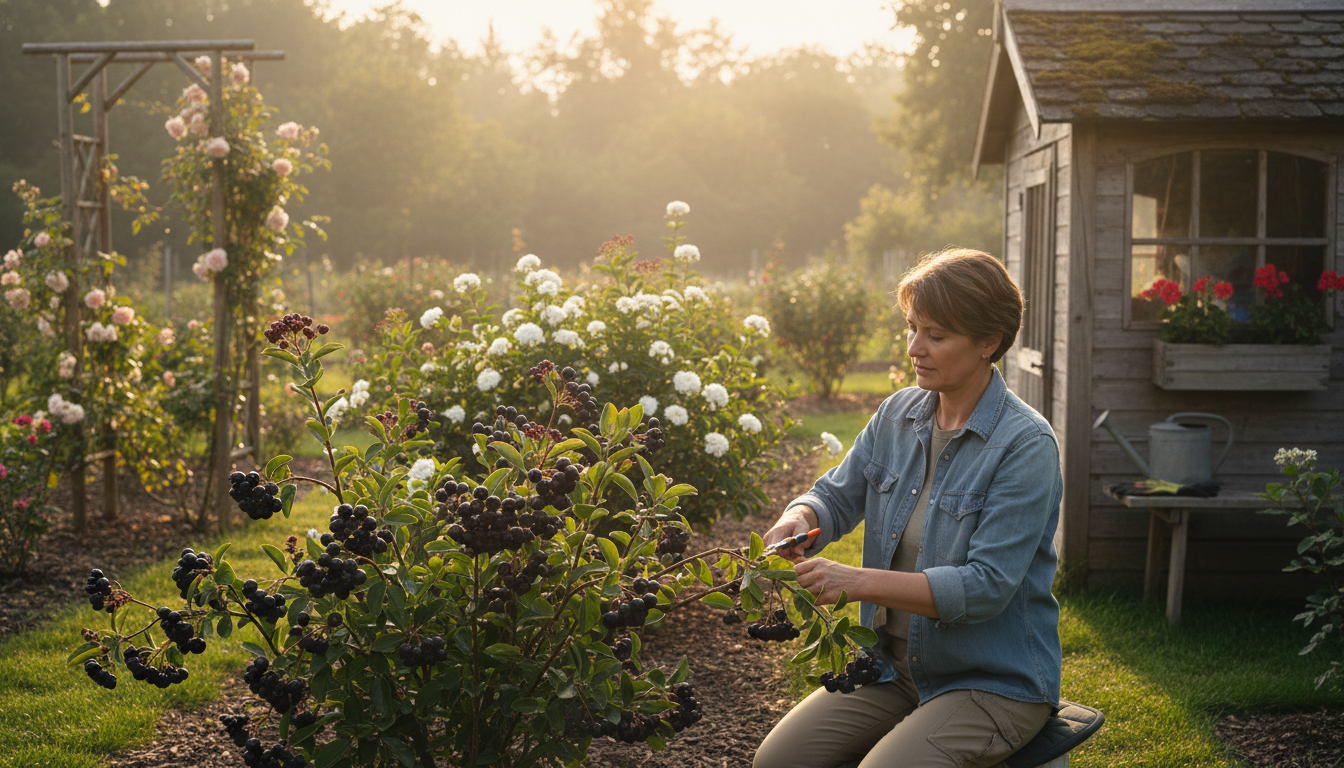

Welcome to the exciting world of aronia berries! I’m thrilled to share my journey with this forgiving native shrub that can transform your garden. If you’re a home gardener, you’ll find that growing aronia is not only simple but also incredibly rewarding.
These nutritious berries are packed with health benefits, making them a fantastic addition to your backyard. I remember my first encounter with aronia and how surprised I was to learn about its rich history in North America. This low-maintenance plant offers beauty across all seasons, from spring blooms to vibrant fall foliage.
You don’t need a green thumb to succeed with aronia. This shrub thrives in various conditions, making it perfect for beginners. Join me as I guide you through the easy steps to enjoy a bountiful harvest of these delicious fruits!
Key Takeaways
- Aronia is a low-maintenance shrub ideal for beginners.
- It offers beauty in all seasons with flowers, berries, and foliage.
- The berries are rich in vitamins and antioxidants.
- Growing aronia can be done in various conditions.
- Harvesting is simple and rewarding.
Introduction to Aronia Berry and Its Varieties
Let me introduce you to the remarkable world of aronia berries, a resilient native shrub that has captured my heart. Known for their superfood qualities, these berries offer a wealth of benefits and delicious flavors. You might have heard the term “chokeberry,” which can sound a bit off-putting. However, this name stems from the tartness of the fresh fruits, not from any harmful properties.
There are two primary species of aronia that I grow in my garden: the black chokeberry (Aronia melanocarpa) and the red chokeberry (Aronia arbutifolia). The black chokeberry is particularly popular among home gardeners due to its hardiness and fruit production. Additionally, there’s the purple chokeberry (Aronia prunifolia), a natural hybrid that also deserves attention.
Different Species and Popular Varieties
When it comes to cultivated varieties, I have my favorites. For instance, the Low Scape Mound® is a compact groundcover that stays under two feet tall, perfect for smaller spaces. On the other hand, the ‘Viking’ variety produces larger fruits, making it ideal for processing into jams or juices. Other notable varieties include:
- Ground Hug™ – Low spreading, 8-14 inches tall.
- Low Scape Snowfire® – Upright, 3-4 feet tall.
- Autumn Magic – Compact, 4-6 feet tall.
- Iroquois Beauty™ – Compact, 2-4 feet tall.
In spring, my aronia shrubs burst into life with clusters of white, five-petaled flowers that feature pink-tipped stamens. These blooms not only beautify my garden but also attract pollinators. As summer transitions into fall, the foliage transforms into stunning hues of red and orange, creating a vibrant display.
Health Benefits of Aronia Berries
The health benefits of aronia berries are impressive. These fruits are rich in antioxidants, vitamin C, and flavonoids, which support immune health and overall well-being. Some key benefits include:
- Boosting the immune system.
- Reducing cell damage linked to cancer.
- Improving liver function.
- Protecting against coronary disease.
- Alleviating inflammation associated with diabetes.
After harvesting, I often process my berries into delicious jams, juices, and teas. This not only tempers their natural tartness but also preserves their remarkable health-promoting compounds. Plus, I can confidently say that aronia is safe for pets and children, allowing me to plant them anywhere in my yard without worry.
As winter approaches, the shiny, blueberry-like fruits remain on the bushes, providing a late-season food source for songbirds when other natural foods are scarce. The resilience and beauty of aronia make it a fantastic addition to any garden.
How to Grow Aronia Berry: Choosing the Right Location and Soil
Choosing the perfect spot for your aronia plants can make all the difference. These shrubs thrive in various conditions, but their growth is best when they receive adequate sunlight and suitable soil. Let’s explore the essential factors to consider when selecting a location for your aronia bushes.
Sunlight Requirements
Aronia plants flourish in both partial shade and full sun. However, I’ve noticed that they produce the most flowers and berries when they receive at least six hours of full sun each day. In my experience, aiming for eight hours of direct sunlight leads to even better results. If planted in too much shade, the growth can become weak, and the fruit yield may suffer.
Soil Preferences and Preparation
These resilient plants do best in moist, well-draining soil that is slightly acidic, with a pH around 6.3 to 6.8. I’ve had great success by mixing an inch or two of organic matter, like compost or peat, into the planting area. This preparation helps create an environment where the roots can thrive.
Interestingly, aronia can tolerate a wide range of soils, including sandy and clay types. I’ve even grown them in areas with heavy clay and occasionally waterlogged spots. This adaptability makes them a fantastic choice for various garden conditions.
USDA Hardiness Zones Suitable for Aronia
Aronia is hardy in USDA zones 3 through 9. This means that whether you face the cold winters of zone 3 or the heat of zone 9, these plants can thrive. Before planting, check your local zone to ensure aronia is a suitable choice for your area.
In preparing the planting area, I usually make it two to three times wider than the root ball. This loosening of the soil encourages strong root growth from day one. Additionally, applying a two to four-inch layer of mulch around the plants helps retain moisture and suppress weeds throughout the growing season.
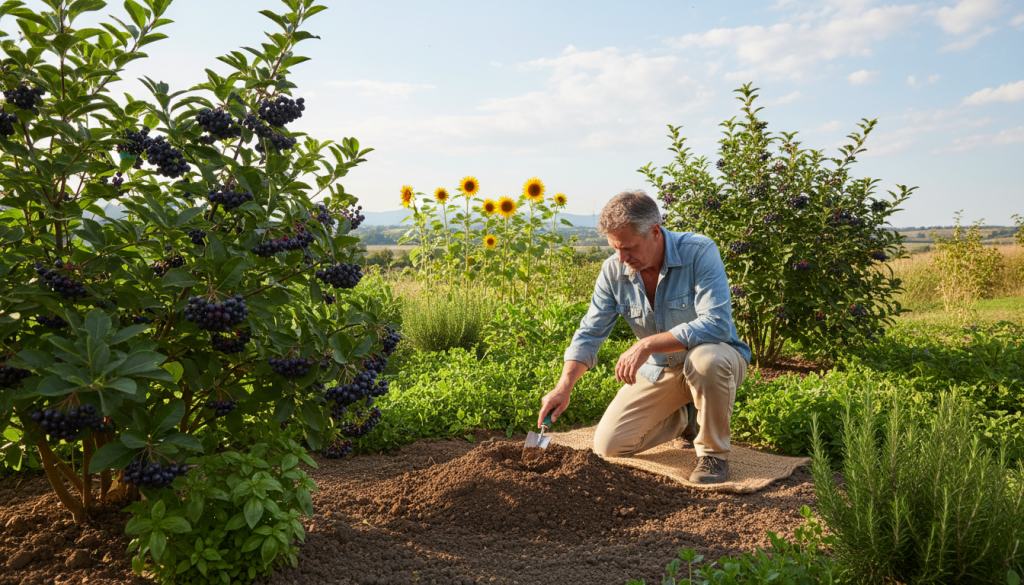
Planting Your Aronia Berry Bush
The journey of planting aronia plants begins with understanding the right techniques. Timing is essential for successful establishment. I’ve found that planting in early spring or fall yields the best results. During these seasons, temperatures are mild, allowing roots to settle in without stress.
When to Plant: Timing for Best Results
Choosing the right time is crucial. I prefer planting my aronia bushes when the weather is moderate. This gives them a chance to grow strong and healthy. Aim for spring or fall, as these seasons provide the ideal conditions for your new plants.
Step-by-Step Planting Instructions
Now, let’s dive into the process. Start by loosening the soil in an area that is three times wider and deep as the container. This creates a spacious environment for the roots to expand. If your plants are pot-bound, gently tease out the roots. This simple step prevents circling roots and encourages outward growth.
Next, dig a hole that matches the size of the root ball. Position the plant so the top of the root ball is level with the surrounding soil. After that, fill in the hole with soil and tamp it down gently. This helps eliminate air pockets. Finally, give your newly planted aronia a thorough watering.
Proper Spacing Between Plants
Understanding spacing is vital for growth. I space my full-sized aronia bushes four to six feet apart. This allows them to mature without overcrowding. For compact varieties like Low Scape Mound®, I plant them closer together, about two to three feet apart. This arrangement works well for creating a low hedge or groundcover effect.
Additionally, I always plant at least two aronia bushes near each other. This encourages cross-pollination, resulting in larger berries and more abundant harvests. If you’re considering container planting for dwarf varieties, use a twenty-gallon pot with quality potting mix for optimal growth.
Remember to water consistently during those critical first weeks after planting. Establishing a strong root system is key to long-term success. Enjoy the process, and soon you’ll be rewarded with delicious aronia berries!
Care and Maintenance for Thriving Aronia Plants
Proper care for aronia bushes leads to vibrant growth and plentiful fruits. Understanding how to nurture these resilient plants will ensure they thrive throughout the seasons. Let’s dive into essential practices for watering, fertilizing, and pruning your aronia shrubs.
Watering Guidelines for Different Growth Stages
Watering is crucial for the establishment and growth of aronia plants. During the first growing season, I keep the soil consistently moist. This helps the roots establish deeply. Once established, my mature aronia bushes are surprisingly drought-tolerant. However, I still provide about an inch of water weekly for optimal fruit production.
During extreme heat waves or prolonged dry spells, I give my plants extra deep soaks. This prevents stress and reduces the risk of berry drop. A general rule is to provide one inch of water per week over the root zone. For a three-foot diameter planting hole, that translates to about 7½ to 10 gallons per week. It’s best to apply water once or twice weekly rather than lightly each day.
Fertilizing and Soil Amendments
One of the great things about aronia is that they need very little fertilizer. If desired, I apply a balanced slow-release fertilizer in spring. Additionally, I add a thin layer of compost around the base of the plants. This enriches the soil and supports healthy growth.
I’ve learned to avoid fertilizing after early summer. Late-season feeding can encourage tender new growth, which is vulnerable to winter cold. Keeping this in mind helps maintain the health of my aronia shrubs.
Pruning Tips to Maximize Fruit Production
Pruning is essential for maximizing fruit production while maintaining plant health. I begin by removing dead or diseased branches in late winter while the plant is still dormant. It’s important to note that aronia blooms on old wood, so I prune lightly and only when necessary. This approach ensures I don’t sacrifice flowers and fruit.
Managing suckers that pop up around the base is also vital. I remove these promptly to prevent unwanted spreading. To rejuvenate my plants, I thin out about a third of the oldest stems every few years. This stimulates vigorous new growth.
For older specimens, I find that a more severe cutback every several years can completely revitalize a tired, overgrown aronia shrub. Taking them down to a few feet tall encourages healthy regrowth and improves overall vitality.
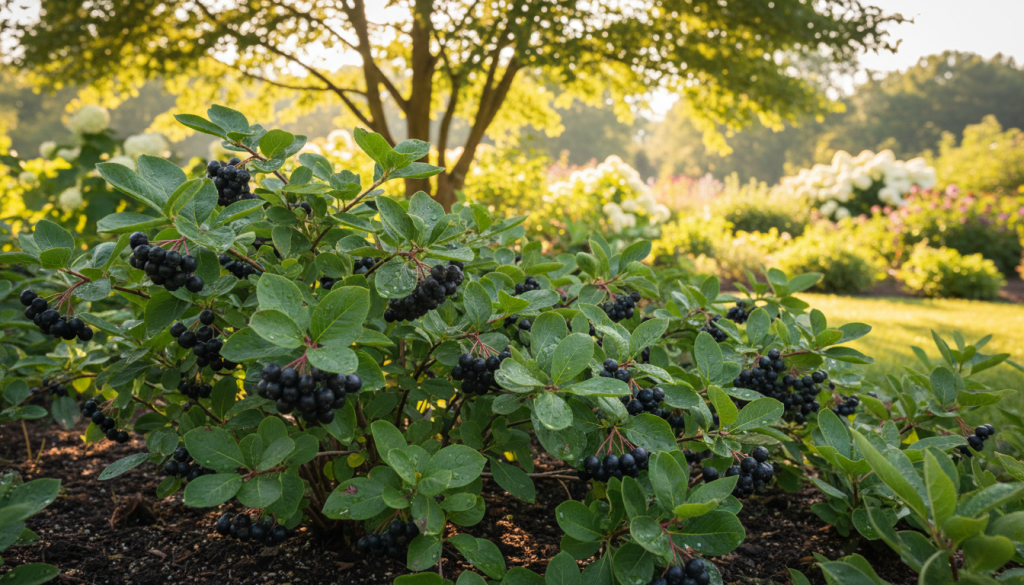
Managing Common Pests and Diseases
Keeping aronia plants healthy involves being aware of potential pests and diseases. While these shrubs are generally resilient, some issues can arise. I’ve learned effective strategies to manage these challenges, ensuring my plants thrive and produce delicious berries.
Typical Insect Pests Affecting Aronia
Although aronia is naturally pest-resistant, I still monitor for a few common insects. Here are the main culprits:
- Aphids: These tiny pests can appear in late spring and summer. I find that a strong spray of water effectively knocks them off before I need to consider treatments.
- Spotted Wing Drosophila: This pest targets ripening fruit. Symptoms include holes in the berries and larvae inside. I maintain good sanitation around my plants to prevent infestations.
- Fall Webworm: They create unsightly webs in the foliage. I prune affected areas to keep my plants looking their best.
- Brown Marmorated Stink Bug: This pest causes decay through its feeding. Monitoring and managing it is essential.
Encouraging beneficial insects like ladybugs and parasitic wasps helps control these populations naturally.
Common Diseases and Their Prevention
Aronia plants can occasionally face diseases, but proper care can prevent most issues. Here are some common diseases:
- Leaf Spot: This can appear as dark spots on leaves. Ensuring good air circulation through proper spacing can help prevent it.
- Powdery Mildew: This white fungal growth can occur in humid conditions. I manage it by ensuring adequate spacing and airflow.
- Rust: Symptoms include lesions on the upper leaf surface. I apply copper fungicide after harvest and again in early spring as a preventive measure.
Animal Browsing and Protection Methods
Protecting my aronia plants from animals is essential, especially when they are young. Here’s what I do:
- Deer: These animals can be a problem for young plants. I use at least eight-foot fencing to keep them away until the bushes are well established.
- Birds: I’ve noticed that birds love my ripening berries. To protect my harvest, I use reflective scare tape and bird netting.
- Voles and Rabbits: These small animals can damage the bark. I keep mulch pulled back from the trunk and use vinyl tree guards on young plants.
- Ants: They can protect aphids and scale. I apply sticky barrier traps, like Tangle Trap, to manage their activity.
By implementing these strategies, I ensure my aronia plants remain healthy and productive. With the right care, I can enjoy a bountiful harvest each season.
Can I Use Similar Growing Techniques for Aronia Berries and Elderberries in My Home Garden?
When planning your home garden, you can apply many elderberry farming tips for beginners to aronia berries as well. Both thrive in similar conditions, requiring well-drained soil and full sun. However, tailored care for each will enhance their growth, ensuring a bountiful harvest of these nutritious berries.
Landscaping with Aronia Berries: Ideas for Your Garden
Exploring creative landscaping ideas with aronia can enhance your garden’s beauty and functionality. These versatile shrubs not only produce delicious berries but also add stunning visual interest throughout the year. Let’s dive into some inspiring ways to incorporate aronia into your garden design.
Using Aronia in Edible Gardens
I love using aronia in my edible garden. Compact varieties like Low Scape Mound® fit perfectly into raised beds alongside vegetables and herbs. This combination creates a beautiful, productive mix that is both practical and visually appealing.
Creating Privacy Screens and Hedges
For a stunning privacy screen, I’ve planted a row of ‘Viking’ aronia along my property line. This arrangement not only provides gorgeous white spring flowers and summer berries but also showcases fiery fall foliage. The result is a lush, vibrant barrier that enhances my outdoor space.
Companion Plants and Wildlife Benefits
Aronia shrubs can thrive alongside various native plants, creating a haven for wildlife. I’ve noticed that many songbirds, including bluejays and cardinals, enjoy the persistent winter berries. Here are some companion plants that work beautifully with aronia:
- Prairie Winds® ‘Lemon Squeeze’ fountain grass for texture contrast.
- Rockin® Deep Purple salvia to attract pollinators.
- Gatsby Pink® oakleaf hydrangea for stunning blooms.
- Berry Poppins® winterberry to provide additional food sources.
Integrating these plants with aronia not only enhances the garden’s beauty but also supports local wildlife, creating a vibrant ecosystem.
Whether you’re creating an edible garden, a privacy screen, or a wildlife-friendly landscape, aronia offers endless possibilities. With its adaptability and stunning features, this shrub is a fantastic choice for any garden enthusiast.
Conclusion
In closing, I want to share my enthusiasm for the incredible benefits of growing aronia in your own space. This versatile shrub is one of the easiest and most rewarding plants to add to your landscape. You’ll enjoy three full seasons of beauty, from delicate white flower clusters in spring to glossy berries in summer and stunning red and orange foliage in fall.
Aronia thrives in various conditions, whether you have clay soil or freezing winters. Plus, the health benefits packed into these tart fruits are remarkable. They offer immune-boosting antioxidants and heart-protective flavonoids.
Start small with one or two bushes, perhaps a compact variety like Iroquois Beauty™. You’ll soon find that aronia pairs beautifully with other native plants, supporting local wildlife from pollinators to songbirds.
Remember, you don’t need perfect conditions or expert skills. Aronia forgives mistakes and keeps producing with minimal care. I invite you to discover the joy of growing this underappreciated superfood. Once you plant your first aronia bush, you’ll wonder why you didn’t do it sooner!