

Ethan Brooks
Focused on sustainable practices, careful seed selection, and hands-on experience, our family work closely with nature to produce quality harvests while continuously learning and improving each year..
Latest Posts


Archive
Tags
Social Links


How to Choose the Best Fertilizer for Japanese Maple Trees is a practical guide to help you pick the right feed for your acer palmatum without guesswork.
I write from hands-on experience as a gardener who cares for japanese maple and other maple trees across U.S. landscapes.
Choosing the right product is a vital choice that keeps your tree healthy and your yard vibrant. I’ll show the key needs of japanese maple trees and clear steps to match product labels to those needs.
Whether you are new to pruning and pots or you’ve tended trees for years, this short guide will prevent common mistakes and help your maples thrive.
Key Takeaways
- Identify soil needs before choosing a product.
- Follow acer palmatum feeding cues, not trends.
- Use balanced nutrients in small, regular doses.
- Avoid overfeeding to prevent weak growth.
- Match care to your local climate and light.
Understanding the Nutritional Needs of Japanese Maples
I’ve learned that acer palmatum prefers gentle feeding and careful soil attention over heavy inputs. These trees are slow growers and do best with moderate to low nutrient levels in the soil.
Overfeeding often causes rapid, weak shoots and dull leaf color. I avoid heavy doses and instead watch how leaves develop each spring and summer.
Simple care—balanced soil, good mulch, and steady moisture—keeps maples healthy for many years. By checking leaf color and growth rate I can tell if the tree needs any extra nutrient support.
- Keep soil slightly acidic and well-draining to match natural preferences.
- Use small, infrequent feedings rather than large applications.
- Monitor new leaf growth; pale or stunted shoots can signal low nutrients.
| Nutrient level | Typical sign | Action |
|---|---|---|
| Low | Pale leaves, slow growth | Light, balanced feeding; test soil |
| Moderate | Healthy color, steady growth | Maintain mulch and routine care |
| High | Leggy shoots, weak branches | Reduce inputs; prune for vigor |
| Unknown | Mixed leaf symptoms | Perform soil test; adjust plan |
Deciding if Your Tree Actually Needs Fertilizer
Before reaching for any product, I always check whether the tree truly needs extra feeding. A quick look at the soil and leaves tells me more than a schedule ever will.
Signs of Nutrient Deficiency
Yellow leaves with darker veins point to a mineral shortfall. Pale new growth or stunted shoots are other clear signs.
If you see these symptoms, test the soil before adding fertilizer. Too much food can harm roots and weaken the tree.
The Role of Soil Quality
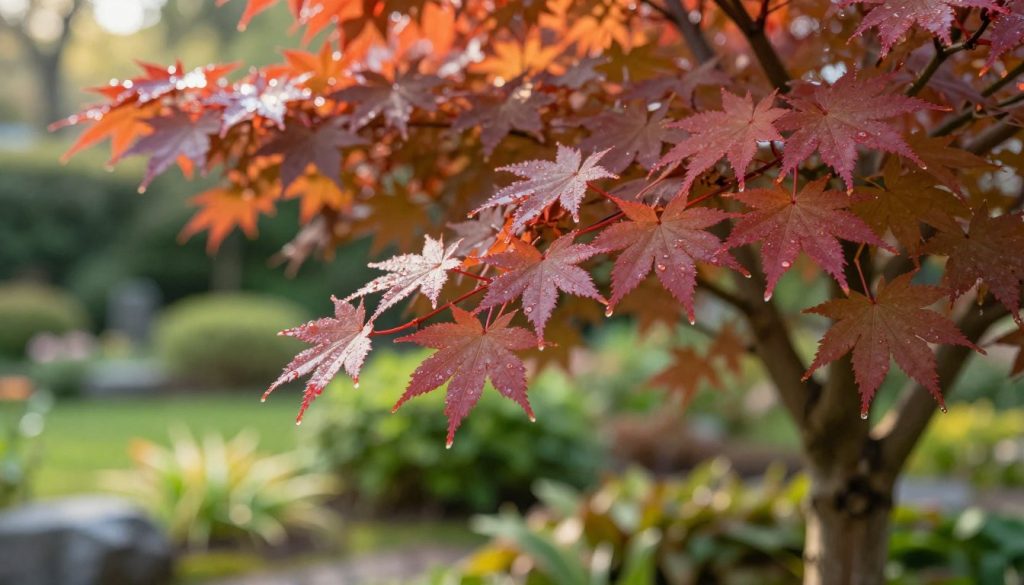
Soil pH matters a lot. Japanese maple grow best at pH 6.0–7.0 so nutrients are available. I test pH and organic matter first.
- Rich, well-draining soil often means no extra product is needed, as Michael J. McGroarty notes.
- Check nutrient ratios and nitrogen levels to avoid overfeeding.
| Sign | Likely cause | Action |
|---|---|---|
| Pale leaves | Low nutrients or pH imbalance | Soil test; correct pH; light feeding |
| Leggy growth | Excess nutrient, too much nitrogen | Reduce feeding; prune |
| Healthy color | Balanced soil | Maintain mulch and monitoring |
Selecting the Best Fertilizer for Japanese Maple Trees
Choosing a steady nutrient source makes a real difference in how my acer palmatum performs each season.
Slow-release formulas supply food gradually so roots absorb nutrients without sudden spikes. That steady feed keeps new leaves healthy and minimizes leggy growth.
Why I favor slow-release options:
- I use Osmocote 14-14-14 when I want a predictable release over three to four months.
- In spring, Espoma Tree-Tone 6-3-2 gives organic support without too much nitrogen.
- Quick-release fertilizers can burn leaves and stress roots, so I avoid them.
Pick a balanced ratio that matches your soil test results. If soil already has good organic matter, a light, slow product is usually enough for the year.
| Product | Type | Benefit |
|---|---|---|
| Osmocote 14-14-14 | Slow-release | Steady nutrients over months; safe for roots |
| Espoma Tree-Tone 6-3-2 | Organic | Gentle spring feed that supports healthy growth |
| Quick-release option | Fast-acting | Higher burn risk; avoid unless soil test shows urgent need |
Proper Application Techniques for Healthy Growth
How you place nutrients around the tree matters more than many gardeners realize. A good application protects roots and improves new growth. I keep steps simple so my japanese maple and other trees get steady care without risk.
Locating the Drip Line
Find the drip by standing beneath the canopy and noting where leaves end. The drip line marks the outer edge where feeder roots are most active.
I spread granules from halfway between the trunk and the drip, then extend about one to two feet beyond that area. This reaches the feeder roots without crowding the trunk.
Avoiding Fertilizer Burn
Never pile fertilizer at the trunk. Too much fertilizer near bark can cause damage and weak new growth.
Use a slow-release fertilizer and keep the product level and thin. I wear gloves and spread evenly to reduce risks.
Watering After Application
Water thoroughly after you apply fertilizer to move nutrients into the soil and down to roots. If you skip this step, pellets can sit on the surface and burn leaves.
Moderate watering over the first 24 hours helps feed the tree without washing nutrients away.
| Step | Action | Why it matters |
|---|---|---|
| Locate drip | Spread ½ way to edge, extend 1–2 ft | Targets feeder roots |
| Spread evenly | Avoid trunk contact | Prevents bark damage |
| Water in | Soak soil after application | Moves nutrients to roots |
Can the Best Fertilizer for Lemon Trees Also Benefit Japanese Maple Trees?
The best fertilizer for lemon trees is rich in nitrogen, phosphorus, and potassium, promoting healthy growth and fruit production. Interestingly, these nutrients can also support Japanese maple trees. While the specific needs may vary, using a balanced formula can enhance the vitality of both plant species.
Timing Your Fertilization for Seasonal Success
Timing feedings to the tree’s natural cycle keeps growth steady and reduces winter risk.
I fertilize my japanese maple once a year in early spring, just before buds open. This gives the tree energy for new growth without forcing late shoots.
Avoid feeding in late summer or fall. Late applications can trigger tender growth that faces winter damage. I also skip any fertilizer during extreme summer heat or drought to protect roots.
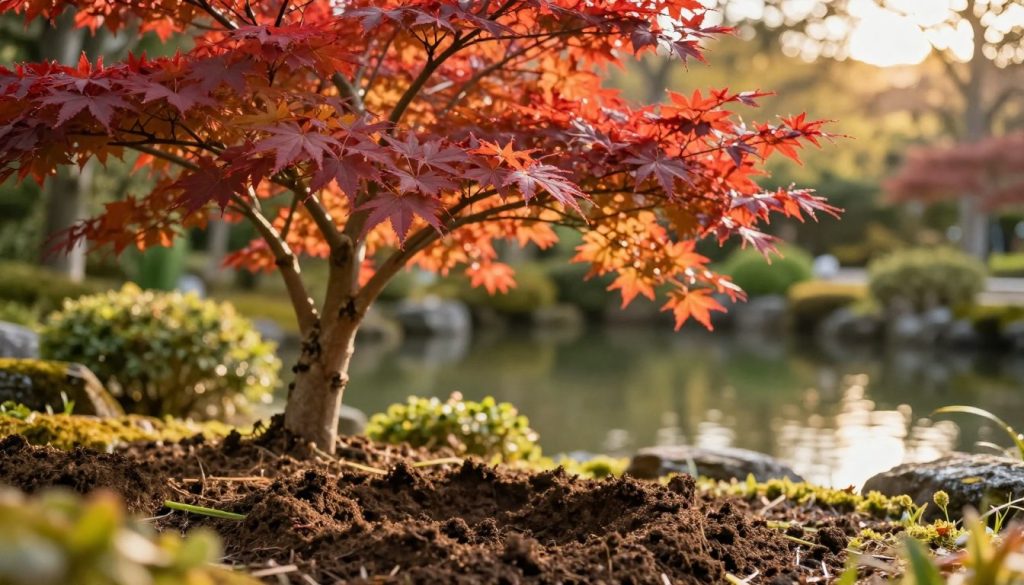
- One yearly application in early spring targets soil nutrient needs before leaf-out.
- Do not fertilize in fall or late summer; it raises the risk of winter damage.
- Water after application to move nutrients to roots and set the right amount in soil.
| Season | Action | Why |
|---|---|---|
| Early spring | Apply once | Supplies nutrients for new growth |
| Summer | Skip if hot/dry | Protect sensitive roots |
| Fall | Avoid | Prevents late growth that risks winter damage |
Conclusion
A steady, measured approach to feeding will keep your trees resilient year after year. I favor slow-release products applied in early spring. That timing gives the new leaf growth a gentle boost without forcing late shoots.
Assess the soil and leaves first. Many maples need little input. When you do add a product, use a light dose and water it in to move the nutrient to roots.
If you want a quick refresher on timing and technique, see this fertilizing guide. For related care tips and soil ideas, this growth resource has useful methods you can adapt.
Make choices that protect soil health and avoid excess nitrogen. Do that, and your maple trees will enjoy steady growth year after year.