

Ethan Brooks
Focused on sustainable practices, careful seed selection, and hands-on experience, our family work closely with nature to produce quality harvests while continuously learning and improving each year..
Latest Posts


Archive
Tags
Social Links


Welcome to your journey into the world of aronia berries! These nutrient-packed fruits are not only delicious but also easy to cultivate. In this friendly guide, I will share everything I’ve learned about nurturing these resilient shrubs right in your backyard.
From selecting the perfect variety to harvesting those deep purple treasures, you’ll find all the essentials here. I’ll provide my personal tips on planting, watering, and caring for these remarkable plants. You’ll soon see why aronia has become one of my favorite superfoods.
Whether you have a sprawling garden or just a small patio, aronia bushes can fit beautifully into your landscape. By the end of this guide, you’ll feel confident and ready to start your own berry patch. Let’s dive in and explore this rewarding journey together!
Key Takeaways
- Learn the essentials of growing aronia berries in your own backyard.
- Discover tips on selecting the right variety for your space.
- Understand the best practices for planting and caring for these shrubs.
- Explore how aronia can enhance your landscape, big or small.
- Feel empowered to start your own berry patch with confidence.
Introduction to Aronia Berries and Their Benefits
Let’s explore the fascinating world of aronia berries and their remarkable attributes. These berries come from a stunning native shrub that adds beauty to any landscape. With their fragrant white flowers and vibrant fall foliage, they offer three full seasons of interest.
Aronia berries, often referred to as chokeberries, have a unique tartness that can surprise new gardeners. The most popular species, the black chokeberry (Aronia melanocarpa), is a favorite for home gardens. This species is known for its reliability and high yield.
One of the most impressive aspects of aronia berries is their health benefits. They are packed with antioxidants, vitamin C, and flavonoids. These nutrients may help boost the immune system, reduce cell damage, and improve liver function. The potential to protect against coronary disease and inflammation due to diabetes makes them a true superfood.
In my own garden, I cherish the delicate clusters of white flowers that attract various pollinators in spring. Understanding the different species of aronia can help you choose the best fit for your garden. The red chokeberry (A. arbutifolia) and the natural hybrid, purple chokeberry (Aronia prunifolia), also offer unique features for diverse growing conditions.
As fall approaches, the foliage transforms into brilliant shades of red, orange, and purple, creating a stunning visual display. While the berries can be astringent when eaten fresh, they are delicious when made into jams, juices, and even wine.
By appreciating the native habitat of these plants, you can see why they thrive in many American gardens. Aronia berries are not just beautiful; they also contribute to a healthy lifestyle.
Choosing the Right Varieties for Your Garden
Selecting the right aronia variety can truly enhance your gardening experience. With so many options available, it’s essential to find the best fit for your space and needs. Each variety has unique characteristics that can influence your garden’s overall aesthetic and productivity.
Popular Aronia Varieties and Their Features
I’ve tried several aronia varieties in my own garden, and I can tell you that choosing the right one makes all the difference for your space and goals. Here are some popular options:
- Low Scape Mound® (Aronia melanocarpa): A compact choice, reaching only 12 to 24 inches tall. It produces dark purplish-black berries and showcases a gorgeous bright red fall color.
- Ground Hug® (Aronia melanocarpa): Perfect for ground cover, this variety grows 8 to 14 inches high and spreads about three feet wide. It features dark purple berries and rich red fall color.
- Low Scape Snowfire® (Aronia melanocarpa): An upright shrub that grows 3 to 4 feet tall, offering dark blue fruits and brilliant red fall foliage.
- ‘Autumn Magic’: This variety grows 4 to 6 feet tall with an upright spreading habit. It produces black berries and displays red and purple fall colors.
- ‘Viking’: Known for larger fruits, this variety grows 3 to 6 feet tall and produces dark purple-black berries with vivid red fall foliage.
- Iroquois Beauty™: A compact option, reaching 2 to 4 feet in height. It has a round habit and offers black berries with orange-red fall foliage.
Size, Growth Habits, and USDA Hardiness Zones
When I’m helping a friend pick a variety, I always ask about their available space first. These bushes can range from under a foot to over six feet tall. I always check the USDA hardiness zones before recommending a variety. Luckily, most aronia thrive in zones 3 through 9, covering nearly the entire United States.
The growth habit varies significantly between varieties. I’ve learned that upright types like Low Scape Snowfire® work wonderfully for hedging and privacy screens.
How Variety Affects Fruit Color and Fall Foliage
I’ve noticed that fruit color can range from deep purplish-black to dark blue depending on the variety you select. This adds visual interest to the harvest. The fall foliage display is one of my favorite features. I’ve seen everything from brilliant red to orange-red and even purple tones across different varieties.
If you’re after bigger berries for processing, I’d point you toward ‘Viking’, which was developed in Europe specifically for larger fruit production. I always remind gardeners that even though these are called chokeberries, the cultivated varieties produce much better quality fruit than wild species.
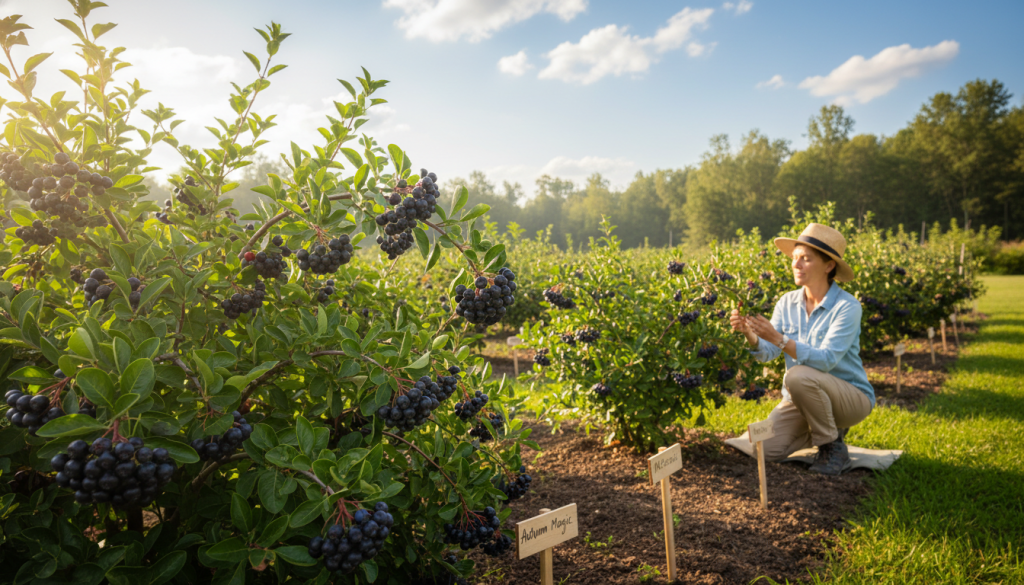
How to Grow Aronia Berries: Planting Your Aronia Bushes
Starting your journey with aronia bushes can be an exciting adventure. With the right techniques, you can ensure a successful planting experience. This section will guide you through the essential steps to plant your aronia bushes effectively.
Best Time and Location to Plant
The best time for planting is either in spring or fall. During these seasons, temperatures are mild, allowing the plants to establish without stress. When scouting a location, ensure it receives at least four hours of direct sun each day. Ideally, aim for six hours for optimal flowering and fruiting.
Soil Preparation and Soil Type Considerations
Aronia bushes are quite forgiving when it comes to soil types. They thrive in a variety of conditions, including wet or clay soils. However, well-draining soil is essential for their health. Before planting, loosen the soil in an area about three times wider and deeper than the container. Mixing in compost or organic matter will enrich the native soil and provide a nutrient boost for your young plants.
Step-by-Step Planting Instructions
- Dig a hole that is twice as wide and slightly deeper than the root ball.
- Remove the plant from its nursery container, gently teasing out any circling roots if potbound.
- Set the plant in the hole, ensuring the top of the root ball is level with the surrounding ground.
- Backfill the hole with soil, tamping it down lightly to remove air pockets.
- Water the plant thoroughly to help settle the soil.
Spacing and Pollination Tips
For optimal growth, space your aronia plants 2 to 6 feet apart, depending on the variety. Typically, I recommend a distance of 4 to 6 feet. While aronia is self-fertile, planting different varieties within 100 feet of each other can enhance fruit size and yield. This simple step can lead to a more bountiful harvest.
| Step | Description |
|---|---|
| 1 | Choose the right time to plant in spring or fall. |
| 2 | Select a sunny location with at least 4 hours of sun. |
| 3 | Prepare the soil by loosening it and adding compost. |
| 4 | Dig a hole twice as wide as the root ball. |
| 5 | Space plants 2 to 6 feet apart for optimal growth. |
With these steps, you’ll be well on your way to establishing a thriving aronia bush in your garden. For more detailed guidance on planting, check out this resource for additional tips. Happy planting!
Watering, Fertilizing, and Soil Care for Healthy Growth
Caring for your aronia plants is essential for achieving healthy growth and a bountiful harvest. Proper watering, fertilizing, and soil management will help your plants thrive throughout the year. Here’s what I’ve learned about keeping these resilient shrubs happy.
Watering Requirements and Tips
Aronia plants prefer moderate water but can tolerate both dry and wet soils. During the first growing season, consistent watering is crucial for establishing strong roots. I’ve found that a general rule is to provide about an inch of water per week, ensuring it reaches the root zone. This equates to approximately ¾ to 1 gallon per square foot.
Instead of watering lightly every day, I recommend watering deeply once or twice a week. This method encourages deeper root growth. During hot summer spells, I monitor my bushes closely and provide extra water if the leaves appear droopy. For container-grown aronia, I water until it drains from the bottom, then wait until the top inch of soil feels dry before watering again.
Fertilizer Use and Soil Amendments
One pleasant surprise for me has been how little fertilizer these native shrubs require. In most gardens, aronia thrives with just a spring layer of compost. If you choose to fertilize, a balanced slow-release formula applied in early spring works well. Just be cautious not to overdo it, as too much fertilizer can lead to weak, disease-prone growth.
Adding a thin layer of compost around the base of the plants can also enrich the soil. This simple step helps improve nutrient availability and supports healthy growth.
Mulching Benefits and Techniques
Mulching has been a game-changer in my aronia patch. A two to four-inch layer of straw, leaves, or wood chips keeps the soil moist and suppresses weeds. I always ensure to keep the mulch 4 to 6 inches away from the trunk to prevent rot and discourage pests like voles from nesting near the base.
The ideal soil pH for aronia is slightly acidic, around 6.3 to 6.8. However, I’ve seen these adaptable plants perform well in a wider range of soils. Well-mulched plants not only need less water but also tend to produce more consistent berry crops year after year.
| Task | Description |
|---|---|
| Watering | Provide about an inch of water per week, watering deeply rather than lightly. |
| Fertilizing | Use a balanced slow-release fertilizer in spring if needed, but compost is often sufficient. |
| Mulching | Apply a 2-4 inch layer of mulch to retain moisture and suppress weeds. |
| Soil Care | Maintain a slightly acidic soil pH of 6.3 to 6.8 for optimal growth. |
By following these practices, you’ll create an environment where your aronia plants can flourish. Happy gardening!

Pruning and Maintenance for Optimal Berry Production
Maintaining your aronia plants is crucial for ensuring they produce abundant berries year after year. I’ve learned that proper pruning and regular maintenance can significantly enhance the health and yield of these remarkable shrubs. In this section, I’ll share my best practices for keeping your aronia bushes thriving.
When and How to Prune Your Aronia Plants
Timing is everything when it comes to pruning. I typically do most of my shaping in late winter while the plants are still dormant. Since aronia blooms on old wood, it’s vital to avoid heavy pruning in spring. This way, I don’t sacrifice that year’s berry crop along with the flowers.
When I do need to trim after flowering, I focus on removing only dead, damaged, or crossing branches. Keeping the cuts minimal helps maintain the plant’s health and berry production. Remember, a well-pruned bush allows air and light to reach the interior, leading to larger and more abundant fruits.
Managing Suckers and Shaping the Bush
Managing suckers is an ongoing task. These vigorous shoots develop around the base and can quickly form a thicket if not removed regularly. I find it helpful to pull these rooting branches as they appear to maintain a tidy shape and vigor.
Every few years, I rejuvenate my older bushes by thinning out about a third of the oldest stems down to ground level. This practice stimulates fresh new growth and helps keep the plants healthy. For neglected or overgrown specimens, I have successfully cut them back hard to just a couple of feet tall, and they bounced back with vigorous new growth within a season.
Seasonal Maintenance Tasks
Seasonal maintenance is essential for keeping your aronia plants in top shape. In spring, I do a quick walkthrough to remove any branches that didn’t survive the winter. This helps assess the overall shape of each bush and allows for better air circulation.
Additionally, I refresh the mulch layer to help retain moisture and suppress weeds. I also check for any signs of pest damage while I’m pruning. Keeping my pruning tools sharp and clean is a must, as clean cuts heal faster and reduce the risk of disease entering the wood.
| Task | Description |
|---|---|
| Pruning Time | Prune in late winter while plants are dormant to minimize stress. |
| Remove Dead Branches | Focus on dead, damaged, or crossing branches to maintain health. |
| Manage Suckers | Regularly remove suckers to prevent dense thickets and promote growth. |
| Rejuvenation | Thin out a third of the oldest stems every few years for fresh growth. |
| Seasonal Checks | Inspect plants in spring for dead branches and refresh mulch. |
By following these practices, you’ll create an environment where your aronia plants can flourish and produce a bountiful harvest. For more detailed information on seasonal care, check out this resource. Happy gardening!
Common Pests and Diseases: How to Protect Your Plants
Understanding the common threats to your aronia plants can help you maintain a healthy garden. While these shrubs are generally resilient, a few pests and diseases can pose challenges. In this section, I’ll share my experiences with identifying these issues and how to effectively manage them.
Identifying Major Pests of Aronia Berries
I’m happy to report that aronia is one of the most pest-resistant fruiting shrubs I’ve ever grown. Serious problems are rare in my experience. However, when I do spot issues, aphids are usually the culprit. These tiny, pear-shaped insects measure between 1/32 to 1/8 inch long and often hide on the underside of leaves, causing red blisters or curled leaves.
Another pest to watch for is the spotted wing drosophila. This pest lays eggs in the fruit about 7-10 days before ripening, leading to holes and larvae in the berries. Monitoring traps can help catch them early.
Effective Pest Control Strategies
When I find aphids, I simply check the leaves and blast them off with a strong spray of water. Encouraging natural predators like ladybugs has also been effective. For spotted wing drosophila, I set out traps and harvest promptly to stay ahead of them.
Deer generally leave my aronia alone due to the bitter taste, but young plants can be more susceptible to browsing. I protect them with fencing in early spring when other food is scarce.
Disease Prevention and Management
While pests are manageable, diseases can occasionally appear. I keep an eye out for leaf spot and powdery mildew, especially during humid weather. Good air circulation from proper pruning has been my best defense against these issues.
Rust disease can show up as orange spots on the upper leaf surface, followed by orange structures on the underside. I manage this by removing affected foliage and applying copper fungicide when needed.
Additionally, voles and rabbits can girdle the base of young bushes in winter. I always keep mulch pulled back several inches from the trunk and use tree guards to protect them.
By keeping my plants healthy with proper watering, spacing, and sanitation of fallen leaves and fruit, I’ve found that I rarely need to resort to chemical sprays. When I do, I prefer using insecticidal soap or spinosad as lower-impact options.
Landscaping and Companion Planting Ideas with Aronia
Incorporating aronia into your landscape can transform your garden into a vibrant haven. These versatile shrubs offer a range of benefits, from providing privacy to attracting wildlife. In this section, I’ll share some creative ideas for using aronia in your outdoor spaces.
Using Aronia for Privacy Screens and Borders
For privacy screening, I plant taller varieties like Low Scape Snowfire® in staggered rows. Within a few years, they create a beautiful living fence that not only blocks views but also adds visual interest. The combination of their lush foliage and white flowers in spring makes them a stunning choice for property lines.
Combining Aronia with Other Native Plants
Aronia works wonderfully alongside other native plants. In my rain garden, I pair aronia with moisture-loving natives, which thrive together and handle wet feet beautifully. This combination not only supports local wildlife but also creates a vibrant ecosystem.
Some great companion plants include:
- Prairie Winds® ‘Lemon Squeeze’ fountain grass
- Rockin® Deep Purple salvia
- Gatsby Pink® oakleaf hydrangea
- Berry Poppins® winterberry
Growing Aronia in Containers and Small Spaces
For small-space gardeners, aronia is an excellent choice. I’ve had great success growing Low Scape Mound® in containers on my patio. A 20-gallon pot gives the roots enough room to thrive while adding charm to my outdoor area.
Using high-quality all-purpose potting mix with adequate drainage holes is key for container growth. This ensures that the plants receive the right amount of moisture without becoming waterlogged.
Additionally, I enjoy using low-growing ground cover varieties to edge pathways or as a lawn substitute. These options not only provide beautiful foliage but also help with soil retention and erosion control.
| Application | Description |
|---|---|
| Privacy Screens | Plant taller varieties in staggered rows for a living fence. |
| Native Plant Combinations | Pair aronia with other natives for a vibrant ecosystem. |
| Container Gardening | Use a 20-gallon pot for smaller varieties on patios. |
| Ground Cover | Utilize low-growing varieties to edge pathways or replace lawns. |
By exploring these landscaping ideas, you can make the most of aronia in your garden. Whether for privacy, beauty, or wildlife support, these shrubs are sure to enhance your outdoor spaces.
Conclusion
In closing, I hope this guide has illuminated the many benefits of incorporating these plants into your garden. Growing aronia is not just about the delicious berries; it’s about the joy they bring from spring’s delicate white flowers to the stunning red fall foliage.
These resilient shrubs provide nutritious fruits and support local wildlife while adding seasonal beauty. Whether you choose a single black chokeberry or a hedge, you’re in for a delightful experience.
Start with a variety that suits your space and climate, and consider companion plants for a dynamic landscape. While the berries may be tart fresh, they transform beautifully into jams and juices.
Every time I admire my aronia bushes in fall, I’m reminded of why I love this native shrub. With the tips shared, you’ll soon be enjoying your own harvest and vibrant fall colors for years to come.