

Ethan Brooks
Focused on sustainable practices, careful seed selection, and hands-on experience, our family work closely with nature to produce quality harvests while continuously learning and improving each year..
Latest Posts


Archive
Tags
Social Links


Have you ever dreamed of picking a perfectly ripe, sweet melon from your own garden? The process of how to grow cantaloupe is incredibly rewarding, and I’m excited to share my friendly guide with you.
I’ve spent years in my own backyard, learning the secrets of these vining plants. My goal is to make your first try a big success.
These melons are cousins to cucumbers and squash. They demand a long, warm season—at least 90 days from planting to your first harvest.
Growing up, I loved the classic Italian dish, prosciutto e melone. I never imagined I’d one day cultivate the main ingredient myself. Now, it’s one of my favorite garden projects.
This guide will walk you through every step. We’ll cover soil preparation, planting seeds, and ongoing care. You’ll be ready for a delicious, sun-ripened harvest this season.
Key Takeaways
- Cantaloupes are part of the cucumber family and need a long, warm growing period.
- Success starts with choosing a sunny spot and preparing the soil well.
- These plants are vigorous vines that require plenty of room to spread.
- Consistent moisture is essential, particularly when fruits are forming.
- Knowing the right signs for harvest guarantees the sweetest flavor.
- With the right steps, even a first-time gardener can enjoy a bountiful crop.
Understanding Cantaloupe and Its Benefits
I’m always amazed at what homegrown cantaloupes bring to my table. These melons offer more than just taste. They provide a wonderful gardening journey.
Nutritional Value and Delicious Flavor
Each bite of these sun-ripened fruits packs vitamin C and antioxidants. This makes them incredibly nutritious.
The explosive flavor of a homegrown melon beats store-bought ones. It’s a taste you’ll love.
Why Homegrown Cantaloupes Stand Out
When you cultivate your own plants, the fruit reaches peak maturity. This enhances sweetness and quality.
These plants reward patience with a healthy, delicious harvest. The experience is unique and fulfilling.
| Feature | Homegrown | Store-Bought |
|---|---|---|
| Flavor | Explosive & Sweet | Often Bland |
| Nutrition | High in Vitamin C | Varies |
| Quality | Peak Ripeness | May Be Underripe |
Focusing on the right conditions yields superior melons. They’re far better than grocery store options.
Choosing the Right Location and Soil
Finding the perfect spot for your melon patch sets the stage for success. I always consider two critical factors: sunlight exposure and soil quality. These elements make or break your harvest.
Site Selection Tips for Optimal Sunlight
My melon plants thrive when they receive at least 4-6 hours of direct sun daily. I choose the sunniest garden area available.
Well-drained soil prevents problems. Damp conditions attract snails and root diseases. I avoid weedy spots with field bindweed or Bermudagrass.
Soil Recommendations and Organic Amendments
I test soil pH regularly. The ideal range is 6.0 to 6.5. Lime or gypsum adjustments help maintain this balance.
Organic matter transforms average soil. Compost or manure improves texture dramatically. My plants establish roots more easily in enriched earth.
| Location Factor | Ideal Conditions | Problems to Avoid |
|---|---|---|
| Sun Exposure | 6+ hours direct sun | Shaded areas |
| Soil Drainage | Well-drained soil | Waterlogged areas |
| Weed Presence | Clean planting area | Bindweed infestation |
| Soil pH | 6.0-6.5 range | Extreme acidity/alkalinity |
Proper location selection gives your melons their best start. Thoughtful planning prevents many common growing challenges.
Preparing Your Garden for Planting
Getting your planting area ready is one of my favorite garden tasks each season. This foundation work makes all the difference for healthy, productive plants.
Improving Soil Drainage and Fertility
I always begin by loosening the top layer of earth. A shovel or rototiller works perfectly for this task.
Organic amendments transform ordinary ground into rich, fertile soil. I mix in compost or aged manure to improve texture and drainage.
Clearing the area thoroughly is essential. I remove weeds and old debris to give seedlings a clean start.
Testing soil moisture helps me know when to add more organic material. If it forms tight clumps, it needs improvement.
| Preparation Step | My Recommended Tool | Benefit |
|---|---|---|
| Soil Loosening | Shovel or Rototiller | Better root penetration |
| Adding Nutrients | Compost or Manure | Improved fertility |
| Weed Removal | Rake | Clean planting area |
| Moisture Test | Hand Test | Proper water balance |
Proper soil preparation creates the perfect environment for young plants. This careful groundwork leads to a bountiful harvest later.
How to Grow Cantaloupe: Starting from Seed
My favorite part of each gardening season begins indoors with those tiny, promising seeds. This initial step gives your plants a fantastic head start, especially in cooler climates.
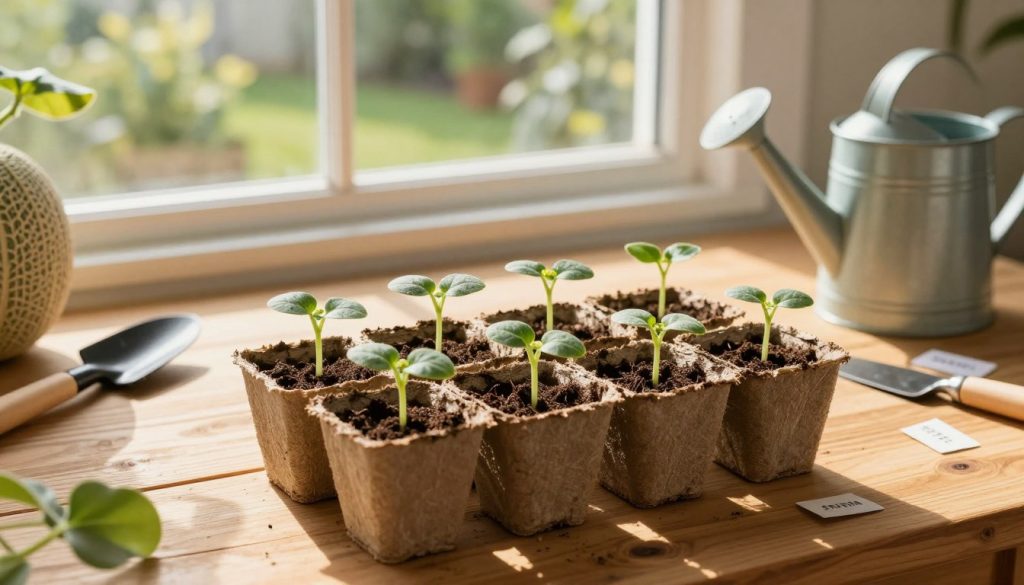
Indoor Seed Starting for Early Growth
I begin my seeds indoors about four weeks before our last expected frost date. Using 4-6 inch pots gives each seedling plenty of room to develop strong roots.
These melon plants aren’t fast growers. You’ll need at least 90 days from germination until your first harvest. Patience truly becomes your gardening partner.
Safe Transplanting to Outdoor Garden Beds
Moving young plants outdoors requires careful timing. I always wait until nighttime temperatures stay consistently above 59°F to avoid any frost damage.
When transplanting, handle the root system gently. These sensitive roots prefer staying in their original soil. Disturbing them too much can shock the plant.
This early start method proves especially valuable in regions with shorter summers. You’ll gain precious extra weeks of growing time for your delicious cantaloupe harvest.
Planting Techniques and Vining Strategies
The way you arrange your cantaloupe plants can make a huge difference in your harvest. Proper spacing and support give each plant room to thrive. This leads to healthier vines and more delicious melons.
Spacing Guidelines and Row Arrangements
I always space my plants 36 to 42 inches apart. This generous distance allows each vine to spread freely. It prevents overcrowding and promotes better air circulation.
When planting in rows, I keep them 5 to 6 feet apart. This width provides easy access for watering and harvesting. It also reduces disease risk by improving airflow between plants.
Vertical Growing Options and Trellis Setup
Vertical gardening saves space while keeping vines healthy. I use a sturdy trellis that stands 8 feet tall. This structure supports vigorous growth in my small garden.
Training vines upward requires daily attention with soft ties. I gently secure stems to prevent damage. For heavy fruits, I add cloth slings to avoid breakage.
This method works best in warm climates with long seasons. It keeps melons clean and reduces pest problems. Vertical planting maximizes yield in limited areas.
Watering and Mulching for Optimal Growth
Proper hydration makes all the difference between bland and sweet melons from your patch. I follow a simple routine that keeps plants thriving while boosting their natural sweetness.
Establishing a Consistent Watering Schedule
My plants receive at least 2 inches of water weekly. This equals about 1.5 gallons per square foot. I use soaker hoses for direct soil delivery.
This method prevents fungal diseases by keeping leaves dry. Consistent moisture prevents stress during critical growth phases.
Mulching Techniques to Retain Moisture
A thick mulch layer works wonders for moisture retention. Straw or organic mulch also suppresses weeds effectively.
When fruit reaches full size, I cut water in half. This concentrates sugars for incredible flavor. Soil stays moist but never waterlogged.
Too much moisture causes developing fruit to split. My balanced approach ensures perfect harvests every time.
Managing Pests and Diseases
Protecting my melon patch from unwanted visitors has taught me valuable lessons about garden defense. Early detection and prevention make all the difference for healthy production.
Identifying Common Pests Like Cucumber Beetles
Cucumber beetles top my watch list. These striped insects transmit bacterial wilt disease that causes entire plants to collapse suddenly.
I inspect undersides of leaves daily for aphids. These tiny pests colonize vines rapidly if ignored.
Preventative Measures and Organic Treatments
Floating row covers work wonders early in the season. They exclude insects while trapping warm air around young plants.
For spotted diseases like powdery mildew, I consult my local extension agent. They recommend approved organic treatments.
Treat adult beetles at dusk with rotenone or pyrethrum-based insecticides. This timing maximizes effectiveness.
Late fall soil turning exposes overwintering insect eggs to cold temperatures. This simple step reduces next year’s pest populations significantly.
Pruning and Care for Nutritious Foliage
Managing plant growth ensures healthier harvests every time. My careful attention to pruning makes all the difference in my garden’s success.
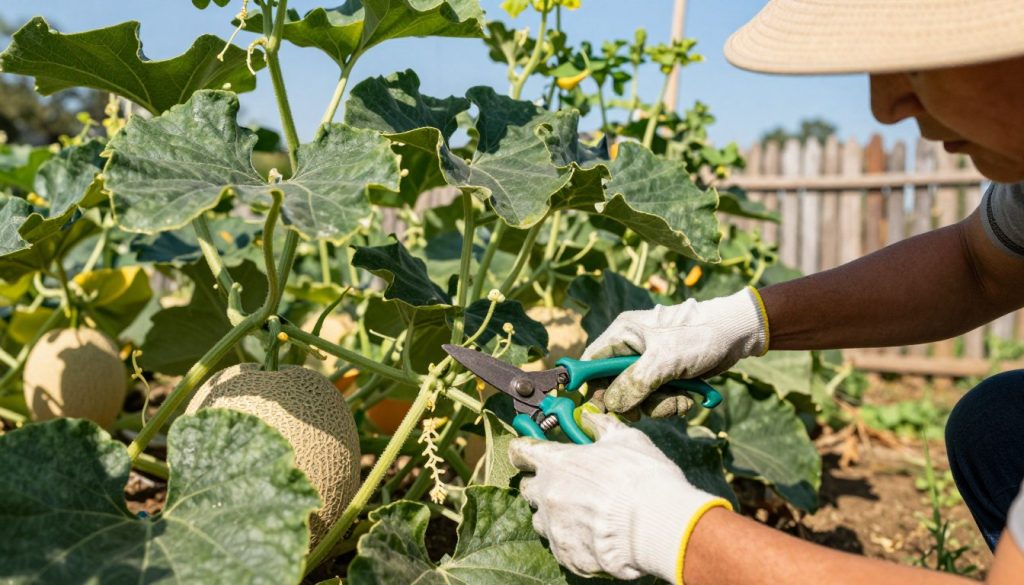
Pruning Cantaloupe Suckers
I remove about one-third of all suckers from my plants. These growths appear where leaves, tendrils, and flowers meet on the main stem.
Thinning the foliage improves air circulation dramatically. This simple step prevents fungal diseases from developing.
Improved Airflow and Disease Prevention
Healthy leaves are essential for sweet fruit production. They create the sugars that make melons delicious.
I always leave enough foliage on each vine. Too much pruning reduces the plant’s ability to produce quality fruit.
| Pruning Approach | Benefits | Considerations |
|---|---|---|
| Light Pruning (1/3 removal) | Better air circulation | Prevents disease |
| Moderate Pruning | Larger fruits | Maintains sugar production |
| Heavy Pruning | More energy to fruits | Risk of reduced foliage |
My plants focus energy on fewer, larger melons when properly pruned. This technique delivers amazing results every season.
Fertilizing and Nutrient Management
My melon plants thrive when they receive balanced nutrition throughout their growth cycle. Proper feeding makes a dramatic difference in fruit quality and yield.
Selecting Organic and Inorganic Fertilizers
I combine organic compost with inorganic fertilizers for complete nutrition. Mixed formulas like 5-10-5 or 8-16-16 provide balanced support.
These plants need nitrogen most during their active growth phase. I apply 0.5 to 1 pound per 100 feet of row.
Well-amended soil often only requires additional nitrogen. This simplifies my feeding routine significantly.
Side-Dressing Tips for Enhanced Yields
I use side-dressing techniques to boost my crop production. This method places nutrients exactly where roots need them.
When applying nitrogen, I create narrow bands 4-6 inches from the plant row. This prevents stem burn while encouraging root expansion.
Light applications every 3-4 weeks maintain steady nutrient supply. I always water thoroughly after feeding to help absorption.
| Fertilizer Type | Application Rate | Best Timing |
|---|---|---|
| Nitrogen Fertilizer | 0.5-1 lb/100 ft row | Early growth phase |
| Mixed Formulas (5-10-5) | As package directs | Pre-planting |
| Organic Compost | 2-3 inch layer | Soil preparation |
| Side-Dress Applications | Every 3-4 weeks | Growing season |
This approach keeps my plants healthy and productive. Proper nutrition transforms average soil into a powerhouse for melon production.
When and How to Harvest Your Cantaloupe
Harvesting these sweet treasures marks the most rewarding moment in my gardening season. Timing proves absolutely crucial for perfect ripeness.
Signals Indicating a Ripe Cantaloupe
I watch for three clear signs that my melons are ready. The skin transforms from green to creamy yellow-buff.
A sweet, fragrant aroma surrounds each mature fruit. The stem shows a clean crack completely circling its base.
Safe Harvesting Techniques to Preserve Quality
I gently twist each melon from its vine rather than cutting. This method prevents disease spread and damage.
Unlike some crops, these melons won’t ripen further after picking. Perfect timing ensures peak flavor and texture.
Freshly harvested fruit offers incredible taste. Properly stored melons maintain quality for several weeks in refrigeration.
Can the Techniques for Growing Tobacco Be Applied to Growing Cantaloupe?
Growing cantaloupe requires specific techniques, but some practices from tobacco cultivation can be beneficial. For instance, proper soil preparation and nutrient management are crucial. Beginners might find it helpful to explore beginnerfriendly tips for growing tobacco plants, as these can translate to effective methods in nurturing a healthy cantaloupe crop.
Troubleshooting Common Growing Challenges
Every gardening season brings its own unique tests for melon enthusiasts. I’ve learned to anticipate weather extremes and maintain steady care for my plants.
Managing Weather Extremes and Frost Risks
Sudden temperature drops can threaten developing fruit. I use black plastic mulch to trap ground heat during cool summer nights.
Floating row covers provide excellent frost protection. They create a warm microclimate around young plants.
In colder regions, I remove blossoms appearing within 50 days of first frost. This helps existing fruit mature properly.
Tips for Consistent Moisture and Nutrient Supply
Regular watering prevents stress during heat waves. I maintain soil moisture without overwatering.
Bacterial wilt often appears during weather stress. I monitor plants closely for early signs.
Choosing climate-appropriate varieties makes a huge difference. Some types handle temperature swings better than others.
| Challenge | Protection Method | Best Timing |
|---|---|---|
| Early Frost | Row covers | Before temperature drops |
| Cool Soil | Black plastic mulch | Planting time |
| Heat Stress | Consistent watering | Summer months |
| Disease Risk | Variety selection | Before planting |
These strategies help my cantaloupes thrive despite challenging conditions. Proper preparation leads to successful harvests every time.
Conclusion
Cultivating your own melons brings a special satisfaction that store-bought fruit simply cannot match. This guide has walked you through each essential step for a healthy crop.
Your consistent care with water, sun, and nutrients directly creates that incredible flavor. Experiment with different varieties and techniques in your unique garden space.
Patience rewards you with sweet, juicy melons all season long. I hope these tips lead to a successful harvest. Your garden will transform into a productive source of delicious, sun-ripened fruit.
Please share your experiences or questions in the comments below. I love hearing about your gardening adventures!