

Ethan Brooks
Focused on sustainable practices, careful seed selection, and hands-on experience, our family work closely with nature to produce quality harvests while continuously learning and improving each year..
Latest Posts


Archive
Tags
Social Links
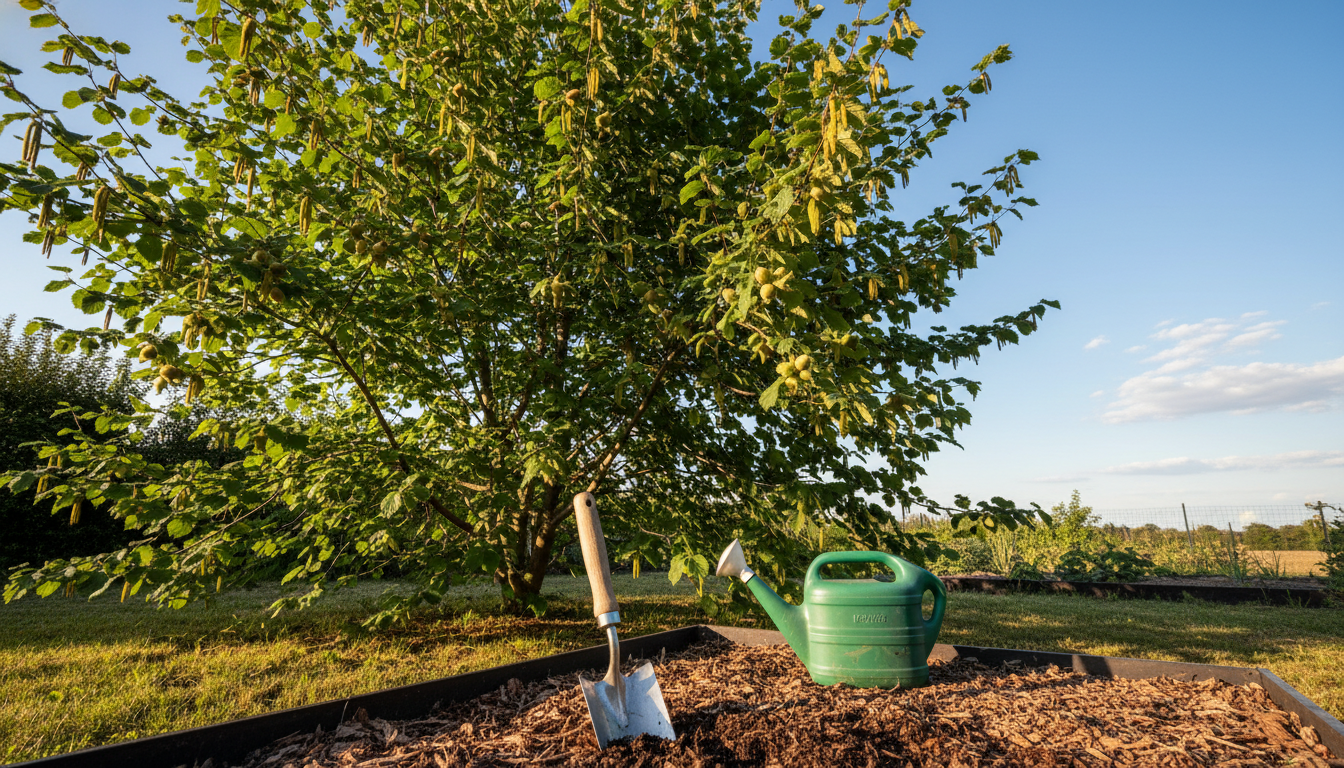

Welcome to your journey into the world of the hazelnut tree! If you’ve ever thought about adding this beautiful and productive plant to your garden, you’re in the right place. I’m excited to share my personal experiences and insights on how to cultivate these wonderful trees.
From selecting the right variety to understanding the soil requirements, every detail matters. I believe that with the right guidance, you can enjoy the rewards of homegrown nuts and a thriving landscape. This guide aims to be your friendly companion, providing practical advice on planting, care, and harvest.
So, let’s embark on this rewarding adventure together! You’ll discover that nurturing a hazelnut tree is not just about the harvest; it’s about connecting with nature in a meaningful way.
Key Takeaways
- Learn about the different varieties of hazelnut trees.
- Understand the importance of soil for healthy growth.
- Get practical tips on planting and care.
- Discover the joy of harvesting your own nuts.
- Connect with nature through gardening.
Introduction to Growing Hazelnut Trees in the United States
As I delve into the world of nut cultivation, I find hazelnuts to be a remarkable choice for any gardener. These trees not only enhance the beauty of your landscape but also provide significant wildlife value and delicious nuts. The appeal of hazelnuts lies in their compact size, making them suitable for smaller gardens. They offer multi-season interest, from the delicate catkins that grace the branches in late winter to the stunning fall foliage that adds vibrant color to your garden.
The nutritional benefits of hazelnuts are impressive. They are rich in vitamins E and B-complex, as well as essential minerals like calcium, iron, and magnesium. With about 60 percent heart-healthy unsaturated fat, they are a nutritious addition to any diet.
In the United States, several native species of hazelnuts are available. The American hazelnut (Corylus americana) is widely adapted and thrives in open areas with sandy soils. It’s a fantastic option for many gardeners. On the other hand, the beaked hazelnut (Corylus cornuta) is more shade tolerant and often found in forest understories on mesic soils. However, its smaller nuts can be a bit tedious to crack.
European hazelnuts (Corylus avellana) are commonly seen in commercial production, particularly in Oregon’s Willamette Valley, where around 80,000 acres are dedicated to their cultivation. Unfortunately, they struggle with winter hardiness in the Upper Midwest and are susceptible to Eastern Filbert Blight.
Hybrid hazelnuts present an exciting option, combining the disease resistance and cold tolerance of American hazelnuts with the larger nut size and productivity of their European counterparts. The Upper Midwest Hazelnut Development Initiative (UMHDI) has been instrumental in developing improved hybrid varieties for colder regions since its inception in 2007.
When considering market potential, hazelnuts represent a nearly $5 billion global commodity. The demand for Midwest-grown nuts is increasing, attracting interest from major companies like Mars, Inc. and General Mills. Choosing the right species and varieties for your specific area is crucial, and I’m here to help you navigate these choices throughout this guide.
Why Hazelnuts Are a Great Addition to Your Garden
Incorporating hazelnuts into your garden can transform your landscape. Not only do they provide delicious nuts, but they also attract wildlife and create a beautiful environment. Their compact nature makes them perfect for smaller spaces, allowing you to enjoy the benefits of nut trees without needing extensive land.
Overview of Hazelnut Species and Varieties in the US
Understanding the different species and varieties of hazelnuts is essential for successful cultivation. Each species has unique characteristics that may suit your specific gardening conditions. The American hazelnut is adaptable, while the beaked hazelnut offers shade tolerance. European varieties are popular for their nut size but may not thrive in all regions. Hybrid options are emerging as strong contenders, blending the best traits of both native and European species.
For more information on the specifics of hazelnut cultivation, you can check out resources like the UMHDI Hazelnuts 101 Fact Sheet Series and explore various aspects of planting and care.
How to Grow Hazelnut Tree: Getting Started with Planting and Establishment
Starting your journey with hazelnuts requires careful planning and preparation. Getting the planting and establishment phase right is crucial for success. I’ve learned that the first steps lay the groundwork for a fruitful future.
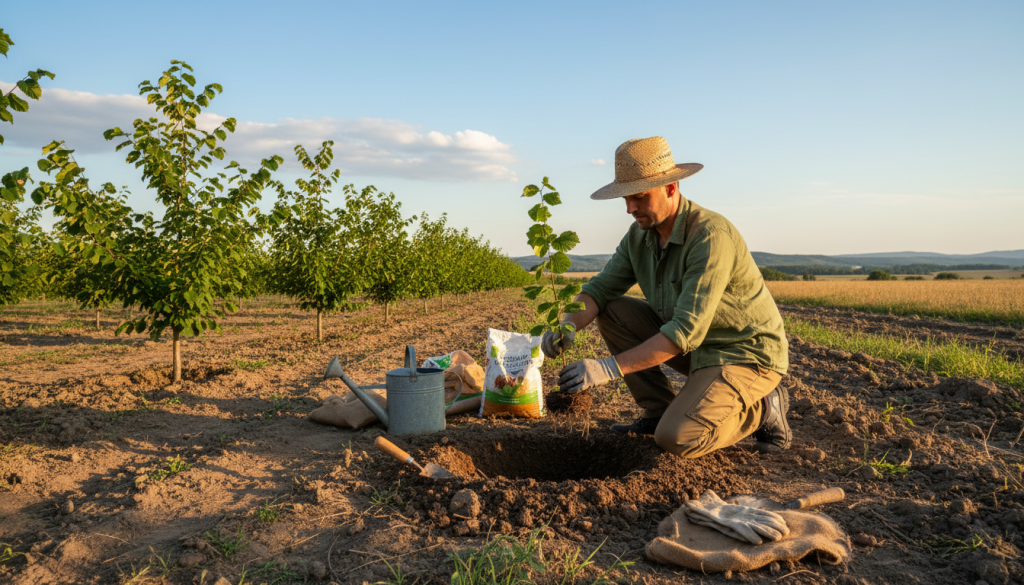
When I choose a site for my hazelnuts, I always look for a location that receives at least 8 hours of direct sunlight. I measure this during early summer, specifically from late June to early August, to ensure optimal conditions.
In terms of soil, hazelnuts are quite adaptable. They tolerate a variety of soils but thrive best in well-drained conditions with a pH between 6.3 and 6.8. Before digging any holes, I improve my soil by mixing in an inch or two of organic matter. This enriches the area around the planting hole, making it one and a half to two times the diameter and up to a foot deep.
I always plant bareroot dormant plants in the spring when the ground has thawed and is workable. For containerized plants, fall is a great time to plant. Proper timing ensures the best establishment.
When planning my spacing, I follow guidelines of 4 to 6 feet between plants within the row. This gives each hazelnut enough room to develop a healthy root system without crowding. For row spacing, I consider my future harvest method. If I’m using self-propelled harvesters, I space rows 12 to 15 feet apart. For pull-behind harvesters that need a driving lane, I alternate 12-foot and 15-foot rows.
I’ve discovered that the planting hole itself needs to be generous enough to accommodate the roots without bending or crowding them. After planting, I always water deeply to settle the soil around the roots.
In my experience, applying a 2- to 4-inch deep layer of mulch—using straw, leaves, or wood chips—after planting makes a tremendous difference. It helps retain soil moisture and suppress weeds during that critical first year.
Taking the time to plan my orchard layout carefully saves me countless headaches down the road. I consider both the mature size of the plants and my access needs for maintenance. A well-planned planting is the foundation for decades of productive harvests, and I never rush through this essential step.
| Aspect | Details |
|---|---|
| Sunlight | At least 8 hours of direct sunlight |
| Soil pH | 6.3 – 6.8 |
| In-row Spacing | 4 – 6 feet |
| Row Spacing (Self-propelled) | 12 – 15 feet |
| Row Spacing (Pull-behind) | Alternating 12 and 15 feet |
Selecting the Best Varieties for Your Area
Choosing the right variety of hazelnuts can significantly impact your gardening success. With various options available, understanding the unique traits of each type is essential for maximizing your harvest.
American Hazelnut (Corylus americana) and Its Benefits
The American hazelnut (Corylus americana) is a fantastic choice for many gardeners. It is widely adapted across the United States and thrives in open areas with sandy soils. Although the nuts are smaller and have thicker shells, the yields can be impressive.
I’ve noticed that these plants often produce root suckers, which can be beneficial for propagating desirable traits. However, if not managed, they can create a bushy thicket that may need trimming.
Hybrid Hazelnuts and Disease Resistance
Hybrid hazelnuts excite me because they blend the best qualities of both American and European varieties. These hybrids combine the disease resistance and winter hardiness of the American hazelnut with the larger nut size and higher production of European types.
Organizations like the Upper Midwest Hazelnut Development Initiative (UMHDI) have made significant strides in developing improved hybrid selections. Their 1st Generation Selections, evaluated from 2009 to 2017, are excellent options for growers in colder regions.
Pollination Requirements and Compatibility
It’s crucial to remember that filberts, another name for hazelnuts, are not self-fertile. You need to plant at least two different compatible varieties nearby for successful nut production. I’ve learned that hazelnuts are wind-pollinated, so I ensure my pollenizer plants are within 50 feet and have no line of sight obstruction.
During autumn, I keep an eye out for the long, thin catkins that hang through winter. These male flowers signal the potential for next year’s crop. The female flowers, which are bright red and inconspicuous, open in early spring. Spotting many of them is a good sign for a heavy yield.
Lastly, I emphasize the importance of selecting varieties that are resistant to diseases, particularly Eastern Filbert Blight. This fungus is common in the Upper Midwest and can be deadly to susceptible plants. The quality of the nuts I harvest greatly depends on choosing varieties well-suited to my climate.
Understanding Soil, Root System, and Sunlight Needs
Creating the right environment for your hazelnuts is crucial. I’ve learned through years of hands-on experience that understanding your soil is the foundation of successful cultivation. Let’s explore what I’ve discovered about providing the perfect conditions for these trees.
Preferred Soil Types and pH Levels
The ideal soil for hazelnuts is well-drained and fairly rich, with a pH between 6.3 and 6.8. I always recommend testing your soil before planting to know exactly what you’re working with. Hazelnuts are remarkably adaptable to different soils, but they absolutely cannot tolerate waterlogged conditions, which can quickly lead to root rot and decline.
When preparing a planting site, I improve the soil by mixing an inch or two of plant-based organic matter into an area one and a half to two times the diameter of the planting hole and up to a foot deep. This enriches the soil and helps the plants thrive.
Root System Characteristics and Care
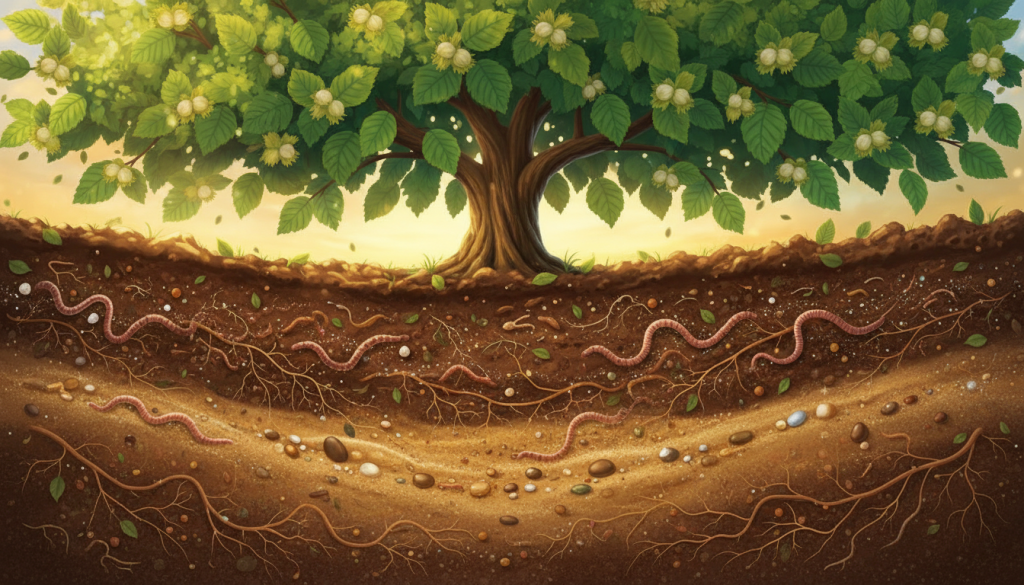
The root system of hazelnuts is fascinating. American hazels, in particular, have a strong habit of forming root suckers. These are sprouts that shoot vertically from shallow lateral roots, usually less than 3 inches deep. While these suckers can be beneficial for propagating new plants, they also require regular management to prevent my hazelnuts from turning into an impenetrable thicket.
I’ve come to respect how resourceful hazelnut roots are at scrounging minerals from the soil. This means I rarely need to add fertilizer. In over 30 years, I’ve only added wood ash or maple leaves for potassium and calcium. The maple leaves serve more as mulch than a fertility source, reminding the hazels of their natural habitat in the understory of well-drained climax hardwood forests.
Importance of Sunlight for Nut Production
I cannot overstate the importance of sunlight for nut production. My trees need at least 8 hours of direct sunlight, measured in early summer (late June to early August), to trigger the initiation of new flower buds. While hazelnuts can survive in partial shade, they simply won’t produce quality nuts without abundant sunlight. I keep them in what I call “perpetual emergency mode” by planting them in open, sunny locations.
The growth and overall health of my hazelnut plants is directly tied to how well I’ve prepared the soil and positioned them for maximum sun exposure. This is the most fundamental aspect of successful nut production.
Caring for Your Hazelnut Tree: Watering and Fertilization
Caring for your hazelnut trees is essential for their health and productivity. Proper watering and fertilization play a vital role in ensuring that these plants thrive and yield abundant nuts. I’ve developed a reliable routine over the years that I want to share with you.
First, let’s talk about watering. My rule of thumb is straightforward: plants in the ground need about an inch of water per week over the root zone. This translates to roughly three-quarters to one gallon per square foot of soil surface area. For a typical three-foot diameter planting hole, that means about seven and a half to ten gallons of water each week. This amount can come from rainfall or my supplemental irrigation.
I’ve learned that watering lightly each day can lead to a wet surface while leaving the root zone dry. Instead, I apply water deeply once a week, or twice a week if my soil drains quickly. During the hot summer months, I pay extra attention to soil moisture. A thick layer of mulch can significantly reduce evaporation and keep the roots cool.
Watering Guidelines for Healthy Growth
- Ensure your plants receive about an inch of water weekly.
- For a three-foot diameter hole, provide 7.5 to 10 gallons of water weekly.
- Avoid daily light watering; instead, water deeply once a week.
- During summer, monitor soil moisture closely.
Fertilizer Recommendations and Soil Improvement
When it comes to fertilizer, I take a measured approach. I use an all-purpose or balanced organic fruit tree and shrub fertilizer, but only if my trees show signs of needing it, such as less than a foot of new growth per year. I’ve discovered that a couple of inches of well-rotted compost spread over the root zone can be just as effective as commercial fertilizer. It also builds soil health at the same time.
One mistake I made early on was applying fertilizer after early summer. This encouraged soft new growth that was damaged by winter cold. Now, I only fertilize from late winter through early summer. I also make sure to keep mulch pulled back 4 to 6 inches away from the trunk to prevent rodent damage and fungal issues.
Mulching and Maintenance Tips
My maintenance routine includes refreshing the mulch layer each year with straw, leaves, or wood chips. This not only conserves moisture but also builds humus, attracts earthworms, and supports beneficial fungal organisms in the soil. I’ve come to see that consistent, thoughtful care throughout the growing season—rather than sporadic intervention—is what leads to truly thriving plants and the best nut harvests.
| Aspect | Details |
|---|---|
| Water Requirement | 1 inch per week over the root zone |
| Water Amount for 3ft Hole | 7.5 – 10 gallons per week |
| Watering Frequency | Once a week, or twice if fast draining |
| Fertilizer Type | All-purpose or balanced organic |
| Fertilizer Timing | Late winter through early summer |
Pest and Disease Management for Thriving Trees
Every gardener must face the challenges of pests and diseases to ensure their trees flourish. I’ve encountered my share of issues over the years, and I want to share what I’ve learned about managing these threats effectively.
One of the most serious concerns is Eastern Filbert Blight (EFB). This fungus is endemic to the Upper Midwest and can be lethal to susceptible hazelnut plants. Symptoms typically appear between July and September, manifesting as sudden twig and stem die-back. I always look for dead leaves hanging on branches and vertical lines of small bumps or black ruptures in the bark below the die-back.
Planting resistant varieties is my best defense against EFB. If I find myself dealing with a susceptible variety, I apply Bordeaux or fixed copper spray every two weeks from bud swell through early May. This proactive approach helps protect my trees during critical growth times.
Recognizing and Managing Eastern Filbert Blight
Being vigilant is key. I regularly inspect my trees for signs of EFB, especially in early spring. Catching the disease early allows me to take action before it spreads. Proper care and attention can make a significant difference in maintaining healthy plants.
Dealing with Deer, Birds, and Small Mammals
Wildlife can also pose a challenge. Deer often browse on my trees, munching on leaves and shortening branches. I’ve found that an 8-foot tall woven wire fence provides reliable protection against these persistent visitors.
Birds, particularly Blue Jays, are clever at knowing when my nuts are ready to harvest. Their loud calls signal me to pick immediately before they clean out my crop. I’ve learned to keep a close eye on my trees as the harvest season approaches.
Additionally, I’ve dealt with voles, mice, and rabbits that chew the bark up to 8 inches high. In snowy areas, I use vinyl tree guards wrapped around the trunk until the trees are well-established. This helps prevent damage and promotes healthy growth.
Common Insect Pests and Control Strategies
Insect pests can be a serious issue as well. The hazelnut curculio, a type of weevil, has been my most challenging pest. I achieve reasonable control by diligently collecting and removing all dropped nuts, which interrupts their life cycle.
Aphids have also appeared on my hazelnuts, but I’ve found that natural predators like ladybugs and parasitic wasps often provide adequate control without any intervention on my part. For the Brown Marmorated Stink Bug, I monitor with traps and stay informed about emerging control methods through resources like stopbmsb.org.
Accepting that some level of pest pressure is natural has helped me maintain a healthy perspective. My goal is management rather than elimination. A healthy tree can tolerate some damage and still produce a satisfying crop.
| Aspect | Details |
|---|---|
| Disease Concern | Eastern Filbert Blight (EFB) |
| Symptoms | Twig die-back, dead leaves, bark ruptures |
| Control Method | Plant resistant varieties, apply Bordeaux spray |
| Wildlife Threats | Deer, birds, voles, rabbits |
| Insect Pests | Hazelnut curculio, aphids, Brown Marmorated Stink Bug |
Propagation, Pruning, and Maintenance Practices
Exploring the propagation and maintenance of hazelnuts can enhance your gardening experience. I’ve found propagation to be one of the most satisfying parts of caring for these plants. The natural tendency of American hazels to produce root suckers makes it surprisingly accessible even for beginners.
Propagation by Root Suckers and Grafting
When I want to propagate a particularly productive hazelnut, I take advantage of the suckers that shoot vertically from shallow lateral roots. These are usually less than 3 inches deep and easy to work with. My technique involves carefully exposing the root and clipping it between the trunk and the sucker. This gives me a new plant that’s genetically identical to the parent—something you can’t achieve by planting nuts since they don’t come true to seed.
I’ve learned that root suckers often lack fine roots when I first separate them. However, new fine roots usually begin to form as soon as I replant, especially if I snip off at least one-third of the shoot to encourage rootlet formation. While I appreciate suckers for propagation, they can be a nuisance in the orchard. Left unchecked, a hazel plant will turn into a bushy thicket that’s difficult to access for picking.
Pruning Tips to Encourage Nut Production
I keep my plants pruned back to four to six stems each, which I’ve found is the sweet spot for maintaining an open, productive form that’s easy to harvest from. Beyond managing suckers, I do very little other pruning—just removing occasional deadwood and doing some tip pruning to encourage the development of nut-bearing laterals. I’ve seen filberts maintained beautifully at 12 to 15 feet tall and wide as small trees, or alternatively kept as a more compact 6- to 10-foot tall by 4- to 6-foot wide hedge, depending on your space and preferences.
Preparing Your Tree for Winter and Seasonal Care
As winter approaches, I make sure my trees are well-prepared. I apply a fresh layer of mulch, ensuring the soil has adequate moisture before it freezes. Additionally, I check that tree guards are in place to protect against rodent damage. I’ve found that early spring is the ideal time for any major pruning or shaping, before the plants break dormancy and put their energy into new growth.
The time I invest in propagation and maintenance pays off exponentially in the health and productivity of my hazelnut trees. I genuinely enjoy these seasonal rituals.
| Practice | Details |
|---|---|
| Propagation Method | Root suckers |
| Pruning Frequency | As needed, primarily in early spring |
| Optimal Height for Trees | 12-15 feet or 6-10 feet for hedges |
| Winter Preparation | Apply mulch and check tree guards |
| Spring Maintenance | Prune before new growth |
Harvesting and Enjoying Your Hazelnuts
The moment of harvest is a thrilling time for any gardener, especially when it comes to the nuts you’ve nurtured. In my experience, nuts typically ripen in late August and begin dropping in early September. Here in the United States, I start watching my hazelnuts closely by mid-September for signs of maturity.
The key indicator I look for is when the sticky green husks begin to brown at the edges. I’ve learned to trust my ears as much as my eyes—when I hear Blue Jays shrieking in the trees, I know it’s time to drop everything and harvest immediately.
I’ve found that picking hazelnuts is genuinely pleasant work. Most clusters can be reached from the ground, and I can simply bend the supple branches down to where I can comfortably reach them.
When and How to Harvest Nuts
After harvest, I spread my nuts indoors about 3 inches deep on drying racks hung from the ceiling. They cure in the dry heat for a week or two until the husks turn completely brown and brittle. My processing method is satisfyingly low-tech: I put the dried nuts in a galvanized washtub and tramp them with my heavy-shoed feet until they’re mostly separated into crunchy bits of husk and hard round nuts in their shiny brown shells.
Post-Harvest Handling and Storage
I winnow away the husk-chaff by repeatedly pouring everything from one bucket to another in a light breeze. It takes a few rounds, but it’s almost meditative work on a pleasant day. For storage, I keep my cleaned nuts in cloth rice bags inside steel, squirrel-proof barrels, which protects them from the persistent rodents that would love to steal my harvest.
Simple Techniques for Cracking and Processing Hazelnuts
When it comes to cracking, I’ve found the Davebilt hand-crank machine to be a game-changer. It costs about $150 and generally cracks nuts without mashing the kernels, especially if I sort my unshelled nuts into size grades first. The nutritional content of these nuts makes all the effort worthwhile—they’re about 60 percent unsaturated, high-density fat that actually helps the body deal with unfriendly fats, plus they’re loaded with vitamins and minerals.
I’ve come to treasure the entire harvest ritual, from the urgency of beating the wildlife to the nuts, to the quiet satisfaction of processing and storing my homegrown hazelnuts for the year ahead.
| Aspect | Details |
|---|---|
| Ripening Time | Late August |
| Drop Time | Early September |
| Harvest Indicators | Sticky green husks browning |
| Drying Method | Spread 3 inches deep on racks |
| Storage Method | Cloth bags in steel barrels |
Conclusion
Reflecting on my journey with hazelnuts, I hope you’re inspired to cultivate these wonderful trees in your own garden. I’ve shared insights on selecting the right varieties, preparing your soil, and nurturing your plants through each season.
The time and effort you invest will reward you with decades of delicious, nutritious nuts that you can enjoy straight from your backyard. Growing hazelnuts has deepened my connection to nature, from watching catkins in winter to racing Blue Jays for ripe nuts in fall.
The quality of homegrown hazelnuts is unmatched, and the satisfaction of producing your own food is truly life-changing. If you’re feeling overwhelmed, start small; even a pair of compatible plants can yield a meaningful harvest.
Remember, every experienced grower started where you are now. The hazelnut community is thriving, with resources like the Upper Midwest Hazelnut Development Initiative supporting new growers. Planting a hazelnut tree is an act of optimism—you’re investing in a future of abundance and a deeper connection to the land you steward.
I’m genuinely excited for you to experience the joy of your first harvest, and I hope this guide has given you the knowledge and confidence to get started on your hazelnut adventure.