

Ethan Brooks
Focused on sustainable practices, careful seed selection, and hands-on experience, our family work closely with nature to produce quality harvests while continuously learning and improving each year..
Latest Posts


Archive
Tags
Social Links
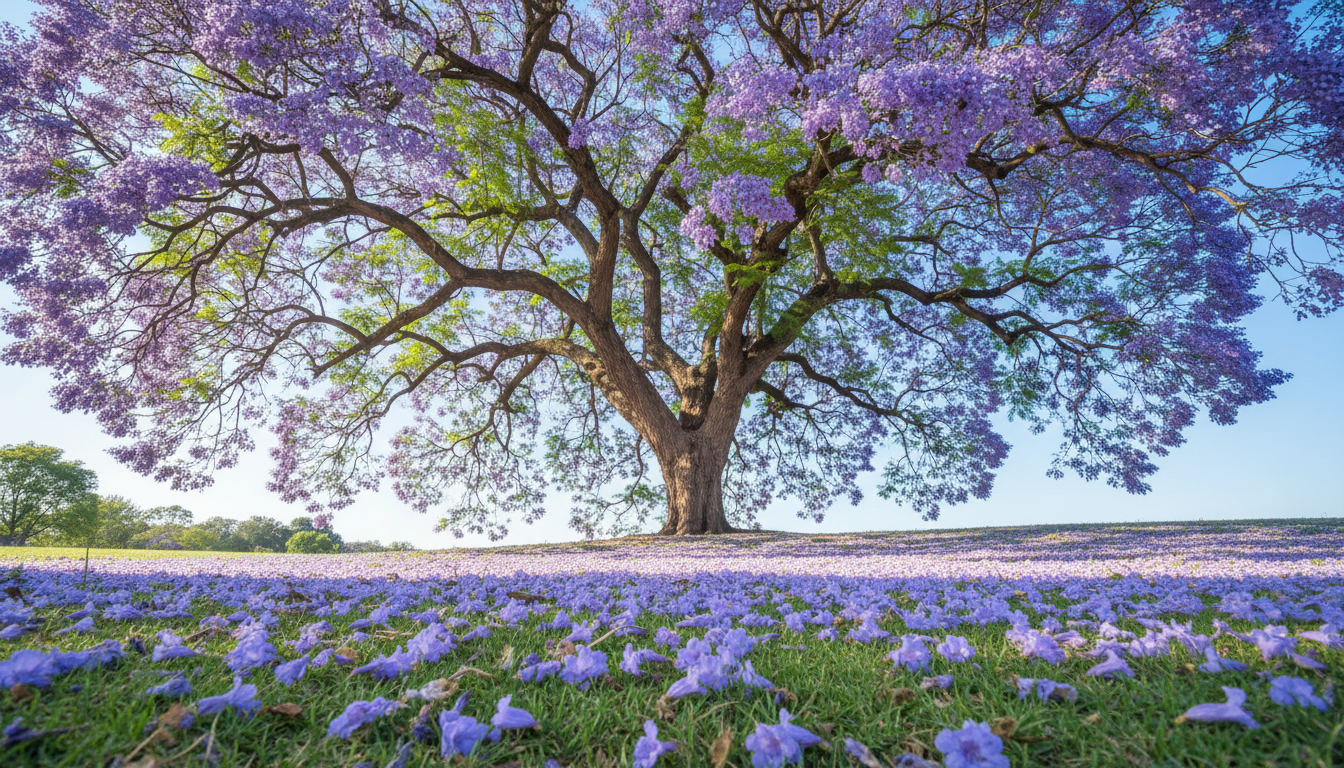

Welcome to the vibrant world of the jacaranda tree, where stunning purple blooms create a breathtaking spectacle each spring. These magnificent trees can reach impressive heights and offer a lush canopy, making them a perfect addition to any garden. If you’re curious about how to grow jacaranda tree successfully, you’re in the right place!
In this guide, I’ll share my passion for these remarkable trees and provide essential tips for nurturing them in your own backyard. From planting techniques to seasonal care, I’ll cover everything you need to know. With the right conditions, you can enjoy the beauty of their flowers and the joy they bring.
Whether you live in a warm climate or are considering container gardening, there’s a way for everyone to appreciate these beauties. Join me on this journey, and let’s explore the magic of jacaranda trees together!
Key Takeaways
- Jacaranda trees are known for their stunning purple blooms.
- They thrive in warm climates and can reach impressive heights.
- With proper care, anyone can grow a jacaranda tree.
- Container gardening is an option for those in cooler areas.
- Expect breathtaking displays once your tree matures.
Understanding the Jacaranda Tree: Characteristics and Origins
Let’s explore the captivating features and origins of the jacaranda tree, a marvel in the botanical world. This magnificent species, known scientifically as jacaranda mimosifolia, showcases stunning attributes that make it a favorite among gardeners and nature enthusiasts alike.
Botanical Features and Size
The jacaranda tree is truly a sight to behold. Here are some of its most striking features:
- Leaves: The leaves are bright, mid-green, and have a unique fern-like appearance, adding to the tree’s beauty.
- Flowers: It produces masses of vibrant purple-blue flowers, typically blooming in late spring and again in autumn.
- Size: A mature jacaranda can reach heights of 25 to 50 feet, with a sprawling canopy that provides lovely shade.
- Growth Rate: Young trees can grow rapidly, gaining over 3 feet each year under optimal conditions.
- Bark: The smooth, greyish bark enhances the tree’s elegance, even when it’s not in bloom.
Native Habitat and Climate Preferences
Understanding where the jacaranda thrives helps in appreciating its beauty. This tree is native to the tropical regions of South America, specifically in countries like Bolivia and Argentina. Here’s what you should know about its habitat:
- Climate Preferences: Jacarandas flourish in warm, subtropical, and tropical climates where frost is rare.
- U.S. Growth: In the United States, these trees thrive in states like Southern California, Arizona, and Florida, where temperatures remain mild.
- Temperature Sensitivity: Jacarandas do not tolerate temperatures below 32 degrees Fahrenheit, making them unsuitable for cooler zones.
Choosing the Right Location for Your Jacaranda Tree
Finding the perfect spot for your jacaranda tree is essential for its success. These trees thrive in conditions that allow them to reach their full potential. Let’s delve into the key factors that will help you select the ideal location.
Sunlight Requirements
Jacarandas need plenty of sunlight—at least six hours of full sun daily. This exposure is crucial for their growth and vibrant blooms. Assess your garden’s sun exposure throughout the day to find that perfect sunny spot for your tree. Consider the orientation of your yard and any nearby structures that may cast shadows.
Space and Placement Considerations
When planting a jacaranda, choose a spacious area where the tree’s mature size won’t interfere with buildings, fences, or powerlines. A mature jacaranda can have a canopy that spreads as wide as it is tall. Avoid planting too close to driveways or patios, as fallen flowers, leaves, and seed pods can create a slippery mess.
Climate Zones Suitable for Jacaranda Growth
Jacaranda trees flourish best in frost-free temperate, tropical, and subtropical climates. In the United States, gardeners in USDA zones 9-11 have the best luck growing jacaranda trees outdoors year-round. If you live in a cooler area, protect young trees from frost until they are established. Additionally, provide wind protection, as strong gusts can damage branches and strip flowers prematurely.
Soil Preparation and Planting Techniques
Proper soil preparation sets the foundation for healthy growth and vibrant blooms. A jacaranda tree thrives best in well-draining soil with a slightly sandy texture. Before planting, it’s essential to loosen the soil and mix it with organic compost to enrich it with nutrients.
Start by digging a hole that is twice the width of the tree’s root ball but only as deep as the root ball itself. This will provide ample space for the roots to expand. If your garden has heavy clay soil, consider adding gypsum clay breaker to improve drainage.
Selecting and Preparing Soil
Well-draining soil is non-negotiable for jacaranda trees. Poor drainage can lead to devastating root rot problems. The ideal soil texture is slightly sandy, allowing water to flow through freely while retaining some moisture.
To ensure the best conditions, test your garden soil. If it’s heavy clay, amend it with gypsum or organic matter. My favorite technique involves loosening the native soil and mixing in generous amounts of organic compost. This method enhances drainage and nutrient availability.
Proper Planting Steps for Jacaranda Trees
When you’re ready to plant, gently tease out the roots before placing the tree in the hole. Cut away any roots that are circling or tangled from container life. After positioning the tree, backfill the hole with soil and firm it gently.
Create a raised ring around the base to form a watering well. This will help direct moisture to the roots where it’s needed most. It’s crucial to give the tree its first deep watering right after planting. This helps settle the soil and eliminates air pockets around the root system.
Remember, during the establishment phase, deep watering once per week is vital for stronger root development. Surface watering alone won’t suffice. With the right soil and care, your jacaranda tree will flourish beautifully in your garden.
How to Grow Jacaranda Tree: Watering and Fertilizing Tips
Watering and fertilizing are vital components in nurturing your jacaranda trees. Understanding the specific needs of young and mature trees will help you provide the best care possible. Let’s dive into the essential watering and fertilizing techniques that will ensure your trees thrive.
Watering Young vs. Mature Trees
Young saplings require regular watering, especially during dry spells. I recommend watering them weekly, ensuring the soil remains moist but not soggy. Consistent moisture is crucial during their first few years of establishment.
In contrast, mature jacaranda trees are surprisingly drought-tolerant once their root systems are well-established. However, they still benefit from occasional deep watering during extended dry periods. If you notice leaves turning brown or wilting, it could indicate underwatering or poor drainage.
Choosing and Applying Fertilizer
While jacarandas don’t need heavy fertilizing, a balanced fertilizer can support healthy growth and encourage beautiful blooms. I suggest applying a low-nitrogen fertilizer once in early spring and again as flowering begins. This helps promote flowering without excessive leafy growth.
Feeding every eight weeks from spring through autumn with a flower-focused fertilizer will keep your jacaranda thriving. Avoid high-nitrogen fertilizers, as they can lead to lush foliage at the expense of those stunning purple blooms we all admire.
Pruning and Maintenance for Healthy Growth
Maintaining the health and beauty of your jacaranda requires thoughtful pruning and care. Pruning is not just about cutting branches; it’s a vital practice that shapes the tree and enhances its natural elegance. Knowing when and how to prune can make all the difference in your tree’s growth and overall appearance.
Best Time and Method to Prune
The ideal time for pruning jacaranda trees is during late winter or early spring, just before new growth begins. This timing allows you to remove any dead or diseased branches effectively. I recommend a light-touch approach, as jacarandas have a naturally beautiful umbrella shape. Heavy pruning can disrupt this form and lead to awkward upright growth.
Managing Suckers and Dead Branches
It’s essential to keep an eye out for suckers—those small shoots that sprout near the base of the tree. These can steal valuable nutrients from the main tree. Regularly trimming these back will help your jacaranda focus its energy on healthy growth.
Additionally, remove any dead, damaged, or diseased branches to keep your tree looking its best. If your jacaranda is young, you might also consider lifting the canopy by carefully removing low-hanging branches that obstruct walkways or views.
Always use clean, sharp pruning tools to make precise cuts. This practice helps the tree heal quickly and reduces the risk of disease. Remember, minimal pruning is often sufficient. Many jacarandas thrive for years with just occasional dead branch removal.
| Pruning Aspect | Details |
|---|---|
| Best Time | Late winter or early spring |
| Method | Light-touch pruning |
| Focus Areas | Dead branches, suckers, low-hanging branches |
| Tools | Clean, sharp pruning tools |
| Frequency | Occasional dead branch removal |
Pest and Disease Management
Caring for your jacaranda involves being vigilant about potential threats from pests and diseases. These challenges can impact the health and beauty of your tree, so understanding them is essential.
Identifying Common Pests
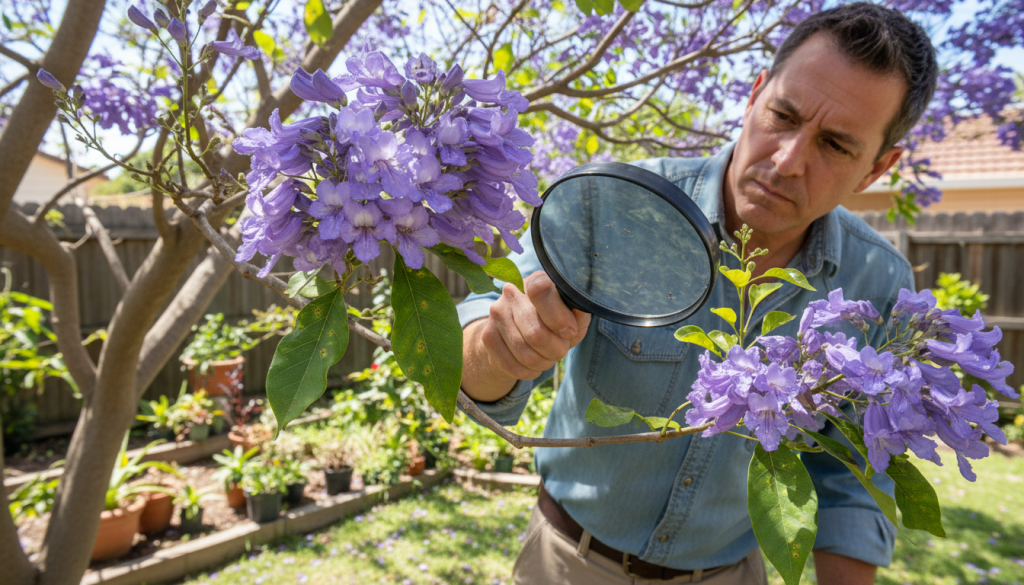
Several pests may occasionally target your jacaranda. Here are some of the most common:
- Aphids: These tiny insects leave sticky honeydew on leaves, causing distortion.
- Scale Insects: Look for small, hard bumps on branches. They weaken the tree by sucking sap.
- Caterpillars: These pests can chew through leaves, leaving noticeable damage.
If you spot any of these pests, consider using insecticidal soap or horticultural oil for effective control.
Preventing and Treating Diseases
Diseases can pose a serious threat to jacaranda trees, particularly root rot. This condition often arises from poor drainage and damp soil. Here’s what you need to know:
- Signs of Root Rot: Look for yellowing leaves and stunted growth, which indicate trouble below ground.
- Prevention: Ensure your jacaranda is planted in well-draining soil and avoid overwatering.
- Treatment: If fungal issues arise, applying a fungicide may help restore health.
Additionally, red spider mites can become a problem in dry conditions. Increasing humidity around the tree can deter them. Whiteflies may also occur, especially in greenhouse settings, so consider biological controls for effective management.
Propagation: Growing Jacaranda From Seeds and Cuttings
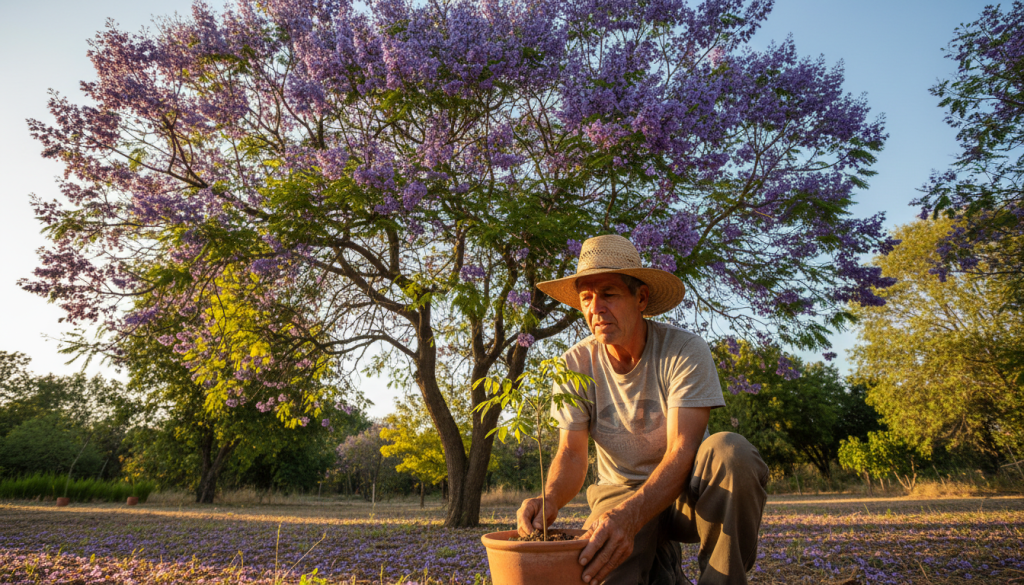
Embarking on the journey of propagation opens up exciting possibilities for your garden. You can easily cultivate new jacaranda trees from seeds or cuttings. Both methods are rewarding and allow you to enjoy these beautiful trees in various locations.
Let’s start with the first method: sowing seeds. Jacaranda’s round, wavy seed pods are often seen hanging on the tree from summer into fall. When these pods mature and turn brown, it’s time to collect them. Remove the pods from the tree, split them open, and extract the small seeds inside.
How to Sow Jacaranda Seeds Successfully
To improve germination, soak the seeds in water for 24 hours before sowing. This simple step can significantly boost your success rate. Plant the seeds about one centimeter deep in small pots or trays filled with seed-raising potting mix. Place them in a warm spot and keep the soil moist.
Seedlings typically emerge after about a month. Patience is key, as it may take several years for these young plants to produce their first blooms. However, the journey is incredibly rewarding, as you witness the transformation from seed to flowering tree.
Taking and Rooting Softwood Cuttings
Another exciting method is propagating jacaranda from softwood cuttings. This technique can be a bit more challenging but is equally rewarding. Use clean and sharp secateurs to cut 20 cm long pieces from the end of non-flowering stems in late spring or early summer.
Choose stems that are at least one centimeter in diameter. Cut just below a node and remove all but a few leaves at the top. Dip the end of the stem into rooting hormone gel. Then, insert the cuttings into small pots filled with cuttings and seeds potting mix.
Providing the right conditions is crucial for successful rooting. Keep the cuttings in a warm, humid environment, and ensure the soil remains moist. With time and care, you’ll see roots develop, leading to new jacaranda trees ready for planting.
| Propagation Method | Steps |
|---|---|
| Seed Sowing | 1. Collect mature seed pods 2. Soak seeds for 24 hours 3. Plant seeds 1 cm deep 4. Keep warm and moist |
| Softwood Cuttings | 1. Cut 20 cm pieces from non-flowering stems 2. Remove excess leaves 3. Dip in rooting hormone 4. Plant in moist potting mix |
Growing Jacaranda Trees in Pots and Containers
Growing jacaranda trees in pots offers a unique opportunity for those with limited garden space. With the right care, you can enjoy these stunning trees even on a balcony or patio. Let’s explore how to successfully cultivate them in containers.
Selecting Suitable Dwarf Varieties
For container gardening, I recommend the dwarf grafted form, Jacaranda ‘Bonsai Blue’. This variety is perfect for small spaces, reaching only about 2.5 meters tall and 2 meters wide. Its compact size makes it an excellent choice for patios and smaller gardens.
Potting Mix and Pot Care
Choosing the right pot is crucial. Select a well-drained container that is at least 500 mm wide. Ensure it has good drainage holes to prevent waterlogging.
For the potting mix, I recommend using a soil-based, peat-free compost like John Innes No. 2. Adding coarse grit or perlite will enhance drainage, which is vital for healthy growth.
Overwintering and Indoor Care Tips
During the winter months, allow the compost to dry out. Potted jacarandas should be kept in a cool but frost-free environment, ideally with temperatures above 5°C (41°F).
While these trees don’t make good permanent houseplants, they can be moved outdoors in summer. Just remember to bring them back inside before the frost arrives.
Water sparingly, allowing the mix to almost dry out between waterings. During the growing season, feed your jacaranda every 2-3 weeks with a balanced liquid fertilizer to support healthy growth.
Seasonal Care and Growth Timeline for Jacaranda Trees
Every season brings unique needs for jacaranda trees, shaping their growth and beauty. Understanding these seasonal changes will help you care for your trees effectively. Let’s explore the key aspects of their growth cycle.
Flowering Periods and Leaf Cycles
The flowering period of jacaranda trees is a magical time. In spring and early summer, bare branches burst into clusters of vibrant purple-blue blooms. These flowers often appear before or just as the leaves begin to emerge.
In late winter, jacaranda trees lose their leaves, making way for a fresh flush of delicate, feathery green leaves in spring. This creates a stunning umbrella-shaped canopy that provides lovely shade.
Watering and Feeding Through Seasons
During the hot and dry weather of mid to late summer, regular watering is particularly important. I recommend adjusting your watering schedule, increasing frequency during these dry spells.
As for feeding, apply a flower-focused fertilizer every eight weeks from spring to autumn. This helps support healthy growth and vibrant blooms. While jacaranda trees can take up to 20 years to reach full maturity, they can grow several meters tall within three years under ideal conditions.
Grafted trees may start flowering as early as three years after planting, while seed-grown trees will take a bit longer. With the right care, each season brings new beauty to enjoy in your garden.
Common Challenges and How to Overcome Them
Every gardener faces challenges when nurturing their plants, and jacarandas are no exception. These beautiful trees can sometimes present issues that require attention. Understanding these common hurdles can help you keep your jacaranda thriving.
Yellowing Leaves and Leaf Drop
During winter, it is perfectly natural for jacaranda leaves to turn yellow before they fall. This seasonal change is part of the tree’s cycle. However, if you notice yellowing at other times, it may signal a nutrient deficiency or even root rot.
Inspect your tree regularly. If you suspect a problem, check the soil moisture and consider whether pests might be the culprit. Addressing these issues early can help your tree stay healthy.
Managing Mess from Leaves and Flowers
Another reality of jacaranda trees is the mess they can create. Dropped flowers, leaves, and seed pods can accumulate on your lawn. While this may seem inconvenient, there are practical ways to manage it.
One effective method is to mow over fallen leaves, which can be collected in the mower catcher. Additionally, when choosing a planting spot, consider areas away from driveways and patios to minimize cleanup.
Frost Sensitivity and Protection Measures
Jacarandas thrive best in frost-free climates. However, established trees can tolerate light frosts. Young trees, on the other hand, need protection during colder months. Frost can damage flower buds, preventing blooming, which is disappointing after waiting for those stunning purple flowers.
For gardeners in borderline climates, consider covering young trees during cold snaps. Choosing sheltered planting spots can also help protect them from harsh winter conditions.
Remember, patience is key. Jacarandas may take several years to start flowering, especially those grown from seed. With proper care and attention, you can enjoy their beauty for years to come.
Conclusion
As we conclude our journey through the enchanting world of jacaranda trees, it’s clear that their beauty is worth the effort. These stunning trees bring vibrant blooms and a sprawling canopy to any landscape. By focusing on proper planting, adequate watering, and essential maintenance, you can ensure your jacaranda thrives for years.
Remember, patience is key. Those first purple flowers will be a rewarding sight after a few years of care. For those in cooler regions, dwarf varieties like ‘Bonsai Blue’ allow you to enjoy these marvels even in containers.
Embrace the full experience of gardening with jacarandas, including the occasional mess. The beauty they bring to your garden far outweighs any cleanup. With the tips from this guide, you are now equipped to cultivate a stunning jacaranda tree of your own!