

Ethan Brooks
Focused on sustainable practices, careful seed selection, and hands-on experience, our family work closely with nature to produce quality harvests while continuously learning and improving each year..
Latest Posts


Archive
Tags
Social Links
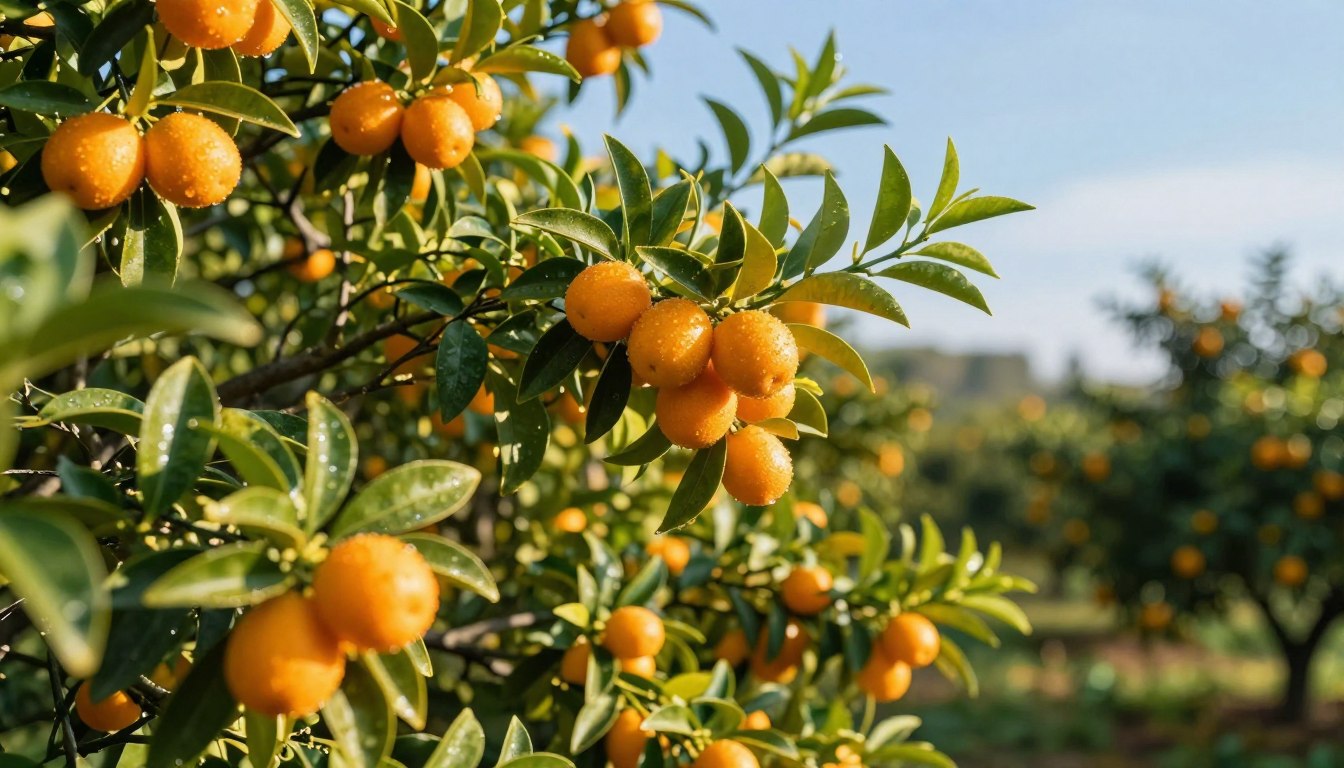

I love these trees for their scent and the way the tiny fruits pop against glossy leaves. I learned that Robert Fortune brought this species to Europe in the mid-19th century, and that history makes the plant feel special.
Kumquats are the smallest known citrus fruits, about an inch wide, and you can eat the peel and fruit whole. My guide will show simple care steps so your tree thrives and yields tasty, decorative fruits.
For deeper tips on light, soil, and seasonal care, check this helpful guide on growing kumquats.
Key Takeaways
- Kumquat Tree describes a compact citrus tree that bears bright orange, edible fruits.
- These trees thrive with full sun and well-draining soil.
- They are hardy and suited to containers or garden beds.
- Fruiting often begins within 2–3 years for grafted plants.
- Regular watering and light pruning boost health and yield.
Understanding the Kumquat Tree
A compact citrus with glossy foliage, the kumquat tree packs big flavor into a small frame.
In the wild, this species can reach up to five meters tall, but as an ornamental it usually stays near 1.5 meters. The evergreen, oval leaves give year-round appeal.
Fragrant white flowers appear for two to three weeks around July or August. It often takes a few years before a young plant flowers and sets its first bright orange fruit.
- The rind is sweet, so you can eat whole kumquats; the peel balances the tart flesh.
- I enjoy that glossy leaves make the tree decorative before fruiting.
- This citrus has a long horticultural history — the genus Fortunella honors Robert Fortune.
| Trait | Wild | Ornamental/Container |
|---|---|---|
| Typical height | Up to 5 m | About 1.5 m |
| Leaves | Evergreen, oval | Glossy, compact |
| Fruit timing | Later, variable | Usually after a few years |
| Flowers | Fragrant, seasonal | Fragrant, blooms in July–August |
How to Grow Kumquat Trees from Seeds or Cuttings
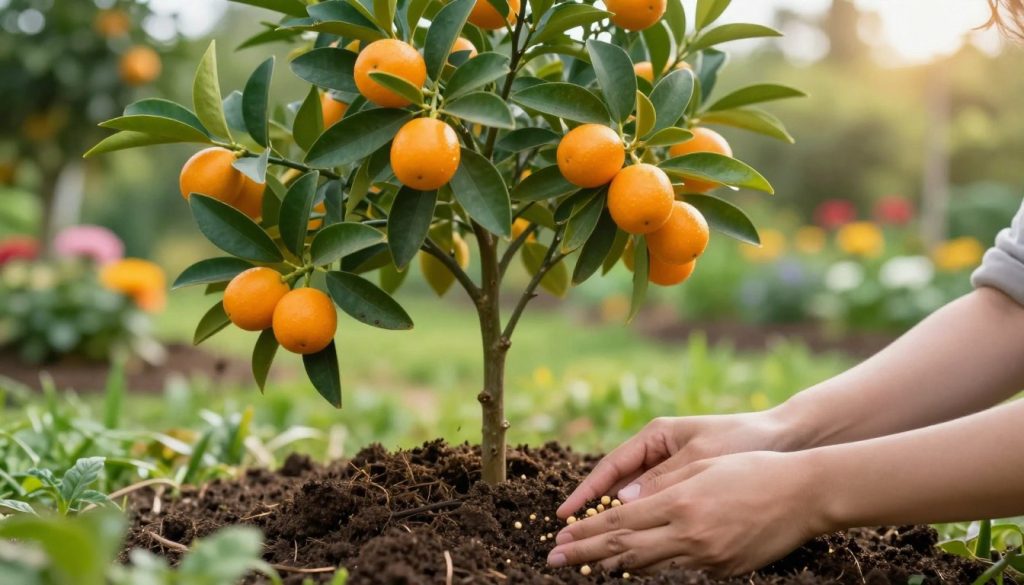
Starting a new tree from seed or a cutting takes patience and a bit of care, but both paths work well in a sunny pot.
Germinating Seeds
I dry seeds for 2–3 days, then seal them in a bag with a damp paper towel at 22°C. High humidity in the bag helps sprouting.
Use a light potting mix made of sand, potting soil, and compost so young roots find air and nutrients. Check for tiny roots after a few weeks and move seedlings into a small pot when stable.
Propagating via Cuttings
I select a branch with at least three nodes, trim a clean end, and soak it in rooting hormone for up to five days. Plant the cutting in a sandy potting mix and keep the pot warm and slightly humid.
- Seed timeline: can take several years before fruit appears.
- Cutting timeline: usually faster for flowering and fruit production.
- Always use well-draining soil and a quality potting mix.
| Method | Time to Roots | Time to Fruit |
|---|---|---|
| Seeds | Weeks to months | Several years |
| Cuttings | Weeks (with hormone) | 1–3 years (often faster) |
| Soil Needs | Sand + potting soil + compost | Well-draining mix in a pot |
For extra guidance on seed steps, see this seed starting guide. For container tips you may also find this container planting resource useful.
Selecting the Right Container and Soil
Choosing the right pot and soil gives a small citrus the best chance at a long, healthy life.
I use a 15–20 gallon container for a mature kumquat tree so the roots have room to expand. A roomy pot prevents crowding and lowers stress on the root system.
Drainage is crucial. Your container must have more than one hole so excess water can escape. Without good drainage, roots sit in wet mix and rot fast.
I prefer a mineral-based potting mix because it holds permanent aeration for roots. Make the soil slightly acidic and very permeable; this helps the tree absorb nutrients efficiently.
- Use a 15–20 gallon container for mature plants.
- Confirm multiple drainage holes in the pot.
- Choose a mineral-based potting mix over standard mixes.
- Avoid decorative pots without drainage; they trap water and kill roots.
| Need | Recommendation | Why it matters |
|---|---|---|
| Container size | 15–20 gallons | Allows root growth and stable fruiting |
| Drainage | Multiple holes | Prevents waterlogging and root rot |
| Soil mix | Mineral-based, slightly acidic | Stable aeration and nutrient uptake |
| Placement | Pots with saucers allowed if draining well | Protects surfaces but avoid standing water |
Essential Light and Temperature Requirements
Sunlight and steady warmth are the backbone of a happy kumquat tree.
I give my kumquat trees 6–8 hours of direct sunlight each day, ideally from a south-facing window. That bright exposure keeps leaves glossy and encourages regular flowering.
If natural daylight is limited, I use LED grow lights placed 12–18 inches above the canopy. LEDs supplement sunlight and prevent yellowing leaves or a lack of flowers.
Temperature matters: I keep the room between 55°F and 80°F. Temps below 40°F cause damage, so I move pots indoors or protect them on cold nights.
Humidity also helps. I aim for 40–60% and place a pebble tray under the pot to raise local moisture. This keeps leaves healthy and reduces stress in winter.
- 6–8 hours direct sunlight is best for leaves and blooms.
- LED lights at 12–18″ supplement low sunlight effectively.
- Maintain 55°F–80°F and avoid exposure under 40°F.
- Keep humidity near 40–60% with a pebble tray.
| Factor | Ideal Range | Why it matters |
|---|---|---|
| Daily light | 6–8 hours direct | Promotes flowering and fruit set |
| Artificial light | LEDs 12–18 inches | Prevents leaf yellowing indoors |
| Temperatures | 55°F–80°F | Avoids cold stress and leaf drop |
| Humidity | 40%–60% | Supports healthy leaves and blooms |
Watering and Fertilizing for Optimal Growth
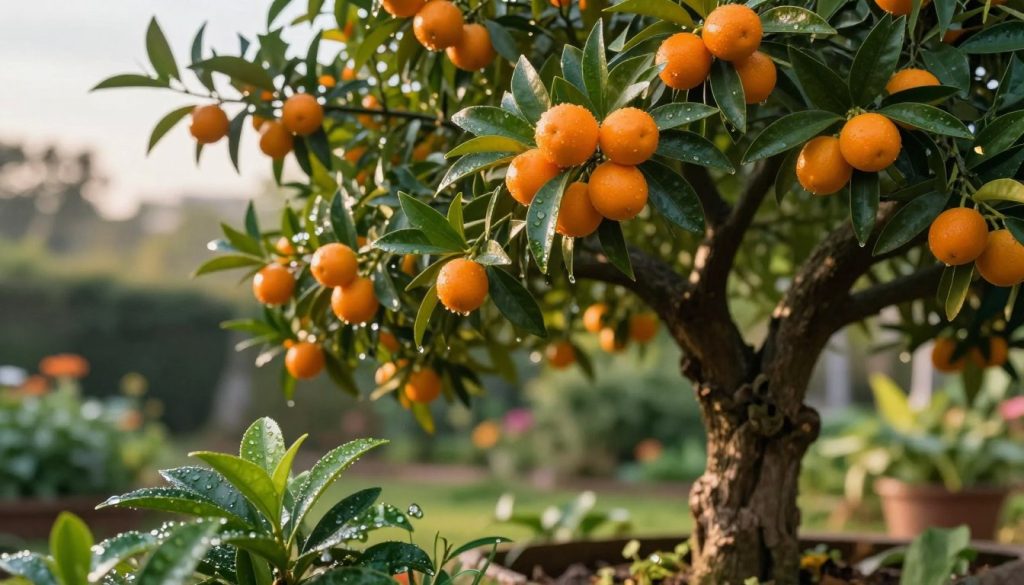
A steady routine of deep watering and monthly feeding keeps a healthy kumquat tree producing bright fruits and glossy leaves.
The Drench Method
I water until moisture runs from the drainage holes. This flushes salts and wets the roots deeply. Then I wait until the top layer of soil is dry before the next session.
Choosing Organic Fertilizer
I use a 7-4-4 organic blend that lists crab shells and kelp, as recommended by US Citrus Nursery. Monthly feeding during the growing season gives steady nutrients for flowers and fruit.
Seasonal Feeding Adjustments
I stop fertilizing when night temperatures fall below 40°F. In winter the plant needs much less water and less feeding. Proper drainage and checking soil with my finger keep the roots healthy through the dormant months.
- Drench until water runs clear from drainage holes.
- Feed monthly during the growing season with an organic 7-4-4.
- Reduce water and pause fertilizer when cold weather arrives.
Can the Best Fertilizer for Magnolia Trees Also Benefit My Kumquat Trees?
Choosing the best fertilizer for magnolia trees can also yield benefits for your kumquat trees. Nutrient-rich fertilizers designed for magnolias often contain balanced levels of nitrogen, phosphorus, and potassium, supporting healthy growth and fruit production in kumquats. A well-fed garden fosters a thriving ecosystem for all plants.
Managing Pests and Pruning for Health
Routine care keeps my kumquat tree productive and resilient.
I prune every February, cutting at a 45-degree angle. This angle helps prevent fungal disease and speeds wound healing.
I never remove more than one-third of the canopy in one session. That limit reduces shock and preserves leaf surface for sunlight and nutrients.
I check leaves for spider mites every few weeks, especially in summer. For infestations, I spray neem oil on both sides of each leaf. This treats spider mites and whiteflies without harsh chemicals.
Each year I trim roots by about 1 inch when the plant is in a container. Trimming prevents the roots becoming root-bound and keeps soil fresh in the potting mix.
- Disinfect tools with rubbing alcohol before and after pruning.
- Maintain good drainage and avoid standing water near the pot or hole in the saucer.
- Monitor growth through the growing season and adjust water, light, and nutrients as needed.
| Task | Timing | Benefit |
|---|---|---|
| Canopy pruning | February | Reduces disease, supports fruit set |
| Root trim | Annually | Prevents root-bound container problems |
| Pest checks | Every few weeks | Early control of spider mites and whiteflies |
Conclusion: Enjoying Your Homegrown Harvest
Few rewards match harvesting a handful of glossy, bright orange fruit from a plant I tended for months.
I kept this tree in a well-draining container, gave steady water, and bright light. That simple routine helped leaves stay healthy and flowers appear each season.
Whether I started from seeds or a young sapling, patience over months and years paid off. I can eat the small citrus fruits and often eat whole pieces right from the branch.
In colder winter weather I move pots inside or protect them. With steady sun and care, kumquat trees and other citrus plants reward you with tasty fruit and lasting joy.