

Ethan Brooks
Focused on sustainable practices, careful seed selection, and hands-on experience, our family work closely with nature to produce quality harvests while continuously learning and improving each year..
Latest Posts


Archive
Tags
Social Links


Welcome to the fascinating world of the pomegranate tree! If you’re looking for a rewarding gardening experience, this is the perfect choice. These stunning trees are not only beautiful but also produce delicious fruits that are rich in flavor and nutrients.
Pomegranate trees thrive in warm climates and can live for decades, making them a fantastic addition to your garden. With their vibrant orange-red flowers in spring and the jewel-like arils in fall, they offer beauty and bounty.
In this article, I’ll share some easy tips for beginners on how to cultivate your own pomegranate tree. From selecting the right site to understanding their care needs, I’ll guide you every step of the way. Get ready to enjoy fresh, homegrown pomegranates!
Key Takeaways
- Pomegranate trees are drought-tolerant and thrive in warm climates.
- They can live for up to 200 years, providing long-term beauty and fruit.
- Self-pollinating, they can produce fruit on their own, but planting multiple trees boosts yields.
- With vibrant flowers and nutrient-packed fruits, they are a joy to grow.
- Perfect for beginners, they require low maintenance once established.
How to Grow Pomegranate Tree: Site Selection and Preparation
Choosing the right spot for your new pomegranate tree is essential for success. The location you select will impact growth and fruit production significantly. A well-chosen site ensures your tree thrives and rewards you with delicious fruit.
Choosing the Ideal Location
I always tell beginners that selecting the perfect location is the first step in cultivating a thriving tree. Aim for a spot that receives full sun, meaning at least 6 to 8 hours of direct sunlight daily. This exposure is crucial for optimal growth and fruit yield.
Evaluate your property throughout the day. Identify areas that remain consistently sunlit, free from shade cast by buildings or larger trees. This assessment helps you pinpoint the best location for your pomegranate tree.
Understanding USDA Hardiness Zones
Understanding USDA hardiness zones is vital. Pomegranates flourish in Zones 8-10. However, cold-hardy varieties like Russian 26 can survive in Zones 6-7 with proper care. If you live in a colder area, consider growing your pomegranate in a container that you can bring indoors during freezing temperatures.
In warmer climates, like Arizona, California, and Texas, these trees thrive. Yet, gardeners in cooler zones can still succeed with the right variety and care.
Sunlight Requirements for Optimal Growth
Sunlight is a key factor for pomegranate trees. They need a minimum of 6-8 hours of direct sunlight daily. This exposure enhances growth and maximizes fruit production. A well-hydrated tree is also better equipped to handle winter stress, so ensure it receives adequate water, especially during dry spells.
Avoiding Frost Pockets and Cold Damage
Frost pockets are low-lying areas where cold air settles, and they can pose a threat to your tree. Unseasonable frosts can damage your pomegranate, reducing its fruit production. Choose a location that avoids these chilly spots.
Even in warmer zones, sudden temperature drops can stress your tree. Selecting a protected site near a south-facing wall can provide warmth and shelter, helping your tree thrive. Good air circulation around your tree also prevents fungal issues and supports healthy growth throughout the season.
Taking the time to select the right location now will pay off later. A well-placed pomegranate tree will provide delicious fruit for years to come. For more detailed information on site selection, check out this helpful guide on how to grow pomegranates.
Preparing the Soil for Your Pomegranate Tree
Setting the stage for your pomegranate tree begins with the right soil. Proper soil preparation is one of the best things you can do to ensure your tree thrives. While pomegranates aren’t overly picky about soil types, they absolutely require good drainage to prevent their roots from sitting in water, which can lead to rot.
Soil Types and Drainage Needs
Pomegranates grow best in sandy loam soil, which offers excellent drainage. However, they can adapt to various soil conditions as long as excess water can drain away freely. If your soil has low fertility or is compact clay, mixing in organic compost will improve both drainage and fertility.
Testing and Adjusting Soil pH
Testing your soil pH is crucial. Pomegranates prefer slightly alkaline soil, ideally between 6.5 and 7.0. You can easily test your soil using a simple home kit. If you find that your soil pH is low, you can adjust it by incorporating dolomitic limestone evenly across the planting area before you plant your tree.
Incorporating Organic Matter and Compost
Digging a generous area for your pomegranate tree and mixing in organic compost will significantly enhance your soil. This practice improves drainage and provides the nutrients necessary for healthy growth. If your soil has poor drainage, consider building a raised mound or planting in a raised bed to give your tree the well-drained conditions it craves.
Taking the time to prepare your soil now will reward you with vigorous growth and abundant fruit production for many years to come. Remember, healthy soil leads to healthy roots, and healthy roots are the foundation of a thriving pomegranate tree that produces delicious fruit.
Planting Your Pomegranate Tree: Step-by-Step
Planting a pomegranate tree can be an exciting and rewarding experience. Whether you choose a bare-root or potted tree, each method has its own benefits. Let’s dive into the details of how to get your new tree in the ground successfully.
Planting Bare-Root vs. Potted Trees
When it comes to planting, the timing varies. Bare-root pomegranates should be planted in early spring while they are still dormant. Before planting, soak the roots in water for about 12 hours. This ensures they are fully hydrated.
Potted nursery stock, on the other hand, should be planted after the last spring frosts have passed. Make sure the plants have hardened off first to ensure a successful transition to their new environment.
Digging the Right Hole and Planting Techniques
Next, it’s crucial to dig the right hole. Aim for a hole that is three times the width of the pot and just as deep as the root ball. The sides should slope like a bowl rather than being vertical. This helps the roots spread out easily.
Loosen the soil at the bottom of the hole to encourage root growth. For containerized plants, gently score the root ball to loosen any root-bound roots. Spread the roots out evenly, avoiding any circling.
Watering and Mulching After Planting
After placing your tree in the hole, backfill with native soil. Pause halfway to water, which helps eliminate air pockets. Once finished, create a soil ring about a foot in diameter and an inch high around the plant. This ring will help retain water right where the roots need it.
Finally, apply a thick layer of mulch, keeping it a finger-width away from the trunk. This prevents rot and retains precious moisture. Remember, do not fertilize at planting time; young trees are sensitive and can suffer from fertilizer burn.
| Step | Details |
|---|---|
| Soak Roots | 12 hours before planting for bare-root trees |
| Dig Hole | 3 times the width of the pot, same depth as root ball |
| Loosen Soil | At the bottom of the hole for better root growth |
| Watering | Pause halfway through backfilling |
| Mulch | Thick layer, finger-width from trunk |
Watering and Mulching for Healthy Growth
Proper watering and mulching are vital for the success of your pomegranate tree. The first year is critical, as your new tree has not yet established a strong root system. During this time, you must pay close attention to its watering needs.
Watering schedules will vary based on soil type. For light, sandy soil, I recommend watering twice a week. In contrast, if your soil is heavier clay, once a week is sufficient. Your pomegranate trees need at least one inch of water per week. During dry spells, consistent watering is mandatory to prevent premature fruit drop.
Establishing Watering Schedules in Different Soils
Once your tree is established, the approach changes. Water deeply but infrequently. This encourages the roots to grow down deep, where moisture is more consistent. A well-watered tree will be more resilient during dry seasons.
The Importance of Mulch and How to Apply It
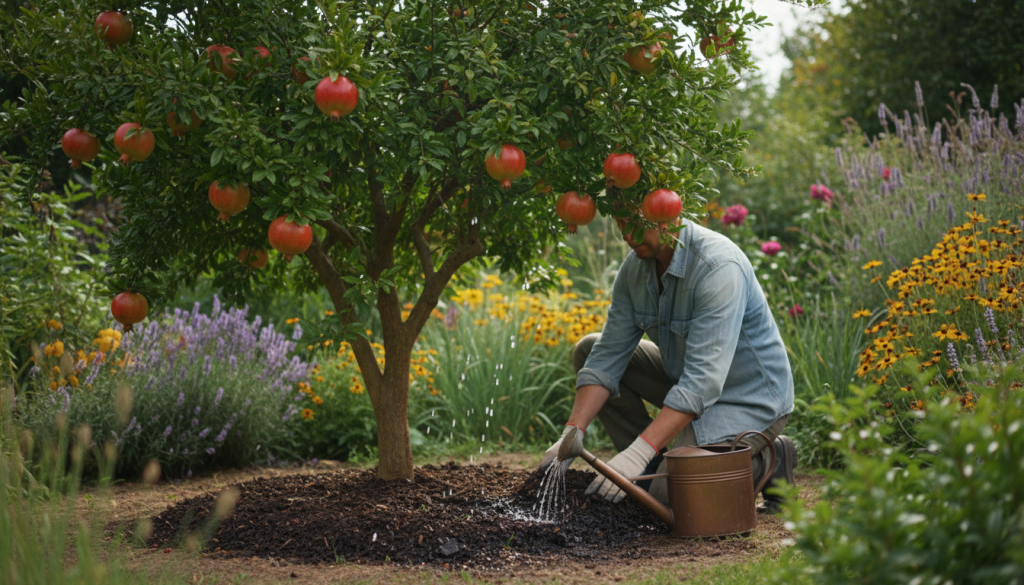
Mulch is essential for retaining moisture and regulating soil temperature. I recommend applying a 2 to 3-inch layer around the base of your tree. This practice also helps suppress weeds that compete for water and nutrients.
When applying mulch, keep it 2 to 3 inches away from the trunk. This distance prevents rot and allows for proper air circulation around the base of your pomegranate. A well-mulched tree has the best chance at vigorous growth and fruit production.
Preventing Overwatering and Root Rot
While pomegranates are drought-tolerant, overwatering can lead to root rot. To avoid this, check the soil moisture before watering. A simple finger test can help determine if the soil is dry enough to warrant additional water.
By maintaining a balanced watering routine and utilizing mulch effectively, your pomegranate tree will thrive. Remember, consistent moisture during the fruiting season rewards you with larger, juicier fruit.
| Soil Type | Watering Frequency | Mulch Depth |
|---|---|---|
| Sandy Soil | Twice a week | 2-3 inches |
| Clay Soil | Once a week | 2-3 inches |
Fertilizing Your Pomegranate Tree: Timing and Techniques
Proper fertilization can significantly enhance the growth and fruit production of your pomegranate trees. Understanding when and how to fertilize is essential for achieving vibrant, healthy plants. In this section, I’ll share my complete fertilizing schedule based on your USDA zone, so you know exactly when and how to feed your pomegranate tree for optimal results.
When and How to Fertilize by USDA Zones
It’s crucial to remember that you should never fertilize at planting time. Young trees are sensitive, and fertilizing too early can harm them. After a few years, if the mature leaves are not deep green and shoot growth is less than a foot per year, it’s time to apply a balanced fertilizer.
In USDA Zones 8-9, I recommend fertilizing three times a year: late February, late May, and late July or early August. For those in Zones 6-7, a single application in March or after buds break is sufficient. Remember, never fertilize after August, as this can lead to late-season growth that is vulnerable to frost damage.
Choosing the Right Fertilizer Types
When selecting fertilizer, consider using a balanced formula like 10-10-10. Alternatively, an organic option such as Espoma Citrus Tone is also effective. After the third year, switch to a low-nitrogen fertilizer (with the first number less than 5) to support fruit production rather than excessive leafy growth.
Applying Fertilizer Correctly Around the Tree
Correct application is vital for your tree’s health. Spread the fertilizer evenly under the entire canopy, avoiding a 5-inch radius around the trunk to prevent burn. The application rates should be about 1 cup per year of your tree’s life, maxing out at 9 cups for a mature tree. This method ensures your pomegranate tree receives the nutrients it needs for optimal growth.
| Zone | Fertilization Frequency | Recommended Fertilizer |
|---|---|---|
| 8-9 | 3 times a year (Feb, May, Aug) | 10-10-10 or Espoma Citrus Tone |
| 6-7 | 1 time a year (March) | 10-10-10 or Espoma Citrus Tone |
By following these guidelines, your pomegranate tree will thrive and reward you with a bountiful harvest. For more tips on tree care, check out this helpful guide.
Pruning Tips to Shape and Boost Fruit Production
Pruning is an essential practice for enhancing the health and productivity of your pomegranate tree. While it may seem daunting, understanding the right techniques can significantly improve fruit size and overall production. Let’s explore the best practices for pruning your tree effectively.
When to Prune Your Pomegranate Tree
The ideal time for pruning is during dormancy, specifically in late winter or early spring. This timing occurs after the risk of frost has passed but before the tree begins to bloom. By pruning at this stage, you can promote healthy growth and prepare your tree for the upcoming season.
Training Tree Form: Single-Trunk vs. Shrub
Deciding on the form of your pomegranate tree is crucial. In warmer climates, you might choose to train it as a single-trunk tree. However, in cooler areas, a multi-trunk shrub is often more beneficial. Aim to establish three to six main trunks—three is ideal for a tree form, while four to six works best for a shrub form. This structure helps channel energy into fruit production.
Removing Dead, Damaged, and Crossing Branches
Regularly inspect your tree for any dead or damaged branches. Removing these promptly is essential for maintaining the health of your pomegranate. Additionally, eliminate any crossing branches to improve airflow and light penetration. This practice not only enhances the tree’s appearance but also supports better fruit set.
Thinning Shoots to Enhance Fruit Size
In the second year, it’s beneficial to prune branches back by one-quarter to one-third of their length. Aim to leave three to five side shoots per branch. Thinning the shoots on the ends of branches increases the size and quality of the remaining fruits. Removing thin or small interior branches also allows more light and air to reach the flowers, leading to increased fruit production.
Remember, while pruning is important, heavy pruning can reduce fruit production. From the third year onward, focus on light pruning each year to maintain shape and encourage fruiting. With these tips, your pomegranate tree will thrive and reward you with a bountiful harvest.
Protecting Your Pomegranate Tree from Pests and Diseases
Caring for your pomegranate trees means being aware of potential pests and diseases. While these trees are resilient, they can still face challenges that affect their health and fruit production. Understanding how to manage these issues is key to enjoying a bountiful harvest.
Common pests include aphids, whiteflies, mealybugs, and leaf-footed bugs. These pests can harm your plants if not addressed promptly. I recommend checking your trees regularly for signs of infestation. Catching problems early can prevent them from affecting your fruit.
Common Pests and How to Manage Them
For effective pest control, consider using organic methods. Insecticidal soap and neem oil are excellent options for managing aphids, whiteflies, and mealybugs. These treatments are safe and effective, allowing you to protect your trees without harsh chemicals.
Mites can be controlled with sulfur applied in June. For scale insects, dormant oil sprays during winter, when leaves are absent, work well. Regular monitoring will help you keep your pomegranate trees healthy.
Fungal and Disease Prevention Through Care
Fortunately, pomegranates have very few disease problems. However, conditions such as root rot and fungal leaf spots can occur, especially in overly wet conditions. Ensuring good drainage and adequate air circulation is vital for preventing these issues.
To further reduce the risk of diseases, practice proper spacing and pruning. This promotes airflow and keeps your trees healthy. If you notice any fungal leaf spots, a neutral liquid copper spray can help treat the problem.
Using Organic and Chemical Controls Safely
Healthy pomegranate plants are naturally more resistant to pests and diseases. All the care tips we’ve covered work together to protect your tree. If you notice leaf-footed bugs, remember they often shelter in fallen fruit at the base of your trees. Cleaning up windfall fruit each season is essential to avoid problems.
Different pomegranate varieties may have slightly different resistance levels. However, these trees are generally tough and rarely suffer major issues. With proper care, your pomegranate trees will thrive and reward you with delicious fruit.
| Pest/Disease | Control Method | Timing |
|---|---|---|
| Aphids | Insecticidal soap or neem oil | As needed |
| Whiteflies | Insecticidal soap or neem oil | As needed |
| Mealybugs | Insecticidal soap or neem oil | As needed |
| Mites | Sulfur | June |
| Scale Insects | Dormant oil | Winter |
| Fungal Leaf Spots | Neutral liquid copper spray | As needed |
Growing Pomegranates in Containers: A Beginner’s Guide
If you’re limited on space or live in a cooler area, container gardening is a fantastic option for pomegranates. These trees adapt well to container growth, thanks to their compact root systems. This guide will help you choose the right container, soil, and care practices to ensure your pomegranate trees thrive.
Choosing the Right Container Size and Soil
Start with a container that is at least 18-24 inches in diameter. Make sure it has multiple drainage holes to prevent water from accumulating. As your tree grows, you can transfer it to a larger container, such as a 30-gallon pot or half-barrel.
For the soil, use a well-draining mix enriched with sand or perlite and organic material. This combination promotes healthy root growth and ensures proper drainage.
Sunlight, Watering, and Fertilizing Container Trees
Like in-ground trees, container pomegranates need full sun. Place your pot where it receives at least 6-8 hours of direct sunlight daily. Water deeply but allow the soil to dry slightly between waterings. This helps prevent root rot in the confined space.
During the growing season, fertilize your pomegranate trees with a balanced, slow-release fertilizer. This will support their growth and fruit production.
Winter Protection and Moving Container Trees Indoors
In regions with frost or freezing winters, it’s essential to protect your container trees. Move them to a sheltered area, such as an unheated garage or greenhouse, when temperatures drop below 40°F. Wrap the tree with burlap or a frost blanket and add mulch to insulate the soil.
Once spring arrives and the danger of frost has passed, bring your pomegranate tree back outdoors to enjoy the warmer weather.
Recommended Pomegranate Varieties for Containers
Here are some excellent pomegranate varieties for container growing:
- Ambrosia: Known for its large fruit and columnar growth.
- Parfianka: Grows 6-10 feet tall when unpruned and requires about 200 chill hours.
- Pink Satin: Features nearly seedless fruit with pink seeds.
- Red Silk: A naturally dwarfed variety that requires 100-200 chill hours.
- Sweet Pomegranate: Can grow up to 12 feet unpruned with light pink flesh.
- Wonderful: Reaches 10-12 feet tall and boasts bright red flowers.
Container-grown pomegranates may take a few years to produce fruit, but with patience and proper care, you’ll be rewarded with beautiful flowers and delicious fruits.
| Variety | Height (Feet) | Chill Hours |
|---|---|---|
| Ambrosia | Columnar | N/A |
| Parfianka | 6-10 | 200 |
| Pink Satin | N/A | N/A |
| Red Silk | Dwarfed | 100-200 |
| Sweet Pomegranate | 12 | N/A |
| Wonderful | 10-12 | N/A |

Harvesting and Storing Your Pomegranates
As the season shifts, it’s time to focus on the exciting part of your gardening journey: harvesting your pomegranates! Knowing when to pick these delicious fruits ensures you enjoy their best flavor and juiciness. Let’s explore the signs of ripeness and how to handle your harvest.
Signs Your Pomegranates Are Ready to Pick
Pomegranate fruit typically begins ripening around the end of August. If you have late-maturing varieties, expect them to be ready from October to early November. To determine if your pomegranates are ripe, look for the following signs:
- The fruit loses some of its shine.
- Ridges inside the fruit become more visible from the outside.
- Small cracks may start to form on the skin.
- Pomegranates may pull free easily from the tree.
It’s important to note that not all pomegranates turn deep red when ripe. Familiarize yourself with your specific variety to identify ripeness accurately. Additionally, the presence of birds around your tree in the fall season might indicate that your fruit is ripe.
How to Open and Extract Seeds Cleanly
Once you’ve harvested your pomegranates, it’s time to enjoy the juicy seeds. I have a favorite mess-free method for opening them:
- Cut off the knobby blossom end by about 1/2 inch.
- Make shallow cuts from top to bottom in wedges, similar to cutting an orange, without cutting into the seeds.
- Submerge the fruit in a bowl of water and gently spread the sections apart.
- The seeds will sink to the bottom, while the white membrane will float away.
- Use a slotted spoon to scoop out the seeds and drain them in a colander.
Storing Fresh and Freezing Seeds or Juice
After harvesting, you’ll want to store your pomegranates properly. Whole fruits can last on your counter for 1-2 weeks or in the refrigerator for an impressive 1-2 months. Once opened, the seeds will last about 5-7 days in the fridge.
If you want to preserve the seeds for longer, freezing is a great option. Here’s how:
- Spread the arils in a single layer on a wax paper-lined baking sheet.
- Freeze for up to 2 hours, then transfer to a freezer bag.
- Use within one year for the best flavor.
You can also freeze fresh pomegranate juice. Use a freezer container with a ½ inch headspace to allow for expansion, and it will keep for up to one year.
By following these steps, you can enjoy the delightful flavor of your pomegranates long after the harvest season. For more detailed information on pomegranate care, check out this helpful guide.
| Storage Method | Duration |
|---|---|
| Whole Pomegranates (Counter) | 1-2 weeks |
| Whole Pomegranates (Refrigerator) | 1-2 months |
| Extracted Seeds (Refrigerator) | 5-7 days |
| Frozen Arils | Up to 1 year |
| Frozen Juice | Up to 1 year |
Conclusion
Embarking on the journey of cultivating pomegranates is both fulfilling and enjoyable. I hope this guide has shown you just how easy it is to nurture your own pomegranate tree, even as a beginner. Remember, these trees can live for over 200 years, offering delicious fruits and beautiful flowers for decades.
Start with a variety that suits your climate, whether it’s a cold-hardy type or a compact one for containers. Providing full sun, well-drained soil, and consistent watering during the first year will lead to the best fruit production.
Don’t forget that pomegranates are self-pollinating, so even a single tree can reward you with lovely blooms in spring and tasty fruits in the fall. The patience you invest now will pay off with abundant harvests in the years to come.
Whether you enjoy your pomegranates fresh, juiced, or frozen, there’s nothing quite like the satisfaction of harvesting fruit from your own tree. I invite you to start your pomegranate-growing journey today and discover why these ancient fruits have been cherished for their beauty and flavor.