

Ethan Brooks
Focused on sustainable practices, careful seed selection, and hands-on experience, our family work closely with nature to produce quality harvests while continuously learning and improving each year..
Latest Posts


Archive
Tags
Social Links
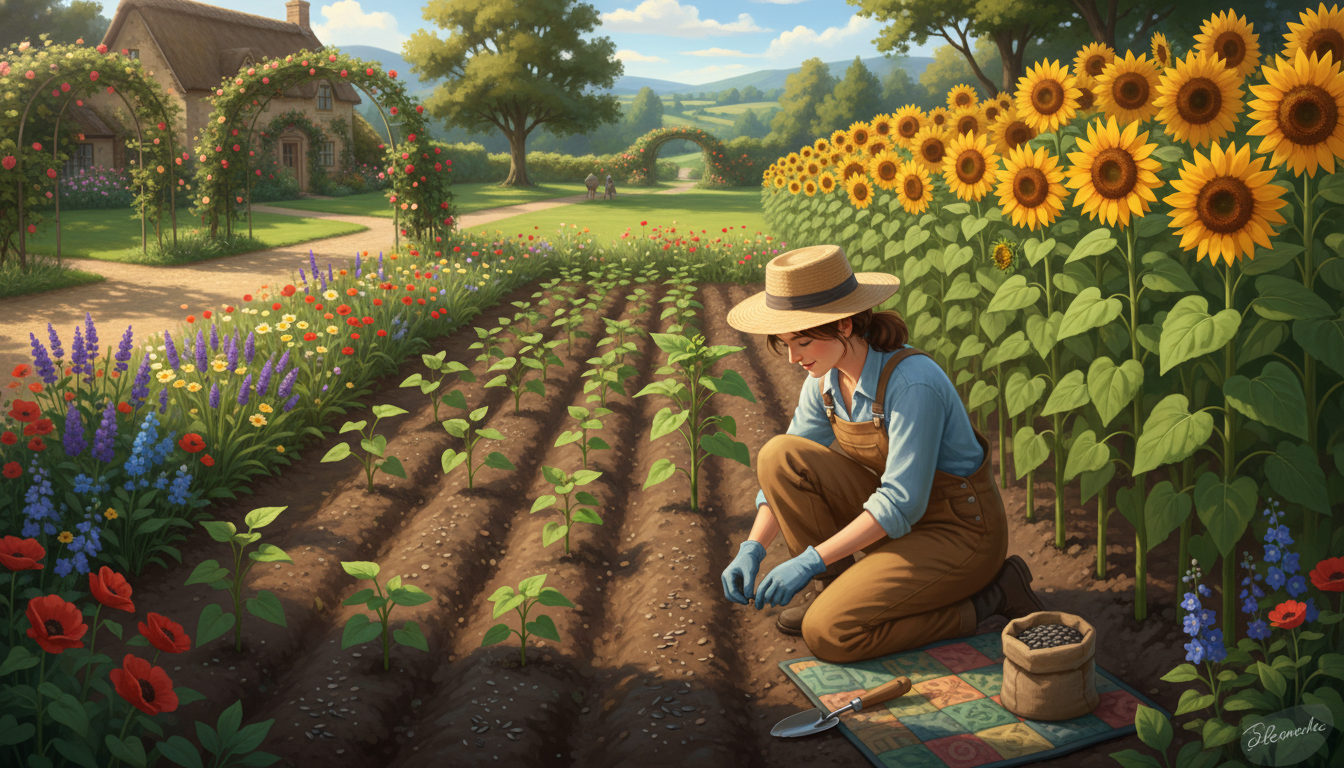

Welcome to the vibrant world of sunflowers! These cheerful blooms can instantly brighten any garden. Learning how to grow sunflower is a rewarding journey that can bring joy throughout the summer. With their tall stalks and large, radiant faces, sunflowers are a sight to behold.
These annual plants are not only beautiful but also forgiving, making them ideal for both beginners and seasoned gardeners. Imagine transforming your garden into a lively display of color and life within just a few months. Plus, sunflowers attract bees, birds, and butterflies, creating a magical connection with nature.
In this article, I’ll share tips and tricks to help you enjoy a garden filled with healthy, happy sunflowers. From selecting the right seeds to savoring those first magnificent blooms, you’re in for an exciting adventure!
Key Takeaways
- Sunflowers are forgiving plants, perfect for all skill levels.
- They can transform your garden into a vibrant space.
- These flowers attract various pollinators, enhancing your garden’s ecosystem.
- Growing sunflowers is a fulfilling summer project.
- You’ll enjoy the beauty of their large blooms in just a few months.
Understanding Sunflowers and Why Grow Them
Sunflowers hold a special place in my heart and garden. Their unique traits make them fascinating plants. From their ability to track the sun across the sky to their stunning array of colors and sizes, sunflowers never cease to amaze me.
Each sunflower head is actually a collection of hundreds of tiny individual flowers. Together, they create that iconic look we all love. I’ve discovered that these plants come in a wide range of heights, from petite 2-foot dwarf varieties to towering 12-foot giants that dominate the landscape.
One of the reasons I enjoy planting sunflowers is their dual purpose. They provide breathtaking beauty while also serving as a valuable food source for wildlife. I’ve noticed that bees absolutely adore these blooms, and planting them has significantly increased pollinator activity throughout my garden.
Additionally, mature sunflower heads attract birds, turning my garden into a lively wildlife haven during the late season. It’s a joy to watch these creatures interact with the flowers, adding even more life to my garden.
Sunflowers are one of the few crops native to the United States, which gives them a unique place in our gardening heritage. Understanding their natural growth cycle enhances my appreciation for the journey from tiny seed to magnificent bloom.
Not only are sunflower seeds a delightful treat for birds, but they are also a nutritious snack for us. Packed with healthy fats and essential minerals, they contribute to a balanced diet. Here’s a quick overview of their nutritional benefits:
| Nutrient | Amount per Tablespoon |
|---|---|
| Calories | 51 |
| Protein | 2 grams |
| Fat | 4.5 grams |
| Carbohydrates | 2 grams |
With all these benefits, it’s no wonder I find sunflowers irresistible. Whether for their beauty, their role in supporting wildlife, or their nutritional value, these flowers truly enrich my gardening experience.
Choosing the Right Sunflower Seeds and Varieties
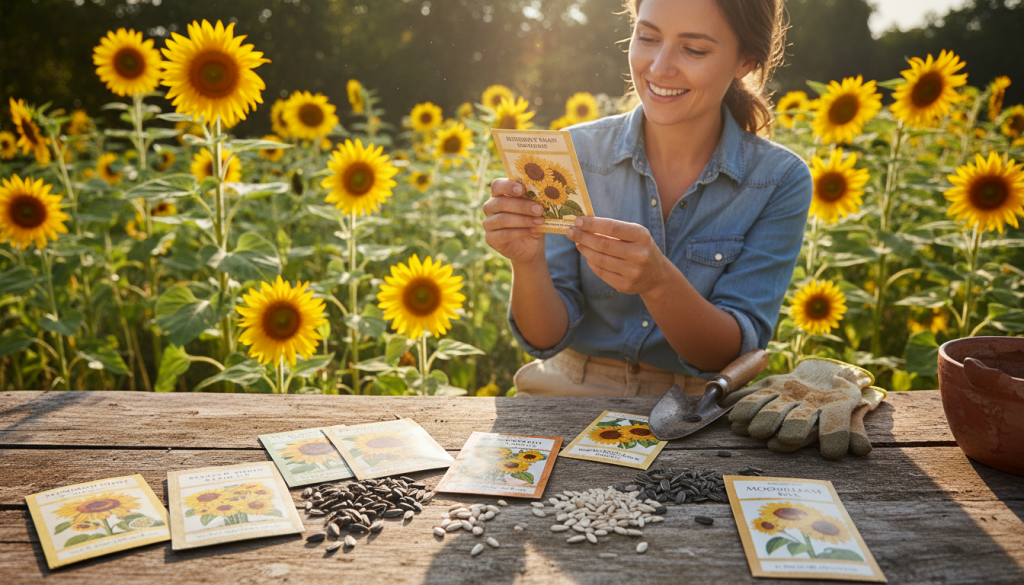
Embarking on the journey of selecting sunflower seeds can be an exciting experience. With so many options available, it’s essential to understand the differences between various types. This knowledge will help you find the perfect match for your garden vision.
I’ve learned that understanding the difference between single stem and branching sunflowers is crucial for planning your cut flower garden successfully. Each type offers unique advantages:
Single Stem vs Branching Sunflowers
- Single Stem: These produce one flower per stem, making them ideal for cut flowers. Some varieties are pollenless, which means they won’t create a mess in your home.
- Branching: These send out multiple blooms over several weeks, providing continuous color in your garden.
Popular Varieties for Gardens and Cut Flowers
Here are some of my favorite sunflower varieties:
- Single Stem Varieties:
- ‘ProCut Orange’
- ‘Sunrich Gold’
- ‘ProCut Brilliance’
- Branching Varieties:
- ‘Autumn Beauty’
- ‘Ruby Eclipse’
- ‘Strawberry Blonde’
- Unique Varieties:
- ‘Mammoth’ for dramatic height
- ‘Teddy Bear’ for small spaces
Considerations for Seed Selection
When selecting sunflower seeds, consider the following:
- Available space in your garden.
- Desired bloom size and color.
- Whether you want flowers for cutting or garden display.
I encourage you to experiment with different varieties each season. This way, you can discover which sunflowers bring you the most joy in your gardening journey.
Preparing Your Garden and Soil for Planting Sunflowers
Creating the perfect environment for sunflowers is essential for their growth. I always start by finding the sunniest spot in my garden. These cheerful blooms need a full 6 to 8 hours of direct sun each day to thrive. A well-lit location helps them reach their full potential, ensuring vibrant and healthy flowers.
Next, I focus on the soil. Sunflowers prefer well-draining soil that doesn’t pool with water. I’ve learned that preparing the soil properly is the foundation of success. I dig down at least 2 feet deep to accommodate those long tap roots. This depth allows them to access moisture and nutrients effectively.
It’s crucial to test the soil pH as well. Sunflowers thrive in a pH range of 6.0 to 7.5, which is slightly acidic to somewhat alkaline. This balance promotes healthy growth and vibrant blooms. If the soil is too acidic, I add lime to raise the pH toward the ideal range.
Since sunflowers are heavy feeders, I enrich my garden beds with plenty of organic matter and composted manure. This nutrient-rich soil helps support their growth. I also work a slow-release granular fertilizer about 8 inches deep into the soil before planting. This gives my sunflowers a strong nutritional foundation.
Another important aspect is protecting my plants from strong winds. I often plant along a fence or near a building to shield tall varieties from toppling over. Additionally, I’ve found that giving each plant adequate space is essential. I prepare an area about 3 feet across for optimal root development.
Lastly, if deer are a concern in your area, I recommend installing tall wire barriers early. Young sunflower plants are absolutely irresistible to them, and a barrier can help protect your garden from hungry wildlife.
How to Grow Sunflower: Planting Seeds Successfully
Planting sunflower seeds can be a delightful and fulfilling task. Timing is key to ensuring your sunflowers thrive. I always wait until the danger of spring frost has completely passed and the soil has warmed to at least 50°F before I plant sunflower seeds outdoors. In the northern U.S. and Canada, this typically falls between April and mid-June, while in the South, mid-March or early April is ideal.
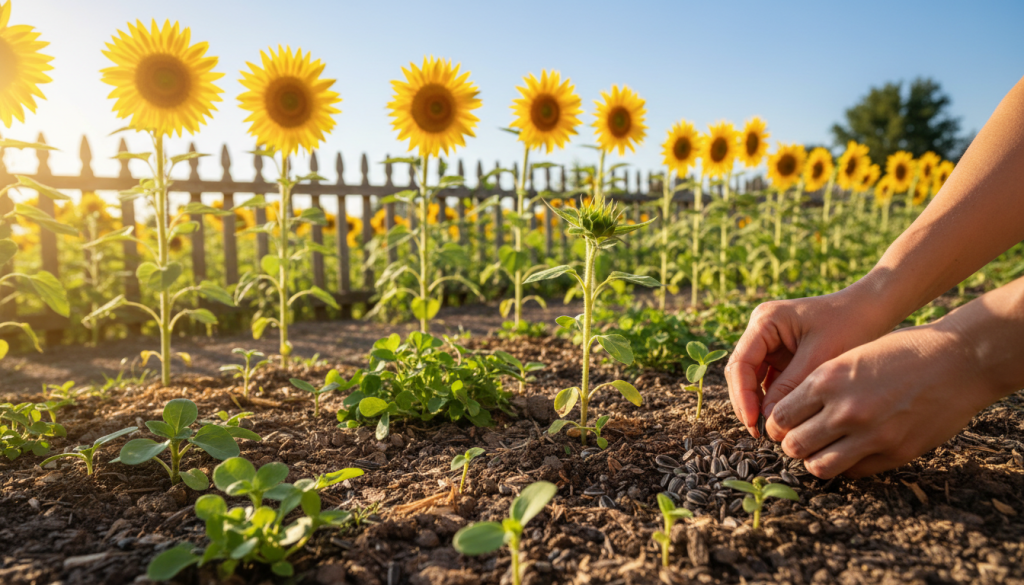
When it comes to planting, I find that direct sowing is the easiest and most successful method. Sunflowers really dislike having their roots disturbed during transplanting. I plant my seeds about 1 to 1½ inches deep in the ground and space them roughly 6 inches apart to give each seedling room to establish.
As a precaution against poor germination, I often sow two seeds per hole and then thin to the strongest plant when they reach about 6 inches tall. Additionally, I space my rows about 30 inches apart to ensure good air circulation and give each sunflower plenty of room to stretch out.
For those who prefer starting seeds indoors, I’ve learned that using biodegradable containers works well, especially if birds or squirrels tend to steal seeds from my garden. I make sure to harden off my indoor seedlings gradually over a week before planting them outside to prevent transplant shock.
To enjoy continuous blooms throughout the summer and fall, I practice succession planting every 2 to 3 weeks from May through August. This way, I can savor the beauty of sunflowers for an extended period. If birds discover your seeds, I recommend covering newly planted areas with netting, removing it once germination occurs.
With these simple steps, planting sunflowers becomes an easy grow experience. Even first-time gardeners can achieve impressive results with minimal effort!
| Task | Details |
|---|---|
| When to Sow | After frost, soil at least 50°F |
| Depth | 1 to 1½ inches |
| Spacing | 6 inches apart |
| Row Spacing | 30 inches apart |
| Succession Planting | Every 2-3 weeks |
| Indoor Start | Use biodegradable containers |
Growing Sunflowers: Care Tips for Healthy Plants
Caring for sunflowers requires attention to detail and a bit of love. These vibrant plants thrive when given the right conditions. Proper care ensures they grow strong and produce beautiful blooms. Here are some essential tips for maintaining healthy sunflowers.
Watering Practices
I water my young sunflower plants carefully around the root zone, about 3 to 4 inches from the stem. This practice encourages strong root development. Once established, deep but infrequent watering is best. I give them several gallons once a week unless the weather is very dry.
It’s crucial not to overwater my sunflowers. Soggy soil can lead to root problems and weak growth throughout the season. A good rule of thumb is to check the soil moisture before watering.
Fertilizing Guidelines
Feeding my plants sparingly is important. I build a small moat about 18 inches from the base to keep nutrients away from the stem. This technique helps ensure that the fertilizer nourishes the roots without overwhelming them.
I’ve discovered that overfertilizing is a common mistake. It can cause stems to become weak and break, especially during fall winds. A little goes a long way, so I always err on the side of caution.
Staking and Pinching Techniques
For tall sunflower varieties, I always stake them with sturdy bamboo stakes. This support prevents them from toppling over in strong gusts. It’s essential to provide stability as they grow taller.
For branching sunflowers, I use the pinching technique when they reach 8 to 12 inches tall. I remove the tiny central bud with my thumbnail. This encourages multiple long stems, resulting in 6 to 10 gorgeous blooms per plant.
However, I never pinch my single stem varieties. Doing so would eliminate the one beautiful bloom that each plant is working so hard to produce. I also strip off most of the lower leaves as my sunflowers grow taller. This directs the plant’s energy toward producing larger, healthier flower heads.
| Care Aspect | Guideline |
|---|---|
| Watering | 3-4 inches from stem for young plants; deep watering once a week for established plants |
| Fertilizing | Feed sparingly; build moat 18 inches from base |
| Staking | Use bamboo stakes for tall varieties |
| Pinching | Pinch branching types at 8-12 inches; do not pinch single stem varieties |
Managing Pests and Diseases in Your Sunflower Garden
Managing pests and diseases is crucial for the health of my sunflower garden. I’ve discovered that being proactive helps me protect my plants and enjoy their beauty longer. Here are some common challenges I face and the strategies I use to overcome them.
Common Pests: Birds, Aphids, and Others
Birds can be both friends and foes in my sunflower garden. They love to feast on the seeds, so I use netting or garden fleece to protect ripening seed heads when necessary. Additionally, I keep a close eye on my plants for aphids. These tiny pests use needle-like mouthparts to suck sap and can quickly colonize tender new growth.
I’ve also found that deer can devastate young sunflowers overnight. To prevent this, I install tall wire barriers around my garden if deer are present in my area. Furthermore, I watch for sunflower moths, which lay eggs in the blossoms. I hand-pick any worms I find on my plants instead of using harsh chemicals.
Fungal and Other Diseases
Regular inspections of my sunflower leaves are essential for spotting fungal diseases. Common issues include powdery mildew, downy mildew, and rust, especially during humid weather. If I notice any fungal problems, I spray with a general garden fungicide early to minimize damage.
Other diseases that can affect my sunflowers include Sclerotinia mold, Phoma black stem, Botrytis blight, and Verticillium wilt. I practice crop rotation and maintain proper spacing between plants to improve air circulation and reduce disease severity.
Preventative and Treatment Measures
I’ve learned that maintaining healthy, vigorous plants through good gardening practices is the best defense against most pest and disease problems. Here are some of my key strategies:
- I ensure proper spacing between my sunflower plants to improve air circulation.
- I appreciate that sunflowers attract beneficial insects like bees and butterflies, so I’m cautious about using insecticides near my blooms.
- I’ve discovered that sunflowers can serve as trap crops, drawing pests away from more vulnerable plants in my vegetable garden.
- I hand-pick caterpillars or sunflower moth worms I find on my plants.
- I follow label directions carefully when using fungicides to protect my plants effectively.
| Pest/Disease | Management Strategy |
|---|---|
| Birds | Use netting or garden fleece to protect seed heads. |
| Aphids | Monitor plants closely and treat with insecticidal soap if necessary. |
| Deer | Install tall wire barriers around the garden. |
| Sunflower Moth | Hand-pick worms from plants. |
| Fungal Diseases | Spray with general garden fungicide if spotted early. |
Harvesting Sunflowers: Flowers and Seeds
Harvesting sunflowers is an exciting finale to a rewarding gardening season. This process not only brings joy but also allows me to enjoy the fruits of my labor. I look forward to gathering both beautiful blooms and nutritious seeds.
Timing is essential when cutting sunflowers for bouquets. I always cut them just before they fully open, allowing a few petals to lift off the face. This timing ensures the longest vase life and the freshest appearance. I typically cut the stems early in the morning when the plants are fully hydrated.
When to Cut Sunflowers for Bouquets
When I prepare to cut my sunflowers, I aim for stems about 24 inches deep. I also strip all leaves except for those closest to the flower head. This practice keeps the water clean and helps focus on the stunning blooms. Before placing them in water, I recut the stems at a 45-degree angle, which aids in moisture absorption.
With proper care, I find that cut sunflowers can last between 5 to 7 days. To maintain their beauty, I change the water daily, as sunflowers tend to make vase water murky quickly. Using commercial flower food, like Floralife, also enhances their longevity. If I need to delay their opening, I can store them in a cooler for about a week.
Collecting and Storing Sunflower Seeds
When it comes to harvesting sunflower seeds, I wait until the back of the flower head turns brown, and the foliage yellows. The petals will have died down, and the seeds should look plump and loose. At this stage, I cut the head off about 6 inches below the flower head.
To remove the seeds, I rub my hand over the seeded area or use a fork for those that are stubborn. After harvesting, I rinse the seeds thoroughly and let them dry for several hours. Finally, I store them in an airtight container in a cool, dry place. If birds are a concern, I cover ripening heads with cheesecloth to protect my precious seeds.
Post-Harvest Care for Cut Flowers
Post-harvest care is vital for maintaining the beauty of cut sunflowers. I find that stripping almost all the leaves from the stems helps keep the water clean. By focusing on the blooms, I can enjoy their vibrant colors longer. I also ensure that I change the vase water daily, as this simple act can significantly extend their life.
Harvesting sunflowers is one of the most satisfying parts of the entire growing season. Whether I’m gathering blooms for arrangements or seeds for future planting, each moment is a celebration of my gardening efforts.
| Harvesting Task | Details |
|---|---|
| Cutting for Bouquets | Cut before petals fully open; stems about 24 inches deep. |
| Leaf Stripping | Remove all leaves except those closest to the flower head. |
| Stem Cutting | Recut at a 45-degree angle before placing in water. |
| Vase Life | 5-7 days with proper care; change water daily. |
| Seed Harvesting | Wait until back of head turns brown; cut 6 inches below flower head. |
| Seed Storage | Rinse and dry seeds; store in airtight container. |
Conclusion
As the gardening season comes to a close, it’s time to reflect on the joy of cultivating sunflowers. I hope this guide has shown you just how simple and rewarding it is to grow these beautiful plants in your own garden, regardless of your experience level.
I’ve shared everything I know about selecting the right varieties, preparing your soil, planting seeds, and caring for your plants throughout the season. Watching a tiny seed transform into a towering sunflower is one of the most magical experiences gardening has to offer.
Embrace the cheerful spirit of sunflowers and make them a permanent part of your gardening tradition for years to come. I encourage you to try different types each year, from dwarf varieties perfect for containers to giant types that reach for the sky.
With the tips and techniques I’ve shared, you’ll be harvesting armloads of gorgeous flowers and bowls of nutritious seeds. Sunflowers not only beautify your garden but also create a thriving ecosystem for bees, birds, and beneficial insects.