

Ethan Brooks
Focused on sustainable practices, careful seed selection, and hands-on experience, our family work closely with nature to produce quality harvests while continuously learning and improving each year..
Latest Posts


Archive
Tags
Social Links


Have you ever dreamed of unearthing your own homegrown treasures from the soil? I’m here to show you exactly how to grow sweet potato plants successfully. It’s a simple, rewarding process that fills your plate with nutrition.
This vibrant crop is incredibly versatile. Did you know George Washington Carver discovered over 118 uses for it? My guide will help you replicate that abundance in your own garden.
I’ve spent years perfecting my methods. I want to share every tip so your harvest is huge. For even more detailed planting advice, check out this great resource on sweet potatoes from The Old Farmer’s.
Let’s get our hands dirty and turn that dream into a delicious reality. Your journey to a bountiful harvest starts right now.
Key Takeaways
- Growing sweet potatoes is a rewarding project perfect for gardeners of any skill level.
- These plants need a long, warm growing season to produce a good yield.
- You start from “slips,” which are small sprouts, not from seeds.
- Proper soil preparation with good drainage is critical for healthy tubers.
- Consistent watering, especially during dry spells, will significantly boost your harvest.
- The vines should not be pruned, as they are essential for the plant’s growth.
- After harvesting, a proper curing process is needed for long-term storage.
Understanding Sweet Potatoes: Varieties and Benefits
Many gardeners are surprised to learn that the vibrant sweet potato shares a family tree with the beautiful morning glory flower. Knowing its background and the different types available makes your gardening project more successful and fun.
History, Origin, and the Morning Glory Connection
As a master gardener, I love pointing out that these plants are not related to common white potatoes. Their scientific name is Ipomoea batatas, and they belong to the morning glory family.
They are native to the American tropics. This explains why they crave warm, summer-like conditions. Even the leaves are edible and make a tasty green, unlike those of standard potatoes.
Nutritional Value and Versatile Uses in the Kitchen
This crop is a nutritional powerhouse. Selecting the right type is key for your kitchen. I often recommend the ‘Centennial’ variety.
It produces reliably and matures in about 100 days. Some potato varieties have dry flesh, while others are moist. Each is perfect for different recipes.
George Washington Carver found over 118 uses for this versatile vegetable. Personally, I prefer the orange-fleshed sweet potatoes for their amazing flavor and texture.
Preparing Your Garden and Soil for Planting
Before a single slip goes into the earth, the soil needs your attention and care. This groundwork is the most critical step for a successful harvest.
Soil Composition and Amendments
I test my garden soil every four to five years. Adding lime or fertilizer at that time ensures the ground is perfectly ready for planting.
In late February or early March, I apply a balanced 12-12-12 or 15-15-15 fertilizer. This provides essential nutrients that will be available when your crop needs them most.
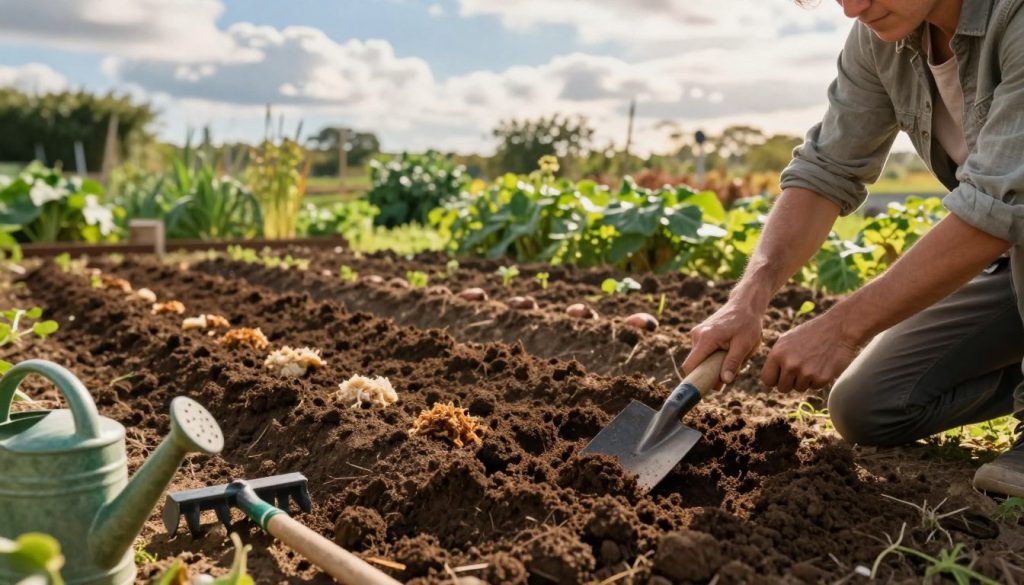
A moderately fertile, sandy loam is the ideal soil type. This loose structure allows the edible roots to penetrate deeply and expand without resistance.
Avoid heavy nitrogen fertilizers. They encourage lush leaves on your plants instead of developing the tubers you want to harvest.
Create raised mounds about 12 inches high and wide. This gives the sweet potatoes the necessary space to form smoothly underground.
Adding compost helps build a loamy structure. I always mark my rows with a big-wheeled garden plow to ensure proper vine garden spacing.
How to Grow Sweet Potato: Planting and Slip Preparation
Getting your slips ready is an exciting step in the gardening process. This phase sets the stage for your entire crop’s development.
Starting Your Own Slips or Sourcing Quality Ones
You can begin developing slips indoors about eight weeks before the final frost date. I keep them in warm soil at approximately 75°F to encourage growth.
It is essential to harden them off for one to two weeks. Gradually expose them to filtered sunlight before the final move outdoors.
Step-by-Step Planting Techniques and Proper Spacing
I always create ridges about 12 inches high for excellent drainage. Set your plants 12 to 18 inches apart on these mounds.
Cover the roots and the stem up to the leaves. This encourages node development underground.
Optimal Planting Times and Temperature Considerations
Wait until your soil temperature is consistently above 65°F. These plants are very sensitive to cold nights.
After planting, use a high-phosphorus liquid fertilizer for seven to ten days. This helps the roots establish well.
Following these tips gives your crop the best start during the short growing season.
Caring for Your Crop: Watering, Fertilizing, and Weed Control
Your plants need proper care throughout the summer months. This ensures a healthy harvest.
Watering Tips to Prevent Root Bruising and Splitting
Consistent moisture keeps your crop thriving. I water deeply during hot, dry periods.
This practice helps increase yields significantly. Reduce watering later in the season.
It prevents the skin from cracking. Avoid sudden heavy watering after dry spells.
This can cause the roots to bruise easily.
Fertilizer Use and Nutrient Management
I side-dress my plants three to four weeks after planting. A 5-10-10 fertilizer works best.
It supports healthy root development. Proper nutrient management leads to large, healthy potatoes.
Weed regularly starting two weeks after planting. This prevents competition for vital nutrients.
Be careful when weeding near the stem. Avoid deep digging with a hoe.
It can disturb the delicate feeder roots.
Can Planting Timing Affect the Success of Growing Sweet Potatoes?
Choosing optimal sweet potato planting times is crucial for maximizing yield. Planting too early or too late can expose young plants to adverse weather conditions, affecting growth. Understanding local climate patterns ensures that farmers can capitalize on warm soil temperatures, promoting healthier root development and a more successful harvest.
Harvesting, Curing, and Storing Your Sweet Potatoes
The culmination of your gardening efforts comes when it’s time to carefully dig up your sweet potato crop. This final stage requires gentle handling to protect your harvest.
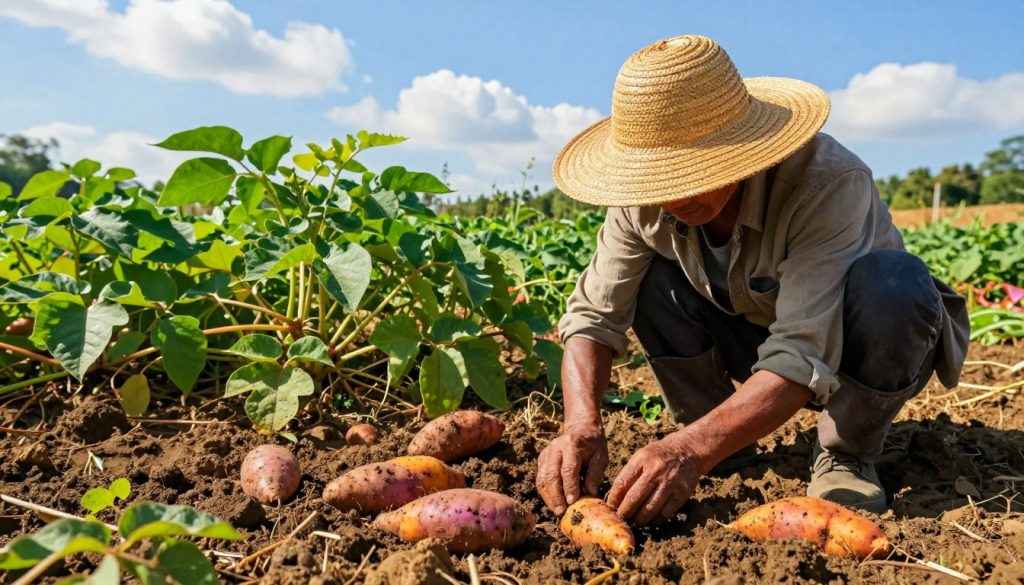
Recognizing Harvest Readiness and Proper Digging Techniques
I always remove the vines before digging. This makes accessing the roots much easier. Look for yellowing leaves as a sign of maturity.
Using a spading fork prevents damage to the delicate skin. Lift gently to avoid bruising the tubers. I schedule my harvest for early October before the first frost.
Curing Methods for Enhanced Flavor and Extended Storage
After washing and sun-drying for a few hours, curing begins. I maintain 80°F with high humidity for 10-14 days.
This process enhances flavor and prepares them for long-term storage. Properly cured potatoes last up to 9 months in cool, ventilated areas.
Handle your crop carefully throughout this process. Bruised roots can rot during storage months.
Conclusion
There’s nothing quite like the taste of vegetables harvested from your own backyard. Cultivating these nutritious tubers is a deeply rewarding gardening project. It provides food for your family for many months.
Understanding the needs of your plants is key. Remember, they belong to the morning glory family. Proper soil preparation and careful handling of the roots ensure success every single year.
Correct curing is the secret to long-term storage success. As a master gardener, I encourage you to try different varieties. See which ones perform best in your specific climate.
Whether you have a large plot or a small raised bed, you can successfully grow these delicious potatoes with just a little effort. I hope this guide has given you the confidence to start your own patch. For more detailed sweet potato growing information, explore trusted resources.
Enjoy the incredible flavor of home-grown produce!