

Ethan Brooks
Focused on sustainable practices, careful seed selection, and hands-on experience, our family work closely with nature to produce quality harvests while continuously learning and improving each year..
Latest Posts


Archive
Tags
Social Links

Welcome to my complete guide on how to harvest coriander plant. This herb, also known as cilantro, is a staple in many kitchens. It’s easy to grow at home, and both its leaves and seeds add amazing flavor to dishes.
In this article, I will share my journey of growing this versatile herb since 2013. You’ll learn the best times to cut your cilantro leaves and how to collect the aromatic seeds effectively. Understanding the right moment for harvesting can greatly enhance the flavor and quality of your dishes.
Whether you’re a beginner or a seasoned gardener, my step-by-step approach will boost your confidence in harvesting coriander like a pro. I’ll also share my personal tips to ensure a continuous supply of this delightful herb throughout the growing season.
Introduction: Why Learn How to Harvest Coriander Plant?
Cilantro is a must-have for any kitchen garden. This versatile herb doesn’t just provide fresh leaves; it also produces flavorful seeds. Both parts can enhance your culinary creations in unique ways.
Understanding the right techniques for harvesting cilantro is essential. It unlocks the full potential of this incredible herb in your kitchen. When I first started growing cilantro, I was amazed to discover that the same plant offers two distinct flavors.
With proper harvesting, you’ll never need to buy expensive fresh herbs or ground coriander spice again. I love how this plant doesn’t take up much space in my garden, yet it rewards me with an abundance of fresh leaves and seeds throughout the season.
One of the best aspects of growing cilantro is its ability to attract beneficial insects. These insects help all your other plants thrive, creating a healthier garden ecosystem.
Once you master the art of harvesting, you can enjoy the bright, citrusy flavor of fresh cilantro leaves in your salsas and curries whenever you want. The satisfaction of grinding your own homegrown coriander seeds into spice is an experience every gardener should have at least once.
Proper harvesting techniques encourage your cilantro plants to keep producing. This means longer and more bountiful harvests for you. This guide will also help you avoid the common mistake of letting your cilantro bolt too early, which can make the leaves taste bitter and ruin your harvest.
Understanding Cilantro vs Coriander: Leaves and Seeds from the Same Plant
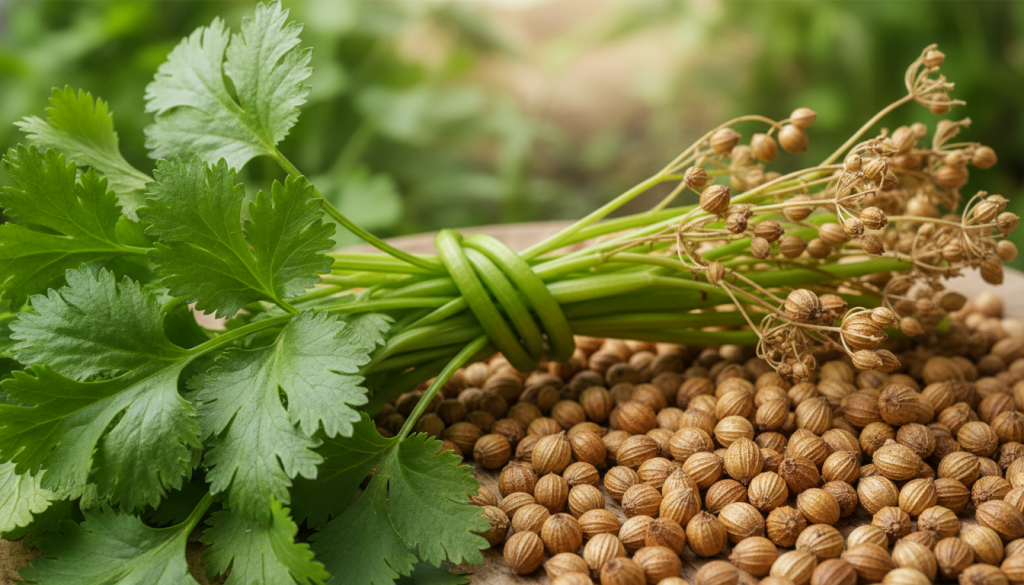
It’s important to recognize that cilantro and coriander are two distinct parts of the same plant. The scientific name for this herb is Coriandrum sativum. When I mention cilantro, I’m referring to the fresh green leaves that I often use in my salsas, salads, and garnishes.
The term coriander, on the other hand, describes the dried seeds that I grind into a warm, aromatic spice for my curries and baked goods. It’s fascinating how one plant can provide such different culinary ingredients.
The leaves are part of the vegetative stage of the plant’s life cycle. Once the plant starts to flower, those leaves can become bitter. After the flowers fade, the plant shifts its energy into producing coriander seeds. This is when I switch from leaf harvest mode to seed collection mode.
In many parts of the world, the entire plant is called coriander. However, in the United States, we typically distinguish between the leaves and the seeds. Understanding this difference is crucial because the timing and method for harvesting cilantro leaves versus coriander seeds are completely different.
I always remind my gardening friends that with careful planning, you can harvest both cilantro leaves and coriander seeds from the same plants. If you want to learn more about growing cilantro, check out this helpful guide: How to Grow Cilantro.
Preparing and Growing Coriander for a Successful Harvest
Setting the stage for a successful cilantro harvest starts with the right preparation. I always begin by planting my cilantro in the spring, right after the last frost date. This timing gives my plants the cool weather they love for producing tender, flavorful leaves.
For my fall garden, I sow seeds again when the summer heat starts to fade. In milder climates like the southwestern United States, this planting can last all the way through spring. I’ve learned the hard way that growing cilantro in the peak of summer heat causes the plants to bolt almost immediately, so I avoid planting during those hot months.
The soil I use is light and well-draining because coriander hates having wet feet. I make sure to choose a spot that gets full sun for at least six hours a day. This helps my plants thrive and produce the best flavor.
I space my seeds about 1 to 2 inches apart and plant them in rows that are roughly 12 inches apart. This spacing gives each plant enough room to develop properly. To keep the seeds moist during germination, I water them regularly.
Once the seedlings emerge, I thin them to about 6 inches apart for healthy leaf development. I practice succession planting by sowing new seeds every three weeks. This ensures I have a continuous supply of fresh cilantro leaves throughout the growing season.
For the best flavor, I use a low-nutrient herb soil and a slow-release natural fertilizer. I apply about a quarter cup of nitrogen fertilizer per 25 feet of row once or twice during the season. I always mulch around my plants as soon as they’re visible above the soil. This helps suppress weeds and retain moisture.
If my goal is to harvest mostly leaves, I sow my coriander later, between mid-April and mid-June. This timing naturally suppresses early flower formation and extends my leaf harvest.
How to Harvest Coriander Plant: Step-by-Step
The process of gathering cilantro and coriander is both rewarding and essential for maximizing your harvest. Knowing the right techniques can ensure that you enjoy fresh leaves and seeds throughout the season.
Harvesting Coriander Leaves
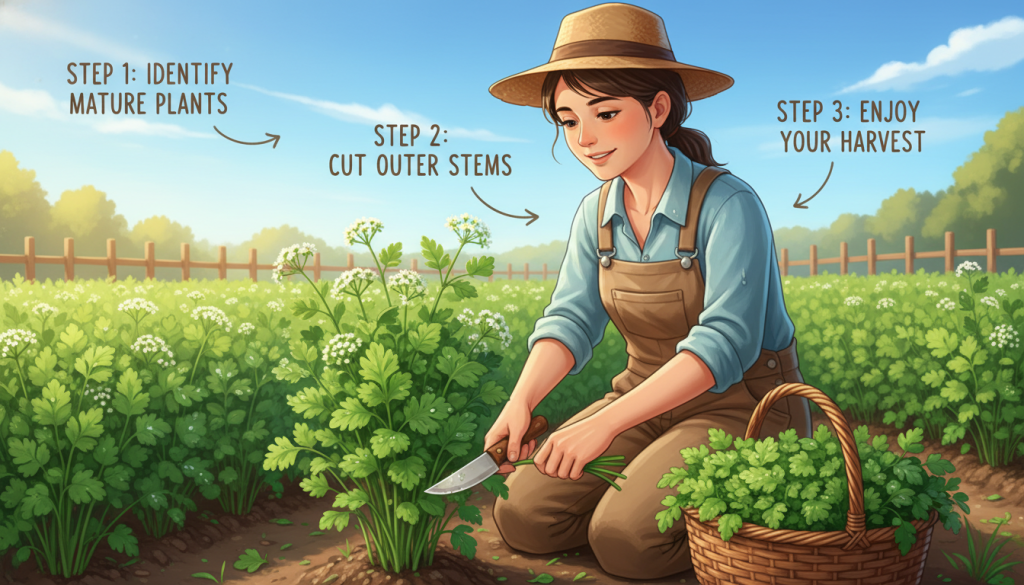
I always wait until my cilantro plants reach about 6 to 8 inches tall before I start harvesting the leaves. This height ensures the plant is strong enough to recover and keep producing.
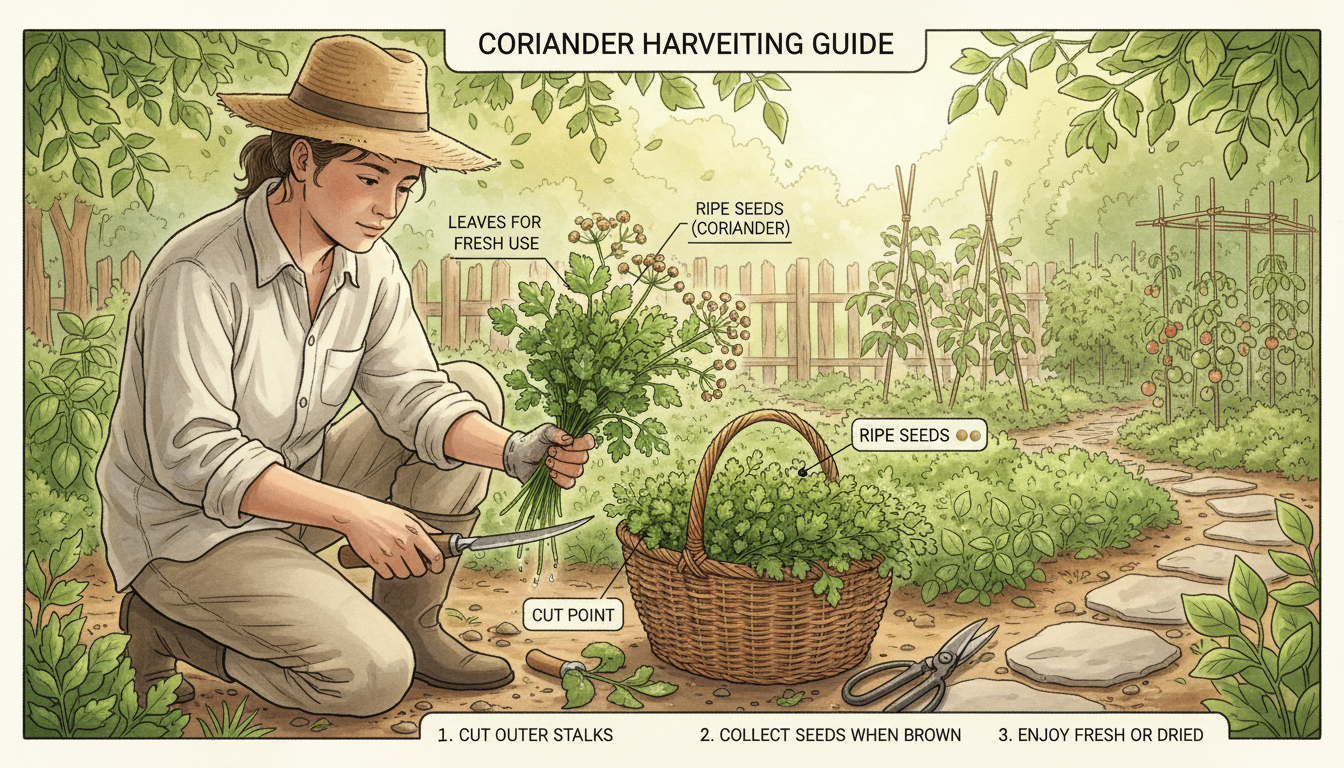
For the larger outer leaves, I simply cut them individually with sharp, clean scissors. This method allows the inner leaves to continue growing, extending my harvest.
When I’m harvesting the smaller leaves, I make my cut about one and a half to two inches above the crown of the plant. This careful technique helps me avoid damaging the growing point.
Regular pruning is essential. If I don’t harvest cilantro leaves frequently, the plant will rush to produce flowers, causing the leaves to turn bitter. I always use a sharp and clean cutting tool when harvesting. This protects my coriander plants from fungal spores and viruses that can enter through ragged cuts.
Once I see the first blooms starting to unfold on my cilantro, I know it’s time to harvest all the remaining foliage. After this point, the leaves won’t taste good.
Harvesting Coriander Seeds
For harvesting coriander seeds, I watch for the flower umbels to start withering. The seed heads should turn a light brown color, which usually happens in July or August.
I cut the entire seed heads close to the ground before the seeds are fully ripe. This prevents them from shattering and falling off the plant too easily.
After cutting, I place the seed heads in a paper bag and hang them upside down until the plant material dries completely. This allows the coriander seeds to fall off naturally.
I’ve learned that it takes about 20 to 28 weeks from sowing to harvest coriander seeds. Planning my planting schedule accordingly ensures a successful seed harvest. The cilantro seeds I collect are actually the coriander spice I use in my kitchen, and I love that I can save some for planting next season too.
Tools and Tips for Successful Coriander Harvesting
When it comes to harvesting cilantro, having the right tools and techniques makes all the difference. Proper preparation can ensure a fruitful and enjoyable experience. Here are some essential tips that I always keep in mind while harvesting.
- I always keep a pair of sharp, clean scissors or pruning shears specifically dedicated to harvesting my herbs. This helps prevent the spread of diseases between plants.
- Before I start harvesting, I wipe down my cutting tools with rubbing alcohol. This ensures they are completely sanitized and won’t introduce any fungal spores to my coriander.
- I’ve learned that harvesting in the early morning gives me the most flavorful cilantro leaves. The essential oils are at their peak concentration before the sun gets hot.
- When I’m cutting stems, I always make clean, angled cuts. This avoids crushing or tearing the plant tissue, helping the remaining plant heal faster.
- I never harvest more than one-third of the plant at a time. Taking too much can shock the coriander and slow down its regrowth significantly.
- A simple basket or colander is what I use to collect my harvested leaves and stems. I gently place them in rather than packing them tightly to avoid bruising.
- For seed harvesting, I keep paper bags and twine on hand to hang the seed heads upside down. This is the easiest method I’ve found for collecting coriander seeds.
- I always label my paper bags with the date and variety of coriander I’m harvesting. This helps me keep track of which seeds performed best in my garden.
- One of my best tips is to harvest regularly, even if you don’t need the leaves right away. Consistent cutting encourages bushier growth and delays bolting.
- I recommend keeping a garden journal to note when you planted and harvested your coriander. This helps you plan better for the next growing season.
How to Store and Preserve Coriander Leaves and Seeds
The right storage techniques can extend the life of your beloved cilantro. After harvesting, it’s essential to know how to keep your coriander fresh and flavorful. Here are some effective methods for preserving both leaves and seeds.
Freezing Coriander
For long-term storage, I chop my freshly harvested cilantro leaves and pack them into freezer-safe bags. This way, they maintain their flavor for about a year. I also love freezing coriander in ice cube trays filled with a little water or olive oil. This makes it super convenient to pop out just the right amount for my cooking.
Drying Coriander
Drying is another excellent method for preserving coriander leaves. I hang the shoots upside down in a warm, dry place for about two weeks. Although dried leaves have a milder flavor, they can last for about six months in an airtight container. I always label the container with the date to keep track of freshness.
Making Coriander Oil
One of my favorite preservation methods is making coriander oil. I place whole or chopped cilantro leaves in a tightly sealed container and cover them with olive oil by about one to two centimeters. This oil takes on the herb’s aroma beautifully, making it perfect for cooking or as a finishing drizzle on soups and salads throughout the year.
For coriander seeds, I hang the harvested seed heads on a string to dry for about two weeks. The seeds are ripe when they turn dark brown and fall easily from the stalks. Once fully dry, I store them in an airtight container, where they’ll stay fresh and flavorful for up to three years. I always keep a small jar of my homegrown coriander seeds in my spice cabinet, as grinding them fresh gives an incredible aroma for my curries and roasted vegetables.
By following these simple storage techniques, you can enjoy the vibrant flavors of your cilantro and coriander long after your harvest.
Common Problems When Harvesting Coriander and How to Prevent Them
Every gardener faces challenges when it comes to cilantro. Understanding these common issues can lead to better results in your harvest. Here are some problems I’ve encountered and how I manage them.
The biggest challenge I face is cilantro’s tendency to bolt quickly in hot weather. This causes the leaves to become bitter, and the plant stops producing usable foliage. I’ve learned to plan my plantings so that I’m harvesting cilantro in the cooler months of spring and fall. This way, I avoid the intense summer heat that triggers early flowering.
When I notice my plants starting to send up flower stalks, I know it’s time to harvest all the remaining leaves immediately. If I wait too long, those leaves will turn bitter and unpalatable.
Insects like aphids can also be a problem on my coriander plants. I use insecticidal soap as soon as I spot them hiding under the leaves. This quick action helps prevent damage to my plants.
I always clean up plant debris and spent plants from my garden promptly. Decaying material can harbor wilt and mildew that might affect my next crop of cilantro. Keeping my garden tidy is essential for healthy plants.
If my cilantro does bolt unexpectedly, I don’t panic anymore. I know I can let it go to seed and harvest the coriander seeds instead. Then, I simply plant a fresh batch for a new crop.
Overwatering is another issue I’ve encountered. Coriander doesn’t like soggy soil, so I ensure the soil drains well and let it dry slightly between waterings. This practice keeps my plants healthy.
I’ve also noticed that harvesting too aggressively can weaken the plant. I always leave enough foliage for the plant to continue photosynthesizing and growing strong. This balance is crucial for ongoing production.
In mild winter climates, I can sometimes keep harvesting cilantro all the way through the colder months. This gives me fresh herbs when most other plants have died back. The key to preventing most harvesting problems is simply paying attention to the weather and your plants. Being ready to adapt my harvesting schedule accordingly makes all the difference.
Best Coriander Varieties for Optimal Harvest
Choosing the right coriander varieties can make a significant difference in your harvest. After experimenting with various options, I’ve discovered that slow-bolting types are ideal for maximizing my cilantro leaves. These varieties help me enjoy fresh greens for a longer period.
One of my favorites is the ‘Costa Rica’ variety. It holds off on flowering longer than most, allowing me to gather fresh leaves throughout the spring season. This extended window for harvesting is a game changer in my garden.
I also appreciate the ‘Leisure’ coriander. It’s incredibly reliable and produces abundant foliage. I can repeatedly harvest from this plant before it decides to bolt, making it a staple in my garden.
Another excellent choice is ‘Long Standing’. True to its name, this variety stays in the leaf-producing stage for weeks longer than standard types. This means more cilantro leaves for my kitchen, which I absolutely love.
When my focus shifts to collecting coriander seeds, I select faster-bolting varieties. I plant these early in the spring to ensure they have ample time to mature in the summer sun. Depending on the variety and weather conditions, I can expect to gather aromatic coriander seeds anywhere from 20 to 28 weeks after sowing.
It’s crucial to read the seed packet descriptions carefully. This helps me understand whether a particular variety is bred for leaf production or seed production. Some varieties are more cold-tolerant, which is beneficial for fall planting if I want to harvest throughout the winter in milder climates.
I recommend trying two or three different varieties in your garden at the same time. This way, you can compare their performance and discover which ones you prefer. Additionally, saving cilantro seeds from your best-performing plants is a great way to develop a strain that’s perfectly adapted to your specific garden conditions over time.
Conclusion
As you wrap up your journey with this aromatic herb, remember that growing cilantro is a delightful experience. I hope this article has given you the confidence and knowledge you need to cultivate this incredible plant successfully.
From understanding the difference between cilantro leaves and coriander seeds to mastering the timing of your harvest, you now have all the tools to enjoy this herb year-round. I’ve shared my personal experiences, and I truly believe anyone can achieve a bountiful harvest with the right approach.
Whether you’re a salsa lover craving fresh cilantro leaves or a curry maker wanting homegrown coriander spice, this aromatic overachiever deserves a spot in your garden. I encourage you to start small, experiment with different varieties, and embrace the joy of harvesting fresh herbs.
Thank you for reading this article, and I wish you many seasons of abundant cilantro leaves and aromatic coriander seeds harvested right from your own backyard.