

Ethan Brooks
Editor of FarmXchange. Ethan plans, edits and updates our growing guides, checking them against university extension and USDA sources. How we work
Latest Posts
- How to Fill a Raised Garden Bed: Best Soil Mix, Amounts and Steps

- Top 8 Urban Farms in the World: Rooftops, Vertical Farms and Community Gardens
- Zigg Design Specs: Build a Zig-Zag Rain Gutter Aquaponic Garden
- Top 5 Home Aquaponics Kits: From Desktop Tanks to Backyard Systems
- DIY Aquaponics: How to Build a Backyard Fish and Vegetable System



Archive
Tags
Social Links
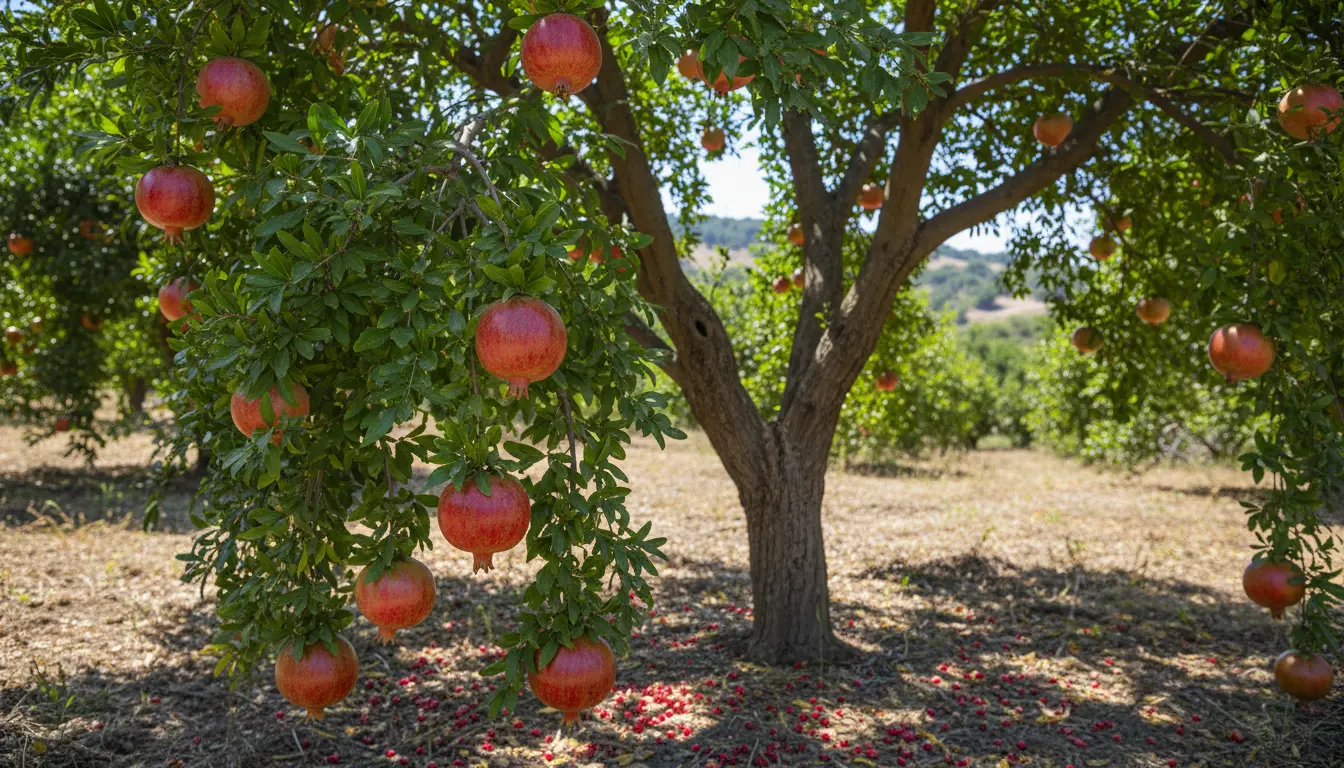

To grow a pomegranate tree, plant it in full sun in well-drained soil, water it regularly while young and evenly while fruit is forming, and prune it lightly in late winter. Pomegranates (Punica granatum) love long, hot summers, tolerate drought once established and usually start fruiting within 2–3 years. In cold climates they can be grown in large pots and moved under cover for winter.
Pomegranate at a glance
| Sun | Full sun; the more heat, the better the fruit |
| Soil | Well-drained; tolerates a wide pH range |
| Cold | Most varieties are damaged below about -10°C (14°F); some are hardier |
| Form | Multi-stemmed shrub or small tree, usually 2–6 m (6–20 ft) |
| First fruit | Usually 2–3 years after planting |
| Harvest | Autumn, about 5–7 months after flowering |
Planting
- Plant in spring after the last frost, in the warmest, sunniest spot you have.
- Dig a hole as deep as the root ball and twice as wide; set the plant at the same depth and backfill with native soil.
- Water deeply and mulch, keeping mulch off the stems.
- In pots, use a container of at least 50 litres (15 gallons) with good drainage.
Care
- Water: weekly in dry weather for the first year. Established trees cope with drought, but steady watering from flowering to harvest gives larger fruit and reduces splitting.
- Feeding: pomegranates need little. A light application of a balanced fertilizer in early spring is enough; heavy nitrogen gives leaves instead of fruit.
- Pruning: in late winter, remove suckers from the base, dead or crossing branches, and crowded stems. Decide early whether you want a shrub (3–5 stems) or a single trunk.
- Pollination: most varieties are self-fertile, though a second variety nearby can improve fruit set.
The pomegranate life cycle
- Starting: hardwood cuttings root easily, and young plants usually fruit within 2–3 years.
- Flowering: bright orange-red flowers appear from late spring into summer.
- Fruit: ripens about 5–7 months after flowering, usually in autumn.
- Dormancy: deciduous in cooler climates, evergreen in warm ones.
- Lifespan: pomegranates can stay productive for many decades.
Harvesting
Pomegranates don’t ripen further once picked. Harvest when the skin has full colour, the fruit sounds metallic when tapped and the sides start to flatten slightly. Cut them off with pruners rather than pulling. Whole fruit keeps for weeks in a cool place.
Frequently asked questions
Why do my pomegranates split?
Usually irregular watering: a dry spell followed by heavy rain or watering makes the arils swell faster than the skin. Keep the soil evenly moist as fruit ripens.
Why are flowers dropping without fruit?
Pomegranates produce many male-type flowers that drop naturally. Poor pollination, heat waves and too much nitrogen can also reduce fruit set.
Can a pomegranate grow in a pot?
Yes, and dwarf varieties are well suited to it.
Related guides
Sources
- University of California Agriculture and Natural Resources, pomegranate fact sheet
- University of Florida IFAS Extension, pomegranate growing in Florida
- Texas A&M AgriLife Extension, pomegranates