

Ethan Brooks
Focused on sustainable practices, careful seed selection, and hands-on experience, our family work closely with nature to produce quality harvests while continuously learning and improving each year..
Latest Posts
- Top 8 Urban Farms in the World: Rooftops, Vertical Farms and Community Gardens

- Zigg Design Specs: Build a Zig-Zag Rain Gutter Aquaponic Garden
- Top 5 Home Aquaponics Kits: From Desktop Tanks to Backyard Systems
- DIY Aquaponics: How to Build a Backyard Fish and Vegetable System
- Fish-Friendly Fertilizers: What Is Safe to Add to Aquaponics and Garden Ponds
Archive
Tags
Social Links
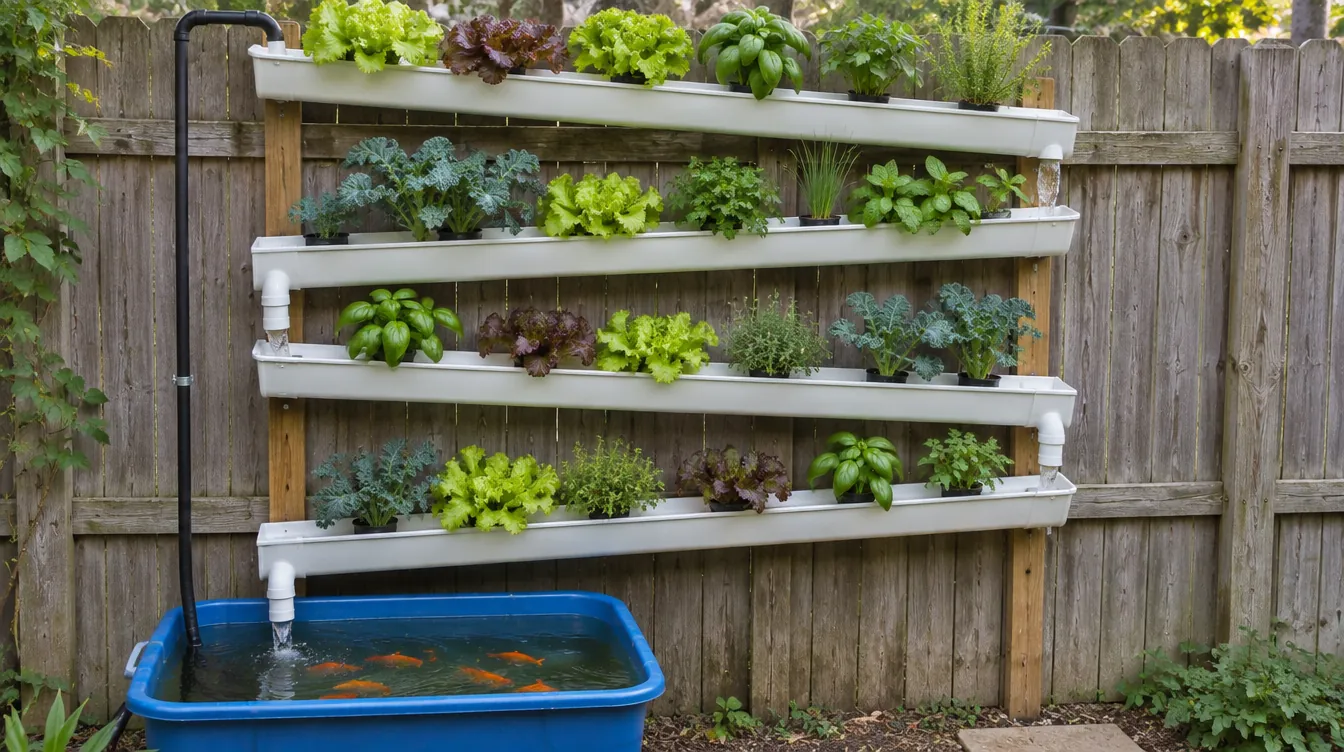

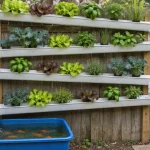
The Zigg is a vertical aquaponic garden made from rain gutters stacked in a zig-zag: water from a fish tank is pumped to the top gutter, flows along it, drops into the gutter below, and runs back and forth down the wall until it returns to the tank. It turns a bare fence or wall into a growing space for lettuce, herbs and strawberries, using fish waste as the fertilizer. This page gives the full design specs and a step-by-step build.
The Zigg is a gutter version of the nutrient film technique (NFT), in which a thin film of water flows past bare roots. The numbers below follow the FAO’s guidance for NFT aquaponics, scaled down for a home garden. If you are new to aquaponics, read our DIY aquaponics guide first: the fish, cycling and water quality rules are the same.
Zigg design specs at a glance
| Part | Spec | Why |
|---|---|---|
| Gutters | White or light-coloured vinyl (PVC) gutter, 1–3 m long, 4 runs | White reflects sun and keeps roots cool; vinyl is inert in water |
| Slope | About 1 cm of drop per metre of gutter, alternating direction on each tier | FAO’s recommended NFT slope; enough to flow without washing roots dry |
| Vertical spacing | 30–40 cm between tiers | Room for leafy greens and herbs to grow without shading the tier below too much |
| Plant holes | 7–9 cm diameter, at least 21 cm apart centre to centre | FAO spacing for net cups in NFT channels |
| Water flow | 1–2 litres per minute through the gutters | FAO’s maximum per NFT channel; more flow just splashes |
| Fish tank | 200 litres or more, opaque, food-safe | A bigger volume keeps temperature and water quality stable |
| Pump | Small submersible pump that can lift water to the top gutter, throttled with a ball valve | Pumps are rated at zero height; you need spare capacity to reach the top tier |
| Filtration | A small mechanical filter and a biofilter between the tank and the gutters | Gutters have no media to hold bacteria or catch solids |
Materials list
- 4 lengths of white vinyl rain gutter, cut to the width of your wall or fence, with end caps for both ends of each run.
- Gutter hangers or brackets strong enough for wet gutters full of plants.
- Short lengths of downspout or 40–50 mm PVC pipe to drop water from each tier to the next.
- Net cups, 7–9 cm, plus a hole saw of the same size.
- Grow medium for the cups: clay pebbles or rockwool starter cubes.
- Fish tank of at least 200 litres, opaque and food-safe.
- Submersible pump, flexible tubing and a ball valve to set the flow.
- Two buckets or small tanks for a mechanical filter (to settle solids) and a biofilter (filled with bio-balls or clay pebbles for bacteria).
- Air pump and air stone for the fish tank.
- Silicone sealant rated for aquarium or food use, for the end caps.
- Test kit for pH, ammonia, nitrite and nitrate.
- GFCI (RCD) protected outlet for the pumps.
What to avoid
- Galvanized steel gutters and fittings. They release zinc into the water, and Iowa State University Extension warns that copper combined with galvanized pipe can form compounds that are fatal to fish.
- Dark gutters in full sun. The FAO recommends white NFT pipes because dark ones heat the water around the roots.
- Old gutters from a roof. They may carry roofing residues, moss killers or copper treatments.
How to build the Zigg, step by step
1. Mark the tiers
Measure up the wall or fence and mark four tier lines 30–40 cm apart. On each line, mark one end about 1 cm lower per metre of length, alternating the low end from left to right on each tier. Water then flows left on one tier, drops, and flows right on the next.
2. Cut the plant holes
Cut 7–9 cm holes along the top of each gutter, at least 21 cm apart. If your gutters are open-topped, fit a strip of white PVC board or gutter guard on top and cut the holes in that; a covered gutter keeps light off the water and stops algae.
3. Seal the ends and cut the drop outlets
Seal end caps onto both ends of every gutter. At the low end of each of the top three gutters, cut an outlet in the bottom and fit a short downspout that drops into the gutter below. The bottom gutter’s outlet runs back to the fish tank.
4. Hang the gutters
Fix the brackets to your marks and hang the gutters. Check every slope with a spirit level before you add water: the alternating fall is what keeps the zig-zag flowing.
5. Set up the tank and filters
Place the fish tank below the bottom gutter. Water should flow from the tank to the mechanical filter, then the biofilter, and from there the pump sends it up to the top gutter. The FAO stresses that NFT systems need dedicated filtration, because without it the channels clog and roots run short of oxygen.
6. Plumb the riser and set the flow
Run tubing from the pump up to the high end of the top gutter, with a ball valve near the outlet. Turn the pump on and close the valve until the flow is about 1–2 litres per minute: time how long it takes to fill a 1-litre jug.
7. Leak-test, then cycle
Run the system with plain dechlorinated water for a day and fix any leaks. Then cycle it to grow the bacteria before adding a full load of fish, as described in our DIY aquaponics guide; Oklahoma State University Extension recommends allowing at least four weeks.
8. Plant
Start seedlings in rockwool cubes or clay pebbles in the net cups and set them in the holes so the bottom of each cup touches the water film.
What grows well in a Zigg
- Best: lettuce, spinach, rocket, kale, basil, mint, parsley, coriander and other leafy greens and herbs.
- Good: strawberries, which hang neatly over the gutter edge.
- Avoid: tomatoes, cucumbers and other large fruiting plants. Their big roots can block a gutter and they need more support than a wall-mounted channel gives. The FAO recommends wider, 11 cm channels for those crops.
Fish for a Zigg
A Zigg holds fewer plants than a media bed system of the same footprint, so stock lightly. Goldfish are hardy and forgiving for a first system. For edible fish such as tilapia, use a larger tank and keep the water warm; see the fish section of our DIY aquaponics guide. Most systems also need small additions of iron, calcium and potassium; see fish-friendly fertilizers.
Troubleshooting
Water overflows a gutter
Flow is too high or a drop outlet is blocked by roots. Reduce the flow and clear the outlets weekly.
Plants at the far end look pale
The run is too long or the flow too low. The FAO notes nutrient shortages at the end of channels longer than 12 m; on a home Zigg, check the flow first, then the iron level.
Roots drying out on hot days
Dark or uncovered gutters heat quickly. Cover the tops, shade the wall in summer, and never leave the pump off for long; NFT roots have no water reserve.
Algae in the gutters
Light is reaching the water. Cover open sections and empty holes.
Frequently asked questions
Can I build a Zigg without fish?
Yes. The same zig-zag gutter frame works as a hydroponic garden with a reservoir of hydroponic nutrient instead of a fish tank.
How many plants does a Zigg hold?
With holes 21 cm apart, each metre of gutter holds about four to five plants. Four 2-metre gutters hold about 36 plants.
Does the pump have to run all the time?
For a gutter (NFT) system, yes. The roots sit in a thin film of water and dry out quickly if it stops.
Can it go indoors?
Yes, on a wall with grow lights, but check the wall can carry the weight of wet gutters and plants, and protect the floor from drips.
Sources
- FAO, “Small-scale aquaponic food production”, section 4: nutrient film technique (NFT)
- Iowa State University Extension, copper sulfate use in ponds (PM1352i)
- Oklahoma State University Extension, “Nitrification and Maintenance in Media Bed Aquaponics”