

Ethan Brooks
Editor of FarmXchange. Ethan plans, edits and updates our growing guides, checking them against university extension and USDA sources. How we work
Latest Posts
- How to Fill a Raised Garden Bed: Best Soil Mix, Amounts and Steps

- Top 8 Urban Farms in the World: Rooftops, Vertical Farms and Community Gardens
- Zigg Design Specs: Build a Zig-Zag Rain Gutter Aquaponic Garden
- Top 5 Home Aquaponics Kits: From Desktop Tanks to Backyard Systems
- DIY Aquaponics: How to Build a Backyard Fish and Vegetable System

Archive
Tags
Social Links
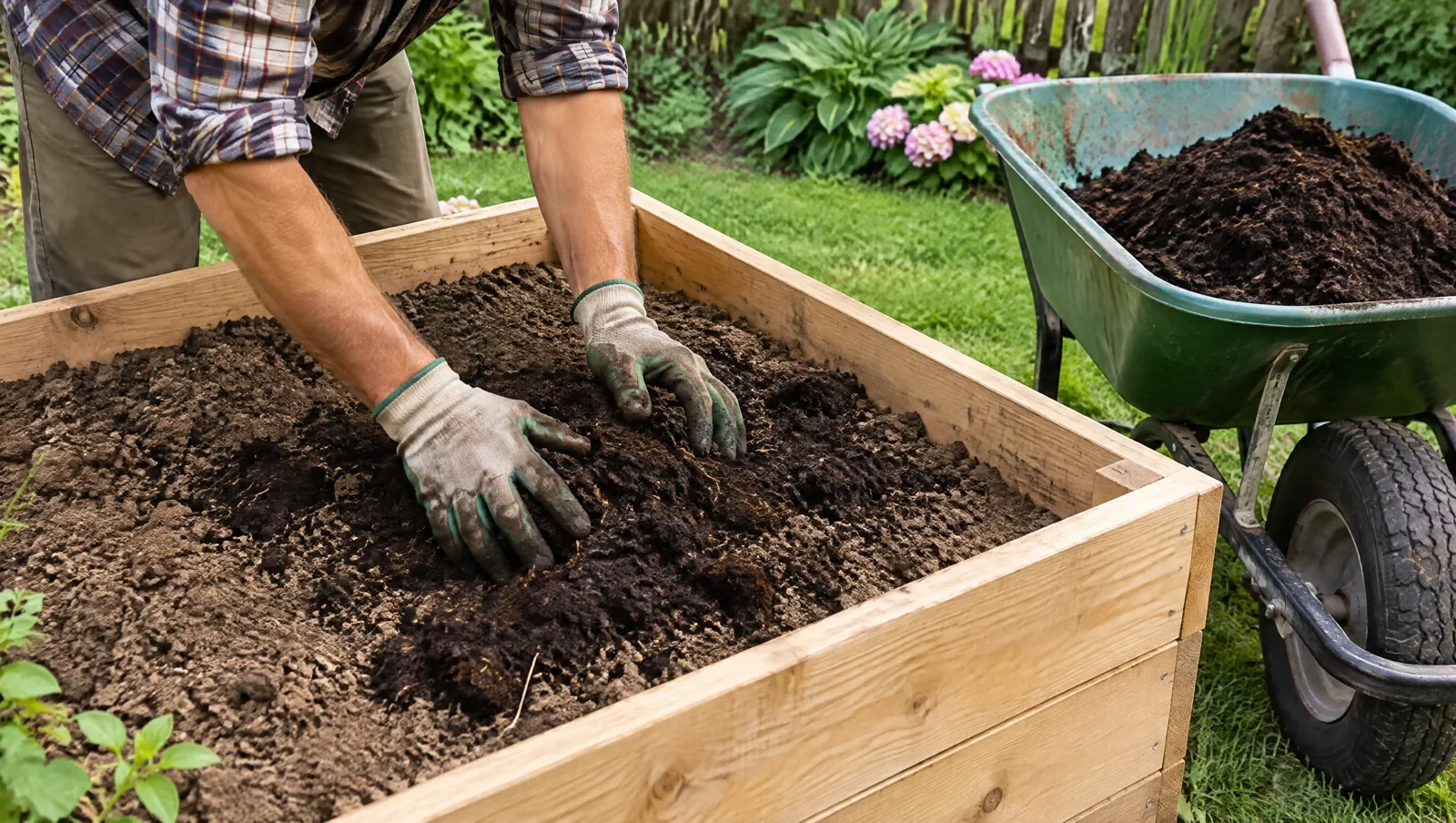

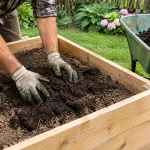
How do you fill a raised garden bed? Loosen the ground underneath, then fill the frame with a blend of roughly one-third to one-half compost mixed into good topsoil (or a 1:1 compost and soilless mix on hard surfaces), mixing as you go rather than layering.
Last updated: November 2026 · Sources: University of Maryland, University of Minnesota, Iowa State and Washington State University Extension.
Key Takeaways
- Fill with compost and topsoil at about 1:2 to 1:1, or compost and soilless mix at 1:1 — University of Maryland Extension.
- Aim for 25–50% organic matter by volume and a pH of 6.2–6.8 for most vegetables — UMD.
- Beds on pavement need at least 8 inches for greens, beans and cucumbers and 12–24 inches for tomatoes, peppers and squash — UMD.
- Mix each few inches of new soil into the layer below; distinct layers block water and roots — Iowa State.
- Potting soil alone dries out too fast for a raised bed, and too much compost can turn water-repellent — University of Minnesota.
- Buried-log “hugelkultur” fills have no peer-reviewed studies behind them and the mounds settle and collapse — Washington State University.
What does filling a raised garden bed actually involve?
Filling a raised garden bed means preparing the ground under the frame and then adding a soil blend that drains well, holds moisture and feeds plants for the whole season. The goal is a loose, crumbly root zone with plenty of organic matter — not a stack of separate materials.
How you fill it depends on what sits underneath: lawn, compacted clay, existing garden soil, or a hard surface like a patio. Each situation has its own recipe, covered step by step below. Once the bed is full, you can use it for anything from lettuce and spinach to deep-rooted tomatoes.
How much soil do you need to fill a raised bed?
Multiply the bed’s length × width × depth in feet to get cubic feet, then divide by 27 for cubic yards. Bulk soil is sold by the cubic yard; bagged soil is usually sold in 1.5 or 2 cubic-foot bags.
| Bed size (L × W × D) | Cubic feet | Cubic yards | 1.5 cu ft bags | 2 cu ft bags |
|---|---|---|---|---|
| 4 × 4 ft × 12 in | 16 | 0.6 | 11 | 8 |
| 4 × 8 ft × 8 in | 21.3 | 0.8 | 15 | 11 |
| 4 × 8 ft × 12 in | 32 | 1.2 | 22 | 16 |
| 4 × 8 ft × 18 in | 48 | 1.8 | 32 | 24 |
| 3 × 6 ft × 12 in | 18 | 0.7 | 12 | 9 |
For anything above about one cubic yard, bulk delivery from a landscape supplier is usually cheaper than bags. Order slightly more than the math says, because a freshly filled bed settles as the soil firms up and organic matter breaks down.
What is the best soil mix for a raised garden bed?
The best soil mix for a raised garden bed is good-quality topsoil blended with compost, so that organic matter makes up roughly 25–50% of the volume. Extension services give slightly different ratios, but they all land in the same range:
| Source | Recommended mix | Best for |
|---|---|---|
| University of Maryland | Compost : topsoil at 1:2 or 1:1, or compost : soilless mix at 1:1 | Beds over compacted or clay soil |
| University of Maryland | Compost : soilless mix at 1:1, topsoil up to 20% if the bed is 16+ inches deep | Beds on driveways or patios |
| Iowa State | Equal parts topsoil, organic matter and coarse sand — or about 70% topsoil, 30% compost | General vegetable beds |
| University of Minnesota | Mostly loam or sandy-loam topsoil with roughly one-third to one-half plant-based compost | Cold-climate beds |
Two materials cause most problems. Straight potting soil dries out too quickly for a raised bed, and very high compost blends can dry out and repel water, according to the University of Minnesota. Bagged “organic garden soil” often contains no mineral topsoil at all — it is usually a blend of bark, wood waste, compost and peat, so check the label.
25–50%organic matter by volume (UMD)
6.2–6.8target pH for most vegetables (UMD)
8 inminimum depth on pavement for greens (UMD)
12–24 indepth for tomatoes, peppers, squash (UMD)
How do you fill a raised garden bed step by step?
Step 1 — Clear and loosen the ground underneath
Smother turf and weeds with cardboard or overlapping newspaper covered by 2–4 inches of compost; the vegetation dies in about 6–8 weeks, per UMD. Then loosen compacted ground by rocking a garden fork or spade every 6–8 inches without flipping the soil. A barrier under the bed is usually unnecessary and can stunt roots, notes the University of Minnesota.
Step 2 — Check what you are buying
Topsoil sales are often unregulated, so ask the supplier for soil-test results and where the soil came from. Good topsoil is dark, crumbly and smells earthy; avoid soil that smells foul, is very sandy or sticky, or shows grey mottling. In urban yards, test for lead — UMD advises against growing vegetables where total lead is above 400 ppm.
Step 3 — Add soil a few inches at a time and mix
Add 3–4 inches of your blend, mix it into the layer below, then repeat until the bed is full. Iowa State warns that distinct layers block water movement and limit root growth, so avoid “lasagna” layers of different materials in the root zone.
Step 4 — Fill to the top, water and let it settle
Fill to the rim and water thoroughly so the soil firms up. Grade the surface so it slopes slightly toward the edges. If it sinks noticeably after the first soaking, top it up with the same blend before planting.
Step 5 — Plant, mulch and maintain
Plant according to your local frost dates — see our guides on when to plant lettuce and when to plant garlic for examples. Mulch the surface to hold moisture, and avoid stepping in the bed so the soil stays loose. Instead of adding compost blindly every year, the University of Minnesota recommends a soil test every 2–3 years and compost as needed, since heavy annual use can build up phosphorus and salts.
Can you fill a raised bed cheaply with logs, branches or leaves?
You can, but it comes with trade-offs. Filling the bottom with logs and branches — a method called hügelkultur — reduces the amount of soil you buy, but Washington State University Extension notes there are no peer-reviewed studies supporting it, and the buried wood breaks down so the bed settles and eventually needs rebuilding.
A more reliable way to save money is to buy bulk compost and topsoil instead of bags, reuse good soil dug from your paths (UMD suggests adding the top 2–3 inches from pathways), and use woody material as surface mulch or path cover rather than burying it in the root zone. Shredded leaves are better used as mulch or composted first.
Tip: If you only need a bed for shallow-rooted crops such as radishes, lettuce or basil, a lower bed of 8 inches cuts your soil bill by a third compared with 12 inches.
What goes wrong when filling a raised garden bed?
| Problem | Likely cause | Fix |
|---|---|---|
| Soil dries out within a day | Too much potting mix or compost | Blend in more topsoil; mulch the surface |
| Water pools on top | Clay topsoil or distinct layers | Mix layers together; add compost, loosen subsoil |
| Bed sinks several inches | Lots of uncomposted or woody material | Top up with finished compost/topsoil blend |
| Seedlings yellow or burn | Fresh manure or salty compost | Use only mature compost; water deeply; soil test |
| Plants stunted in tall beds | Very shallow fill over hardpan | Loosen ground below; add depth for deep-rooted crops |
Which vegetables need the deepest raised bed soil?
Deep-rooted fruiting crops need the most soil. Tomatoes, peppers and squash do best with 12–24 inches of good soil, while leafy greens, beans and cucumbers can manage with 8 inches on a hard surface, according to UMD. Root crops like carrots and potatoes also appreciate a deeper, stone-free fill. Over open ground, roots can also grow down into the loosened soil beneath the bed, so the frame itself can be shorter.
Frequently asked questions
Can I fill a raised bed with only potting soil?
It is not recommended. Potting soil is designed for containers and dries out too quickly in a raised bed. Blend compost with topsoil, or compost with a soilless mix at 1:1 on hard surfaces.
What do you put in the bottom of a raised garden bed?
Over grass, a layer of cardboard or newspaper to smother the turf, then loosened native soil. You do not need gravel or landscape fabric; barriers can restrict roots and drainage.
How many bags of soil do I need for a 4×8 raised bed?
A 4×8 bed that is 12 inches deep holds 32 cubic feet: about 22 bags of 1.5 cubic feet or 16 bags of 2 cubic feet. At that size, bulk soil is usually cheaper.
Should I mix the soil or layer it?
Mix it. Iowa State Extension warns that distinct layers block water movement and limit root growth. Add a few inches at a time and blend each layer into the one below.
Can I use topsoil from my yard?
Yes, if it is loamy and uncontaminated. Mix it with compost. In older urban yards, test for lead first; UMD advises against growing vegetables in soil above 400 ppm total lead.
How deep should a raised garden bed be?
On open ground, 8–12 inches is enough for most vegetables because roots can grow into the soil below. On a patio or driveway, use at least 8 inches for greens and 12–24 inches for tomatoes, peppers and squash.
Do I need to replace raised bed soil every year?
No. Top up settled soil as needed and test it every 2–3 years, adding compost based on the results rather than by default.